Joshua Tree
Yucca brevifolia
Overview
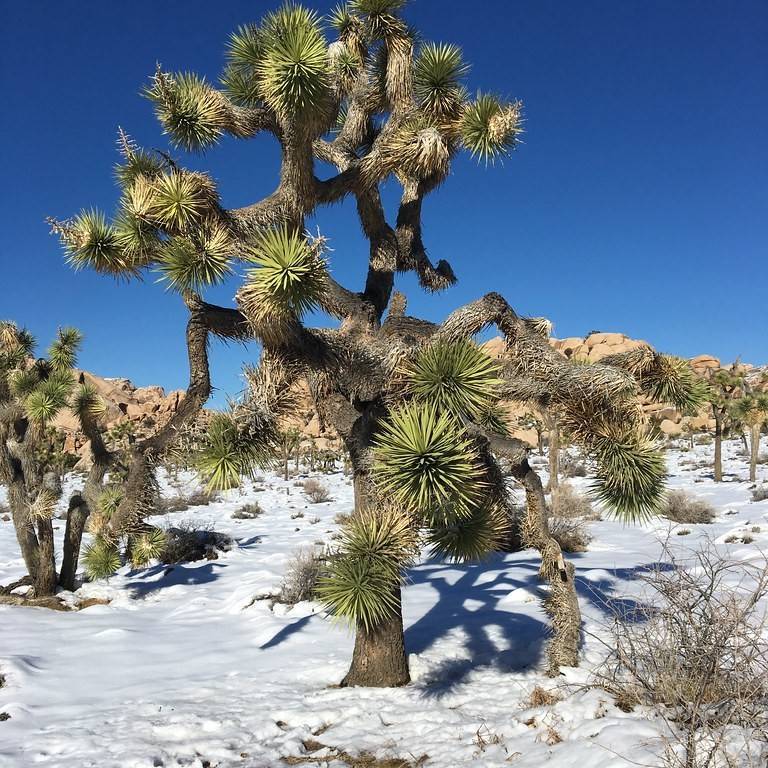
The Joshua tree is a defining keystone species of the Mojave Desert ecosystem, supporting dozens of native wildlife species including desert birds, yucca moths, and small mammals. Its thick, furrowed bark and clusters of stiff, dagger-shaped blue-green leaves help it conserve moisture in extreme arid conditions, while its dramatic, irregular growth form gives it a distinctive, almost sculptural appearance. Individual specimens can live for over 150 years, with some ancient trees surviving for more than 500 years in undisturbed desert habitats.
Care Guide
Watering
Joshua trees are extremely drought-tolerant, requiring only occasional deep watering during extended hot, dry periods; overwatering is the most common cause of decline, as it leads to root rot. Established plants may only need watering 2-3 times per year, while young saplings can be watered once every 2-4 weeks during their first growing season, allowing the soil to dry completely between waterings. In winter, withhold all water to prevent cold damage and fungal growth in saturated soil.
Light
Joshua trees require full, direct sunlight for at least 6-8 hours per day to thrive, as they are adapted to the unobstructed sun exposure of desert environments. They cannot tolerate deep shade, which will cause stunted growth, weak branch structure, and increased susceptibility to pest infestations. When grown in containers, place them in the sunniest location available, such as a south-facing patio or unobstructed windowsill.
Soil
These desert trees demand extremely well-drained, sandy or gravelly soil with a low organic content, as they are adapted to the nutrient-poor, fast-draining substrates of the Mojave Desert. Heavy clay soils that retain moisture will quickly cause fatal root rot, so amend heavy garden soil with large amounts of coarse sand, perlite, or crushed granite to improve drainage before planting. The ideal soil pH is slightly acidic to neutral, ranging from 6.0 to 7.5.
Fertilizer
Joshua trees have very low nutrient requirements, and fertilization is rarely necessary for plants grown in their native desert habitat. If grown in poor soil or containers, apply a diluted, balanced slow-release fertilizer once per year in early spring, using only half the recommended strength to avoid burning the roots. Avoid fertilizers high in nitrogen, as this can promote soft, weak growth that is more vulnerable to cold damage and pests.
Temperature
Joshua trees thrive in hot desert conditions, tolerating summer temperatures up to 120°F (49°C) with adequate air circulation. They are surprisingly cold-hardy, able to survive winter temperatures as low as 10°F (-12°C) for short periods, though prolonged freezes can damage branch tips and young foliage. In regions with wet, cold winters, provide overhead protection to prevent snow and ice from accumulating on branches, which can cause breakage.
Pruning
Pruning is rarely required for Joshua trees, as their natural gnarled growth form is part of their ornamental appeal. Remove only dead, damaged, or diseased branches as needed, making clean cuts close to the main trunk to prevent rot. Avoid removing healthy growing tips, as this can disrupt the tree’s natural growth pattern and lead to abnormal, bushy regrowth that weakens the plant structure.
Propagation
Joshua trees are most commonly propagated from seed, which requires stratification (cold treatment) for 1-3 months to break dormancy before sowing in well-drained sandy medium. They can also be propagated from stem cuttings taken from healthy side branches in late spring, allowing the cut end to callus over for 1-2 weeks before planting in dry, gritty soil to prevent rot. Propagation is slow, with seed-grown plants taking 5-10 years to reach just 1 foot (30 cm) in height, and several decades to mature.
Humidity
Joshua trees are adapted to the very low humidity of desert environments, thriving in relative humidity levels between 10% and 30%. They do not tolerate high humidity for extended periods, as moist air can promote fungal leaf spots and root rot, especially when combined with cool temperatures. In humid climates, ensure excellent air circulation around the plant to keep foliage dry and reduce the risk of disease.
Repotting
Container-grown Joshua trees only need repotting every 3-5 years, as they prefer to be slightly root-bound and grow very slowly. Repot in early spring, using a fast-draining cactus and succulent potting mix amended with extra perlite or coarse sand, and select a pot only 1-2 inches larger than the previous one to avoid excess soil moisture retention. After repotting, withhold water for 1-2 weeks to allow damaged roots to heal and prevent rot.
Uses & Symbolism
Joshua trees are iconic ornamental specimens for xeriscape, desert, and rock gardens in arid regions, prized for their unique sculptural form and low water requirements. Ecologically, they are a keystone species of the Mojave Desert, providing food, shelter, and nesting sites for a wide range of native wildlife, including the yucca moth, which is its exclusive pollinator. Historically, Indigenous communities of the American Southwest used the tree’s tough leaves for weaving baskets and sandals, its seeds and flower buds as food, and its fibrous roots for making soap.
Diseases & Pests
Overwatering is the primary cause of health issues, leading to root rot and stem rot caused by fungal pathogens such as Phytophthora, which can quickly kill the plant if not addressed immediately. Common pests include yucca weevils, which bore into the stems and crowns of young plants, and scale insects, which feed on leaf sap and can be controlled with horticultural oil or insecticidal soap. In wet, humid conditions, Joshua trees may also develop fungal leaf spots, which can be prevented by ensuring good air circulation and avoiding overhead watering.
Related plants
Other plants you might like if you grow Joshua Tree.
%22%2F%3E%0A%20%20%20%20%20%20%3Ccircle%20cx%3D%22920%22%20cy%3D%22180%22%20r%3D%2290%22%20fill%3D%22%23cfe8d5%22%2F%3E%0A%20%20%20%20%20%20%3Cpath%20d%3D%22M600%20590c-90-180-215-255-310-280%200%20165%20118%20296%20270%20296h40z%22%20fill%3D%22%2379b88e%22%2F%3E%0A%20%20%20%20%20%20%3Cpath%20d%3D%22M600%20590c80-150%20198-212%20302-228-8%20142-123%20255-270%20255h-32z%22%20fill%3D%22%235c9f73%22%2F%3E%0A%20%20%20%20%20%20%3Cpath%20d%3D%22M600%20610V360%22%20stroke%3D%22%234f8c64%22%20stroke-width%3D%2218%22%20stroke-linecap%3D%22round%22%2F%3E%0A%20%20%20%20%20%20%3Ctext%20x%3D%22600%22%20y%3D%22700%22%20text-anchor%3D%22middle%22%20font-family%3D%22Arial%2C%20sans-serif%22%20font-size%3D%2244%22%20fill%3D%22%23365c45%22%3E%0A%20%20%20%20%20%20%20%20Plant%20image%20coming%20soon%0A%20%20%20%20%20%20%3C%2Ftext%3E%0A%20%20%20%20%3C%2Fsvg%3E%0A%20%20)