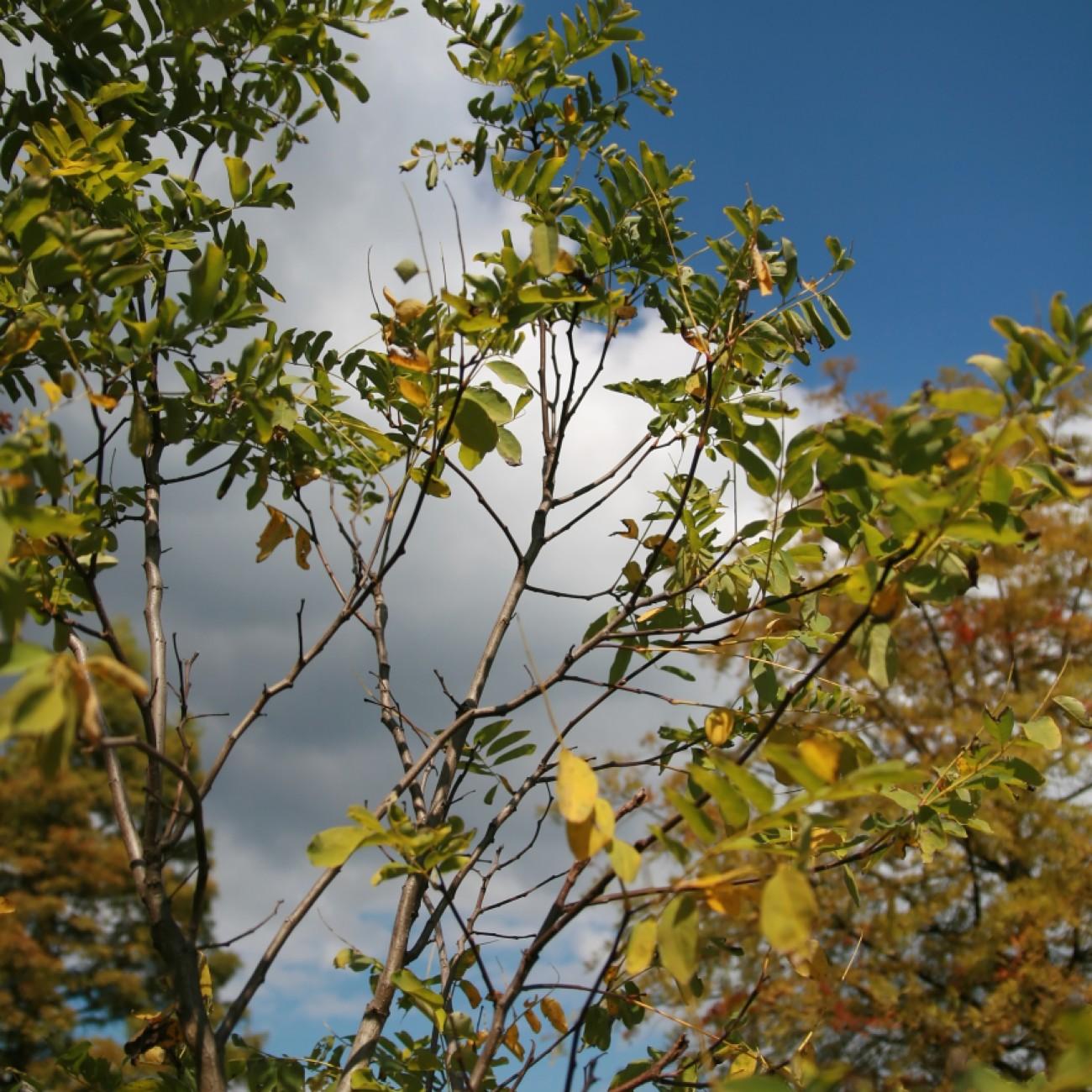
imperial honey locust
Gleditsia triacanthos f. inermis 'Impcole' IMPERIAL
Overview
Imperial Honey Locust is an amazing plant species due to its low maintenance nature and stunning ornamental appeal. It features cascading foliage of seedless leaflets that are a pristine green throughout the growing season, and develop a golden hue as temperatures cool. This plant is highly tolerant of drought conditions, making it a great choice for regions with some dry spells. It also has an attractive pyramidal shape with trailing branches that create a beautiful silhouette in the landscape. Its resilience to pests and diseases makes it a great option for those looking to reduce chemical use in their landscaping. Add Imperial Honey Locust to your yard and you’ll have an eye-catching accent that requires minimal fuss.
Care Guide
Watering
Average — every "7-10" days.
Light
Full sun.
Soil
Well-drained
Temperature
Hardiness zone 3-8.
Pruning
Best pruned in February, February, March, August, August, September, February, August.
Propagation
Seed Propagation, Grafting Propagation
Diseases & Pests
Common pests: Canker, sap rot, Diptera - true flies, Fungal leaf spot, Galls, Heart rot, Leafhopper, spittlebug, Mildew, Rust, Scale insects, Deer resistant, Drought resistant .
Related plants
Other plants you might like if you grow imperial honey locust.