Almond
Prunus dulcis
Overview
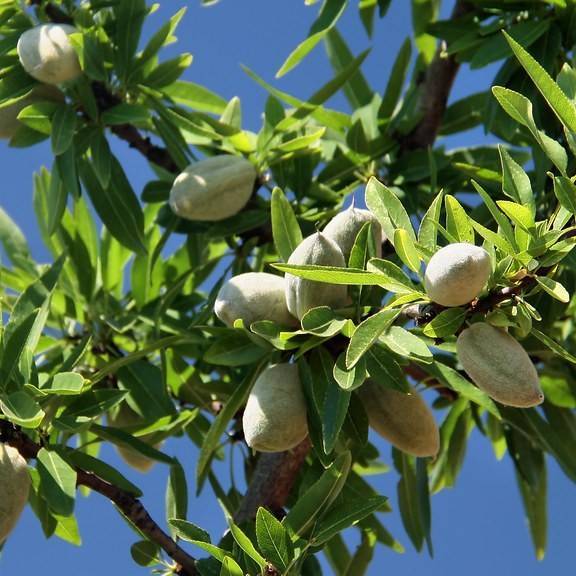
Almond is a deciduous member of the Prunus genus, closely related to peaches, plums, and cherries, with serrated, lance-shaped green leaves and a spreading, rounded canopy. It blooms profusely in late winter to early spring before foliage emerges, attracting pollinators with its fragrant, pale pink or white five-petaled flowers. The fruit is a drupe, with a fleshy, inedible outer hull that splits open at maturity to reveal the hard, pitted shell containing the edible almond kernel.
Care Guide
Watering
Almond trees are drought-tolerant once established, but require consistent deep watering during bloom, fruit development, and early growth stages to prevent kernel drop and ensure high yields. Allow the top 2-3 inches of soil to dry out between waterings to avoid root rot, and reduce watering frequency significantly in fall and winter during dormancy. Avoid overhead watering, which can promote fungal leaf spot and blossom blight.
Light
Almond trees require full, direct sunlight for a minimum of 6-8 hours per day to support healthy bloom, fruit production, and overall vigorous growth. Insufficient light will result in sparse flowering, reduced kernel yields, and increased susceptibility to pest and disease issues. Plant in an open, unshaded location with no overhead obstructions blocking sunlight for best performance.
Soil
Almonds thrive in well-draining, loamy or sandy-loam soil with a pH range between 6.0 and 7.5, and will not tolerate heavy, waterlogged clay soils that hold excess moisture around the root zone. Amend heavy or compacted soil with organic compost, perlite, or aged manure prior to planting to improve drainage and aeration. Avoid planting in low-lying areas where water accumulates after rainfall or irrigation.
Fertilizer
Apply a balanced, slow-release 10-10-10 NPK fertilizer in early spring just before new growth emerges to support bud break, bloom, and initial fruit development. Supplement with a nitrogen-rich fertilizer in late spring after fruit set to support foliage growth and kernel maturation, avoiding late-season fertilization that can stimulate tender new growth vulnerable to frost damage. For mature trees, add a 2-3 inch layer of aged organic mulch around the base each year to slowly release nutrients and regulate soil temperature.
Temperature
Almond trees require a chilling period of 200-1200 hours below 45°F (7°C) during winter dormancy to break bud dormancy and produce flowers in spring, with exact chilling requirements varying by cultivar. They are hardy in USDA zones 7 through 9, and can tolerate brief winter temperatures down to 20°F (-7°C), but late spring frosts after bud break will kill developing blossoms and eliminate the year’s crop. They prefer warm, dry summer temperatures between 60°F and 85°F (15°C and 29°C) for optimal kernel ripening.
Pruning
Prune almond trees during late winter dormancy to remove dead, damaged, or crossing branches, improve air circulation through the canopy, and maintain a manageable open vase shape for easier harvesting and light penetration. Remove any suckers growing from the rootstock at the base of the tree throughout the growing season to prevent them from diverting nutrients from the main fruiting canopy. After harvest, thin out crowded fruiting spurs to encourage larger, higher-quality kernel production the following year.
Propagation
Almond trees are most commonly propagated by grafting desired fruiting cultivars onto hardy, disease-resistant rootstocks to ensure consistent fruit quality, pest resistance, and size control, as trees grown from seed do not produce true to the parent plant. Softwood cuttings taken from healthy new growth in early summer can be rooted in moist, well-draining propagation medium under high humidity, though this method has a lower success rate than grafting. For home growers, purchasing grafted nursery saplings is the most reliable way to obtain a productive, true-to-type almond tree.
Humidity
Almond trees prefer low to moderate humidity levels between 30% and 60%, and are well-adapted to the dry, arid climates of their native Mediterranean range. High humidity during bloom and fruit development increases the risk of fungal diseases such as brown rot, blossom blight, and powdery mildew, which can severely reduce crop yields. Ensure adequate air circulation around the canopy to reduce excess moisture buildup in humid growing regions.
Repotting
Dwarf almond cultivars grown in containers should be repotted every 2-3 years in late winter during dormancy, moving to a pot one size larger with fresh, well-draining potting mix amended with compost and perlite to support healthy root growth. Trim back up to one-third of the outer root ball during repotting to prevent the tree from becoming root-bound and to encourage new, healthy root development. Ensure the container has adequate drainage holes to prevent waterlogging, and avoid planting the tree deeper than it was in its previous pot to prevent crown rot.
Uses & Symbolism
Almond kernels are widely consumed raw, roasted, or processed into almond butter, almond milk, flour, oil, and a range of baked goods and confections, valued for their high protein, healthy fat, and vitamin E content. The trees are also planted as ornamental landscape specimens for their showy, fragrant early spring blossoms, which are an important nectar source for honeybees and other pollinators. Almond oil is used in cosmetics, skincare products, and traditional medicine for its moisturizing and anti-inflammatory properties.
Diseases & Pests
Almond trees are susceptible to brown rot blossom blight, a fungal disease that infects blossoms during wet, humid spring weather, causing flower drop and reducing fruit yields, and can be managed with proper pruning for air circulation and targeted fungicide applications during bloom. Navel orangeworm is the most damaging insect pest, laying eggs in developing fruit and feeding on the kernel inside, with control including removing mummified fruit from the tree after harvest and applying pheromone traps to disrupt mating. Root rot caused by overwatering or poorly draining soil is a common issue in wet growing conditions, leading to yellowing foliage, stunted growth, and eventual tree death if not corrected promptly.
Related plants
Other plants you might like if you grow Almond.
%22%2F%3E%0A%20%20%20%20%20%20%3Ccircle%20cx%3D%22920%22%20cy%3D%22180%22%20r%3D%2290%22%20fill%3D%22%23cfe8d5%22%2F%3E%0A%20%20%20%20%20%20%3Cpath%20d%3D%22M600%20590c-90-180-215-255-310-280%200%20165%20118%20296%20270%20296h40z%22%20fill%3D%22%2379b88e%22%2F%3E%0A%20%20%20%20%20%20%3Cpath%20d%3D%22M600%20590c80-150%20198-212%20302-228-8%20142-123%20255-270%20255h-32z%22%20fill%3D%22%235c9f73%22%2F%3E%0A%20%20%20%20%20%20%3Cpath%20d%3D%22M600%20610V360%22%20stroke%3D%22%234f8c64%22%20stroke-width%3D%2218%22%20stroke-linecap%3D%22round%22%2F%3E%0A%20%20%20%20%20%20%3Ctext%20x%3D%22600%22%20y%3D%22700%22%20text-anchor%3D%22middle%22%20font-family%3D%22Arial%2C%20sans-serif%22%20font-size%3D%2244%22%20fill%3D%22%23365c45%22%3E%0A%20%20%20%20%20%20%20%20Plant%20image%20coming%20soon%0A%20%20%20%20%20%20%3C%2Ftext%3E%0A%20%20%20%20%3C%2Fsvg%3E%0A%20%20)