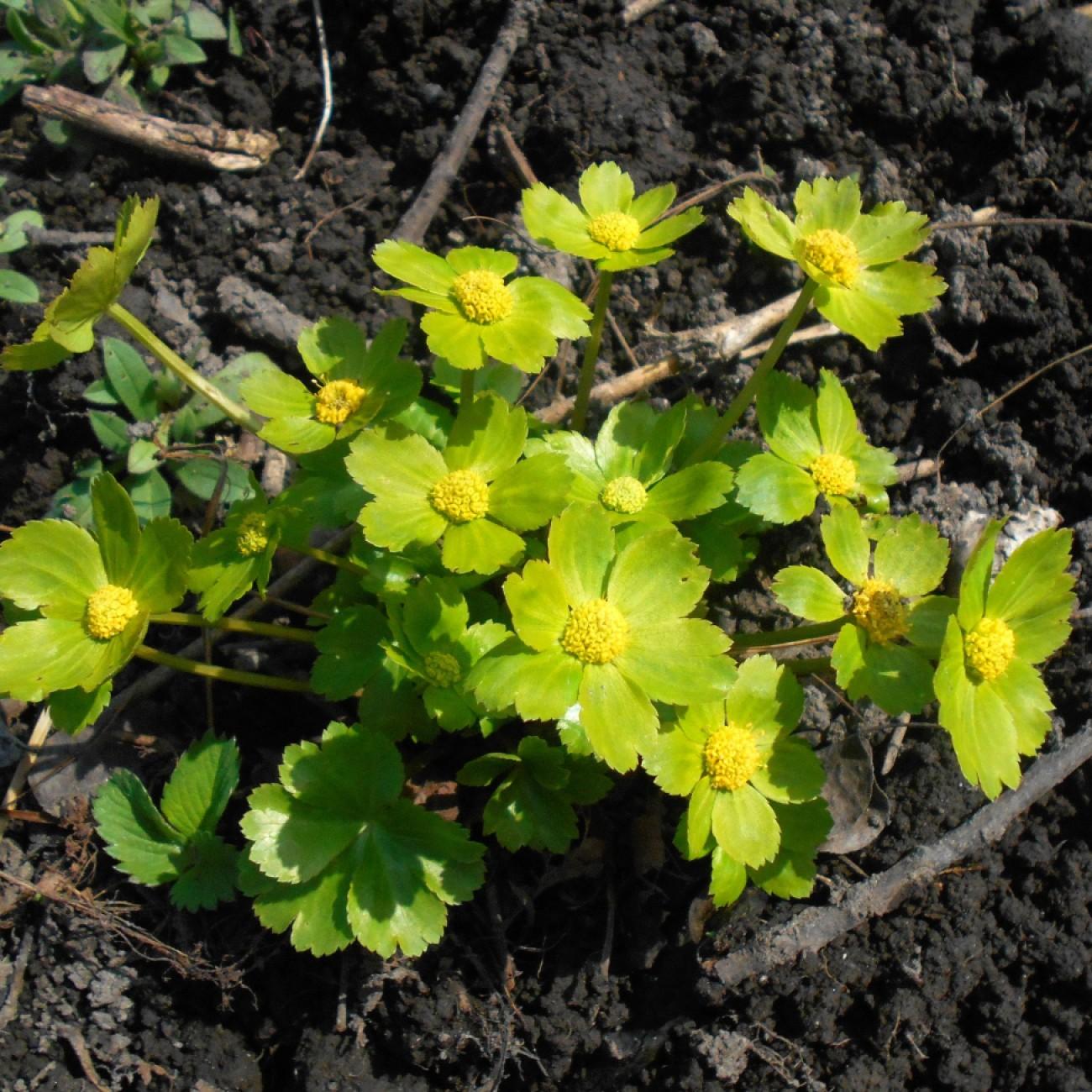
Hacquetia
Hacquetia epipactis (syn. Sanicula epipactis)
Overview
Hacquetia is a diminutive herbaceous perennial native to damp, shaded mountain woodlands across Central and Southern Europe. It is celebrated in horticulture for its early spring display, where clusters of tiny yellow true flowers are surrounded by showy, lime-green bracts that appear before the plant’s mature foliage. Its compact, clumping habit makes it a popular choice for rock gardens, shaded border edges, and alpine trough plantings.
Care Guide
Watering
Hacquetia requires consistently moist, well-drained soil and should be watered regularly to prevent the root zone from drying out, especially during warm, dry periods in spring and summer. Avoid overwatering or waterlogged conditions, as this can cause root rot, particularly in heavy, poorly draining soils. During winter dormancy, reduce watering significantly to prevent saturation around the resting root system.
Light
This woodland species thrives in partial to full shade, mimicking the dappled sunlight it receives under deciduous tree canopies in its native habitat. It can tolerate short periods of direct morning sun, but harsh midday or afternoon sun will scorch its foliage and cause the plant to wilt prematurely. In regions with cool, mild summers, it may tolerate slightly brighter conditions, but full shade is preferred in warmer climates.
Soil
Hacquetia grows best in rich, humusy, slightly acidic to neutral soil with excellent drainage, amended with organic matter such as leaf mold or well-rotted compost to replicate its native woodland substrate. Heavy clay soils should be amended with grit or perlite to improve drainage, as standing water around the roots will quickly kill the plant. It will not thrive in sandy, nutrient-poor soils that dry out rapidly.
Fertilizer
Feed hacquetia once annually in early spring, just as new growth begins to emerge, using a balanced, slow-release granular fertilizer or a diluted liquid organic fertilizer formulated for woodland perennials. Avoid over-fertilizing, as this can encourage excessive, weak foliage growth at the expense of blooms and may damage the plant’s delicate root system. Additional fertilizer is not required for the rest of the growing season if the soil is already rich in organic matter.
Temperature
Hacquetia is cold-hardy in USDA zones 4 to 7, tolerating winter temperatures as low as -30°F (-34°C) when dormant. It prefers cool summer temperatures between 50-70°F (10-21°C) and will struggle in prolonged heat above 75°F (24°C), which may trigger early dormancy. In areas with hot summers, it benefits from extra shade and mulch around the base to keep the root zone cool.
Pruning
Pruning requirements for hacquetia are minimal; simply remove spent flower stems after blooming if desired to maintain a tidy appearance, though leaving the bracts in place will extend the ornamental display. Cut back any yellowed or damaged foliage in late autumn once the plant enters dormancy, clearing away debris to prevent fungal pathogens from overwintering near the crown. Avoid cutting back green foliage during the growing season, as this reduces the plant’s ability to photosynthesize and store energy for the next year’s blooms.
Propagation
Hacquetia is most reliably propagated by division of mature clumps in early autumn, after the foliage has begun to die back, or in very early spring before new growth emerges. When dividing, carefully separate the root crown into smaller sections, each with at least one healthy growing point, and replant immediately at the same depth they were originally growing. It can also be grown from fresh seed sown in containers outdoors immediately after harvest in late summer, though seed-grown plants take 3-4 years to reach flowering size.
Humidity
This species prefers moderate to high humidity levels between 40-60%, typical of its native mountain woodland habitats. It will tolerate average indoor humidity if grown as a potted alpine plant, but overly dry air from heating or cooling vents may cause leaf edge browning. Outdoors, mulching with leaf mold around the base helps retain moisture in the soil and maintain consistent ambient humidity around the foliage.
Repotting
Potted hacquetia, often grown in alpine troughs, should be repotted every 2-3 years in early spring, just before new growth begins, using a fresh, well-drained potting mix amended with leaf mold and grit. Choose a pot that is only 1-2 inches larger than the previous container, as the plant prefers a slightly tight root system and excess potting medium can hold unnecessary moisture leading to rot. When repotting, take care not to damage the delicate, shallow root system, and water lightly after planting to settle the soil around the roots.
Uses & Symbolism
Hacquetia is primarily grown as an ornamental plant for shaded rock gardens, alpine troughs, woodland garden edges, and underplanting of deciduous shrubs and trees, where its early spring blooms provide much-needed color late in winter. It is also a popular subject for alpine plant enthusiasts and is often featured in specialist rock garden shows for its unusual, delicate flower display. Its small size and non-toxic nature make it a safe addition to gardens frequented by pets and children.
Diseases & Pests
Hacquetia is relatively pest and disease resistant when grown in its preferred conditions, but root rot can occur quickly if planted in poorly draining soil or overwatered, especially during winter dormancy. It may occasionally be affected by fungal leaf spots in overly humid, poorly ventilated conditions, which can be managed by removing affected foliage and improving air circulation around the plant. Slugs and snails may feed on the tender young spring growth, so physical barriers or organic bait may be needed in areas with high slug populations.
Related plants
Other plants you might like if you grow Hacquetia.