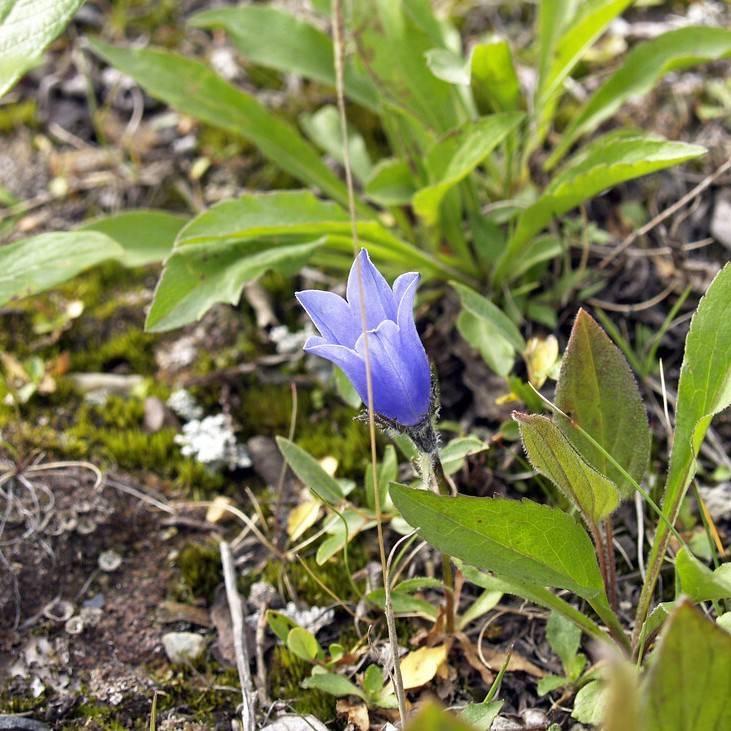
Common Alaska Harebell
Campanula lasiocarpa
Overview
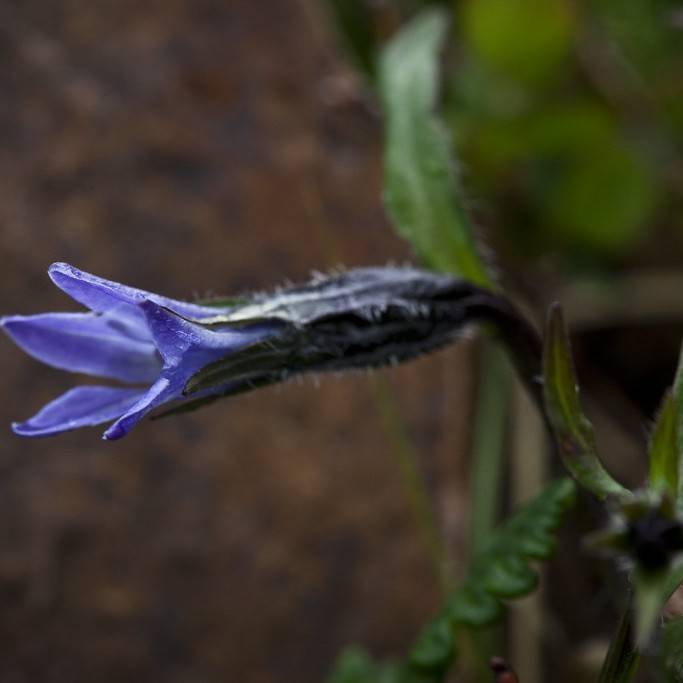
Common Alaska Harebell is a compact, mat-forming perennial adapted to harsh, cold subarctic and alpine environments, where it thrives in rocky, well-drained soils and short growing seasons. It produces delicate, nodding pale blue to lavender bell-shaped flowers from mid to late summer, which stand just above its fuzzy, dark green basal foliage. This species is uniquely adapted to survive extreme cold, wind, and nutrient-poor soils, making it a signature wildflower of Alaska’s tundra and mountain ecosystems.
Care Guide
Watering
Common Alaska Harebell prefers consistently moist but never waterlogged soil, as its shallow roots are prone to rot in saturated conditions. In cultivation, water only when the top 1 inch of soil feels dry, reducing watering frequency in late fall as the plant enters dormancy. Avoid overhead watering to prevent foliar fungal issues, aiming water directly at the root zone.
Light
This species thrives in full sun in its native subarctic range, where summer daylight hours are extended, but will tolerate light partial shade in warmer temperate growing zones. It requires a minimum of 6 hours of direct sunlight daily to produce abundant flowers and maintain its compact growth habit. Insufficient light will lead to leggy growth and reduced flowering.
Soil
Common Alaska Harebell requires sharply drained, low-nutrient soil with a slightly acidic to neutral pH (5.5 to 7.0), mimicking its native rocky tundra and gravelly slope habitats. A mix of sandy loam, crushed granite, and a small amount of organic compost works well for cultivation, as heavy, clay-rich soils will quickly cause root rot. Ensure the planting site or container has excellent drainage, as the plant cannot tolerate standing water around its roots.
Fertilizer
This adapted wildflower needs very little fertilizer, as it is accustomed to nutrient-poor native soils, and over-fertilization will cause soft, leggy growth that is prone to damage. A single light application of diluted, balanced slow-release fertilizer in early spring, just as new growth emerges, is sufficient for the entire growing season. Avoid high-nitrogen fertilizers, as they will promote excessive foliage growth at the expense of flowers.
Temperature
Common Alaska Harebell is extremely cold-hardy, surviving winter temperatures as low as -40°F (-40°C) and adapted to USDA hardiness zones 1 through 6. It prefers cool summer temperatures between 50°F and 65°F (10°C to 18°C), and will struggle in prolonged heat above 75°F (24°C), often going dormant early in warm climates. A period of cold stratification over winter is required for the plant to break dormancy and flower the following growing season.
Pruning
Pruning is minimal for this low-growing species; spent flowers can be deadheaded throughout the blooming season to encourage additional flower production and maintain a tidy appearance. In late fall, after the foliage dies back, trim away any dead or yellowed leaves to prevent overwintering pests and fungal pathogens. Avoid cutting back green foliage, as it stores energy for the next year’s growth.
Propagation
Common Alaska Harebell is most easily propagated by seed, which requires a 6 to 8 week period of cold stratification to break dormancy before sowing on the surface of moist, well-drained seed starting mix. It can also be propagated by division of established mats in early spring, just as new growth emerges, carefully separating clumps to preserve as much of the shallow root system as possible. Cuttings are rarely used for propagation, as the plant’s compact, low growth habit makes collecting suitable stem material difficult.
Humidity
This species prefers moderate to low humidity levels, between 30% and 50%, matching the dry, windy conditions of its native subarctic habitats. It does not tolerate high, prolonged humidity, which can lead to foliar fungal diseases and root rot, so ensure good air circulation around cultivated plants. Extra humidity is not required, even in dry indoor growing environments.
Repotting
If grown in containers, Common Alaska Harebell only needs repotting every 3 to 4 years, when it has outgrown its current pot and roots begin to emerge from the drainage holes. Repot in early spring, just as new growth emerges, using a sharply drained, low-nutrient soil mix and a container with multiple drainage holes to prevent waterlogging. Avoid overpotting, as excess soil will hold unnecessary moisture and increase the risk of root rot.
Uses & Symbolism
Common Alaska Harebell is widely used in rock gardens, alpine troughs, and cold-climate native landscaping, where its compact size and delicate blue flowers add visual interest to low-growing plantings. It is also planted in pollinator gardens in northern regions, as its summer blooms provide an important nectar source for native bees and butterflies adapted to cold environments. Indigenous communities in Alaska and northern Canada have historically used the plant’s edible leaves in small quantities as a raw or cooked green, and its roots for mild medicinal uses to treat coughs and sore throats.
Diseases & Pests
Common Alaska Harebell is relatively pest and disease resistant when grown in its preferred conditions, but root rot is the most common issue, caused by overwatering or poorly drained soil. Fungal foliar diseases such as powdery mildew and rust can occur in high humidity or poor air circulation, which can be prevented by spacing plants properly and avoiding overhead watering. Aphids and slugs may occasionally feed on young foliage, which can be controlled with insecticidal soap or manual removal, respectively.
Related plants
Other plants you might like if you grow Common Alaska Harebell.