Gooseneck Loosestrife
Lysimachia clethroides
Overview
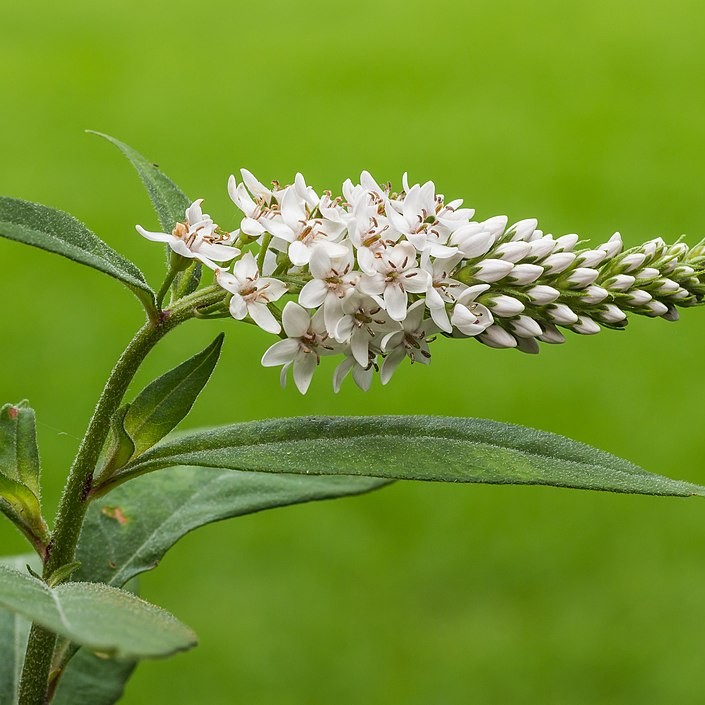
Gooseneck loosestrife is a herbaceous perennial that forms dense, spreading clumps of bright green, lance-shaped foliage. Its signature curving spikes of small, star-shaped white flowers bloom from mid to late summer, attracting bees, butterflies, and other pollinators to garden spaces. While valued for its ornamental charm, it can be aggressive in ideal growing conditions, spreading via underground rhizomes to form large colonies. It thrives in temperate garden settings, often used in border plantings, rain gardens, and naturalized areas.
Care Guide
Watering
Keep soil consistently moist throughout the growing season, as gooseneck loosestrife does not tolerate prolonged drought. Water deeply once or twice per week during dry periods, avoiding overwatering of poorly drained soils to prevent root rot. Reduce watering frequency in fall and winter once foliage dies back for the season.
Light
Grows best in full sun to partial shade, with at least 4 to 6 hours of direct sunlight daily for optimal flowering. In regions with hot, intense summer sun, provide afternoon shade to prevent leaf scorch and help retain soil moisture. Too much deep shade will reduce bloom production and cause leggy, sparse growth.
Soil
Adaptable to a wide range of soil types, including clay, loam, and sandy soils, as long as drainage is adequate. Prefers rich, moisture-retentive soil with a slightly acidic to neutral pH between 5.5 and 7.0. Amend poor, sandy soils with compost or well-rotted manure to boost nutrient content and water retention.
Fertilizer
Feed lightly in early spring with a balanced, slow-release 10-10-10 fertilizer to support new growth and upcoming bloom development. Avoid over-fertilizing, as excessive nitrogen will encourage lush foliage growth at the expense of flowers and increase spreading vigor. No additional fertilization is needed for the rest of the growing season in moderately fertile soils.
Temperature
Thrives in temperate climates within USDA hardiness zones 3 to 8, tolerating winter temperatures as low as -40°F (-40°C) once established. Summer temperatures between 65°F and 80°F (18°C to 27°C) support optimal growth and flowering; prolonged heat above 90°F (32°C) may cause wilting if soil moisture is low. Cut back dead foliage after the first hard frost in fall to prepare the plant for winter dormancy.
Pruning
Deadhead spent flower spikes immediately after blooming to prevent unwanted self-seeding and maintain a tidy appearance. Cut back entire stems to 2 to 3 inches above the soil line in late fall after foliage yellows and dies back for winter. To control spread, dig up and remove excess rhizomatous growth around the perimeter of clumps every 2 to 3 years in early spring.
Propagation
Easiest to propagate via division in early spring before new growth emerges or in fall after flowering ends, digging up clumps and splitting them into smaller sections with healthy roots and shoots. Can also be grown from seed sown directly in the garden in fall or started indoors 8 to 10 weeks before the last spring frost, though seed-grown plants may take 2 to 3 years to mature and bloom. Stem cuttings taken from soft new growth in late spring will root readily in moist potting mix under indirect light.
Humidity
Tolerates average outdoor humidity levels between 40% and 70%, with no special humidity requirements when grown in garden settings. High summer humidity supports lush growth, but good air circulation around foliage helps prevent fungal disease issues. No misting or humidity adjustments are needed for outdoor-grown plants.
Repotting
Rarely grown in containers long-term due to its aggressive spreading habit, but if potted, repot every 1 to 2 years in early spring into a larger container with fresh potting mix. Use a deep, wide pot with drainage holes to accommodate rhizome spread, and select a heavy container to prevent tipping as the plant grows tall. Root-bound potted plants will exhibit reduced flowering and stunted growth, indicating it is time to repot or divide the clump.
Uses & Symbolism
Widely planted as an ornamental perennial in cottage gardens, border plantings, rain gardens, and naturalized areas, where its arching white flower spikes add unique textural contrast and late-summer color. Cut flower stems are popular for fresh floral arrangements, lasting 7 to 10 days in vases with regular water changes. Its dense root system helps stabilize soil on slopes and in riparian areas, reducing erosion in moist locations.
Diseases & Pests
Generally pest and disease resistant, but may be susceptible to aphids and spider mites during hot, dry summer periods, which can be controlled with insecticidal soap or neem oil sprays. Fungal diseases including powdery mildew and leaf spot may occur in humid, poorly ventilated conditions with excess moisture on foliage, preventable by spacing plants to improve air circulation and watering at the base rather than overhead. Slugs and snails may feed on young foliage in spring, especially in shaded, moist locations.
Related plants
Other plants you might like if you grow Gooseneck Loosestrife.