Giant Angelica
Angelica gigas
Overview
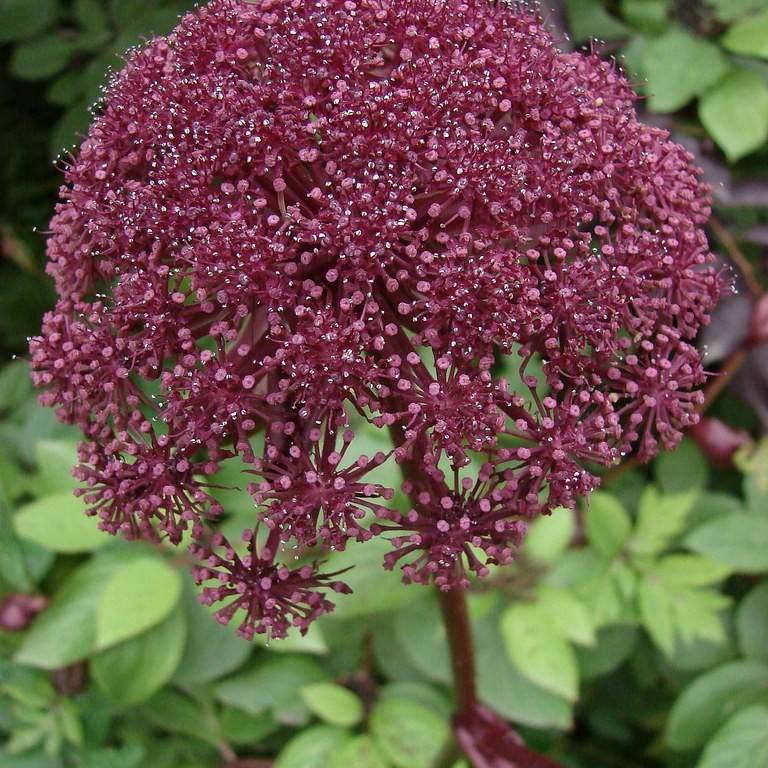
Giant Angelica grows as a low rosette of glossy, toothed green leaves in its first year, sending up a tall, thick purple-tinged flowering stalk in its second summer before setting seed and dying. Its dense, 6-8 inch wide deep purple umbel flower heads attract a wide range of pollinators, including bees, butterflies, and beneficial predatory insects. It thrives in cooler temperate climates, where its dramatic vertical structure adds architectural interest to cottage gardens, rain gardens, and mixed perennial borders.
Care Guide
Watering
Giant Angelica prefers consistently moist, well-drained soil, and requires regular watering during dry periods to prevent the shallow root system from drying out. Avoid overwatering or waterlogged conditions, which can cause root rot, especially in heavier clay soils. Water at the base of the plant to keep foliage dry and reduce fungal disease risk.
Light
This plant grows best in partial shade, particularly in regions with hot summer sun, which can scorch its leaves and cause premature wilting. It can tolerate full sun in cooler, northern climates as long as soil moisture is consistently adequate. Too much deep shade will lead to leggy growth and reduced flower production.
Soil
Giant Angelica thrives in rich, loamy, slightly acidic to neutral soil with a high organic matter content that retains moisture without staying soggy. Amend poor or sandy soils with well-rotted compost or leaf mold prior to planting to improve nutrient content and water retention. Heavy clay soils should be amended with coarse sand or perlite to enhance drainage.
Fertilizer
Apply a balanced, slow-release organic fertilizer in early spring of both the first and second growing years to support robust foliage and stem growth. Top-dress with a 2-inch layer of compost in late fall to replenish soil nutrients and protect the root system over winter. Avoid over-fertilizing with high-nitrogen formulas, which can promote excessive leaf growth at the expense of flower production.
Temperature
Giant Angelica prefers cool temperate conditions, with ideal growing temperatures between 50-75°F (10-24°C). It is cold hardy to USDA zone 4, surviving winter temperatures as low as -30°F (-34°C) with a layer of mulch for insulation. High summer temperatures above 85°F (29°C) can cause stress, so provide partial shade and extra moisture in warmer regions.
Pruning
Remove spent flower heads after blooming if you do not want the plant to self-seed freely around the garden. Cut back the entire flowering stalk to the base of the foliage once seeds have dispersed or blooms have faded in late fall. Remove any yellowed or damaged leaves throughout the growing season to improve air circulation and reduce disease risk.
Propagation
Giant Angelica is most commonly propagated from fresh seed, sown directly outdoors in fall as soon as seeds ripen, as they require a period of cold stratification to germinate. For indoor sowing, refrigerate seeds in moist peat moss for 4-6 weeks before sowing in late winter, and transplant seedlings outdoors after the last frost. Established plants may self-seed prolifically in suitable growing conditions, with volunteer seedlings easy to transplant when young.
Humidity
This plant tolerates average to high humidity levels, thriving in the naturally moist air of woodlands and stream-side environments. It does not require supplemental humidity in garden settings, but may benefit from occasional misting during extended periods of very hot, dry weather. Poor air circulation in high humidity conditions can increase fungal disease risk, so space plants 2-3 feet apart to allow airflow.
Repotting
Giant Angelica is rarely grown in containers long-term, as its large taproot and tall growth habit require deep, spacious planting areas. If growing in a container for its first year, use a pot at least 12 inches deep with drainage holes, and transplant to the garden in early spring of its second year before active growth resumes. Avoid repotting once the flowering stalk begins to develop, as this can damage the taproot and cause the plant to die back prematurely.
Uses & Symbolism
Giant Angelica is widely grown as an ornamental architectural plant in temperate gardens, adding height, color, and pollinator value to mixed borders and naturalized areas. Its roots, stems, and seeds have been used for centuries in traditional East Asian medicine to treat circulatory issues, menstrual discomfort, and inflammatory conditions. Young, tender stems are occasionally candied or used as a flavoring for liqueurs, desserts, and savory dishes, though other parts of the plant have a strong, bitter taste.
Diseases & Pests
Giant Angelica is susceptible to common apiaceae family fungal diseases including powdery mildew, leaf spot, and stem rot, especially in overly wet, poorly drained conditions with low air circulation. Common pests include aphids, which cluster on new growth and flower buds, and carrot rust fly larvae, which can tunnel into the plant’s taproot and cause wilting or death. Slugs and snails may feed on young, tender foliage in early spring, particularly in moist, shaded growing locations.
Related plants
Other plants you might like if you grow Giant Angelica.