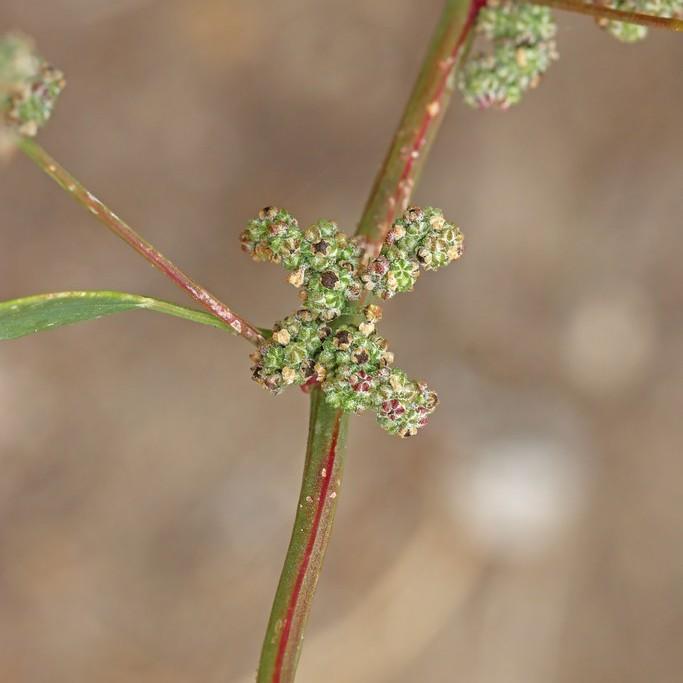
Fremont's Goosefoot
Chenopodium fremontii
Overview
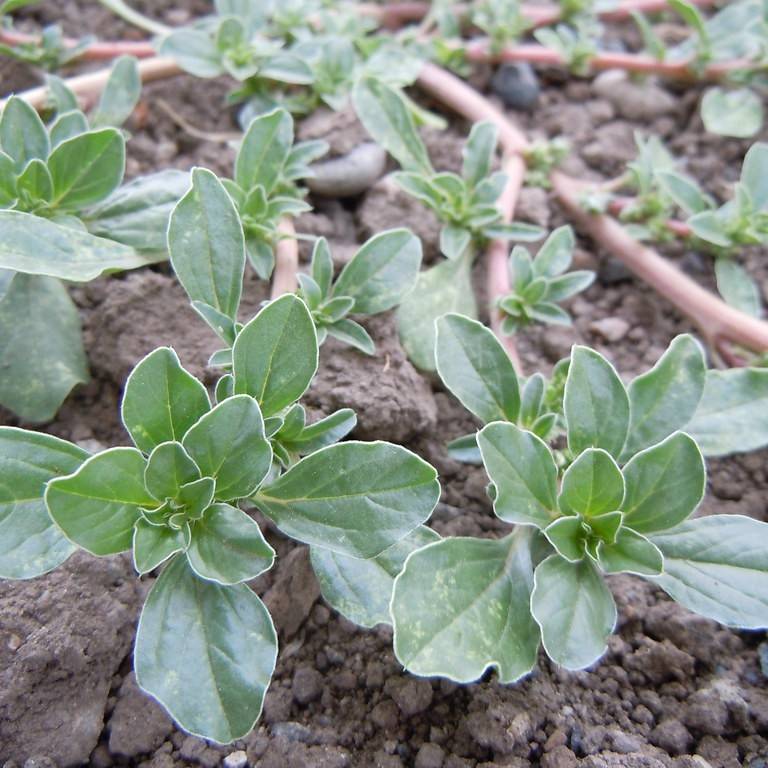
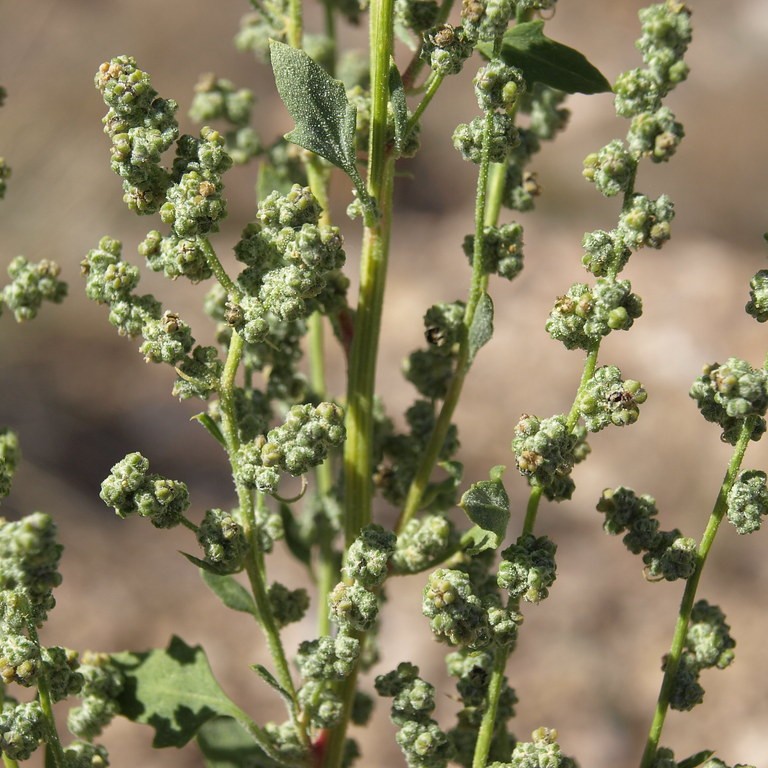
Chenopodium fremontii, commonly called Fremont's Goosefoot, is a fast-growing annual in the amaranth family, recognizable by its triangular, lobed, mealy-textured green leaves and small, dense clusters of greenish flowers that bloom in late summer. It thrives in dry, open, often disturbed sites such as roadsides, desert washes, and grassy slopes across its native range. Indigenous communities have long harvested its nutrient-dense leaves and small, grain-like seeds for food, making it a culturally and ecologically important regional species.
Care Guide
Watering
Fremont's Goosefoot is highly drought-tolerant once established, requiring only occasional deep watering during extended dry periods; overwatering can cause root rot, so allow the top 2 to 3 inches of soil to dry out completely between waterings. Seedlings need consistent light moisture to germinate and establish, but reduce watering frequency once the plant reaches 6 inches in height to encourage deep root growth. In areas with regular seasonal rainfall, supplemental watering is rarely needed for outdoor-grown specimens.
Light
This species thrives in full, direct sunlight, requiring a minimum of 6 hours of unobstructed sun per day to produce robust foliage and abundant seed sets. It can tolerate partial shade, but growth will be leggy, leaf production will be reduced, and seed yields will be significantly lower. When grown indoors, place it in a south-facing window or under grow lights set to 12 to 14 hour daily cycles to mimic its native sunny habitat.
Soil
Fremont's Goosefoot is adaptable to a wide range of soil types, including sandy, loamy, gravelly, and even poor, nutrient-depleted soils, as long as the substrate has excellent drainage. It prefers a neutral to slightly alkaline soil pH between 6.5 and 8.0, and can tolerate mild salinity common in arid western soils. Avoid heavy, waterlogged clay soils, as they retain too much moisture and can lead to root decay; amend heavy soils with coarse sand or perlite to improve drainage before planting.
Fertilizer
This plant is adapted to low-nutrient soils and rarely requires supplemental fertilization; excess nitrogen will promote excessive leafy growth at the expense of seed production and can make the plant more susceptible to pest infestations. If grown in extremely poor, sandy soil, apply a thin layer of compost at planting time to provide gentle, slow-release nutrients for the growing season. Avoid synthetic, high-nitrogen fertilizers entirely, as they disrupt the plant's natural growth habit and reduce the nutritional quality of its edible leaves and seeds.
Temperature
Fremont's Goosefoot is well-adapted to warm, arid climates, thriving in daytime temperatures between 65 and 95°F (18 and 35°C) and can tolerate brief nighttime lows down to 30°F (-1°C) once established. It is highly heat-tolerant, surviving extended periods of temperatures above 100°F (38°C) as long as it has access to occasional deep moisture. Frost will kill the plant, so plant seeds outdoors after all risk of spring frost has passed, or start seeds indoors 4 to 6 weeks before the last frost date for an earlier harvest.
Pruning
Pruning is rarely required for Fremont's Goosefoot, but you can pinch back the top 1 to 2 inches of young plants to encourage bushier, more compact growth and increased leaf production. Remove any yellowed, damaged, or pest-infested leaves as they appear to improve air circulation around the plant and prevent the spread of disease. If you do not want the plant to self-sow and spread in your garden, cut off all flower heads before they mature and release their seeds in late fall.
Propagation
Fremont's Goosefoot is most easily propagated from seed, which can be sown directly outdoors in the spring after all risk of frost has passed, or started indoors 4 to 6 weeks before the last frost date for earlier growth. Sow seeds 1/4 inch deep in well-draining soil, keep the substrate lightly moist until germination, which typically occurs within 7 to 14 days when soil temperatures are between 60 and 70°F (15 and 21°C). The plant readily self-sows in suitable growing conditions, with dropped seeds germinating the following spring without intervention, making it easy to maintain a continuous patch year after year.
Humidity
This species is adapted to the low-humidity conditions of its native arid and semi-arid western North American habitats, thriving in relative humidity levels between 20 and 50%. It does not tolerate high humidity well, as prolonged moisture on its leaves can encourage powdery mildew and other fungal diseases; ensure good air circulation around plants grown in more humid regions to reduce disease risk. Misting or additional humidity supplements are never required, and should be avoided entirely to prevent leaf and root issues.
Repotting
Fremont's Goosefoot is typically grown directly outdoors in garden beds, but if grown in containers, it rarely needs repotting during its single growing season. If you start seeds in small seedling pots, transplant them to their final container (at least 1 gallon in size) once they develop 2 to 3 true leaves, to avoid disturbing their root system later in the growing season. Use a well-draining, sandy potting mix for container-grown specimens, and ensure the pot has ample drainage holes to prevent waterlogging.
Uses & Symbolism
Fremont's Goosefoot has a long history of culinary use by Indigenous peoples of the American Southwest, with its mild, spinach-like leaves eaten raw in salads, cooked as a potherb, or dried for storage, and its small, nutrient-dense seeds ground into flour, popped like popcorn, or cooked as a grain. Ecologically, it serves as a food source for native songbirds, small mammals, and pollinator insects, and is often used in regional habitat restoration projects to stabilize disturbed soils and provide forage for wildlife. It is also grown as a low-maintenance, drought-tolerant edible annual in xeriscapes and native plant gardens, requiring minimal inputs to produce a reliable harvest.
Diseases & Pests
Fremont's Goosefoot is relatively resistant to most pests and diseases, but can be susceptible to powdery mildew in high-humidity conditions or when planted too closely together with poor air circulation; prevent this by spacing plants 12 to 18 inches apart and avoiding overhead watering that wets the foliage. Aphids and leaf miners may occasionally infest young plants, which can be controlled with insecticidal soap sprays, or by removing heavily infested leaves and encouraging natural predators such as ladybugs. Overwatering or planting in poorly draining soils can lead to root rot, which is best prevented by allowing the soil to dry out between waterings and amending heavy soils with sand or perlite to improve drainage.
Related plants
Other plants you might like if you grow Fremont's Goosefoot.