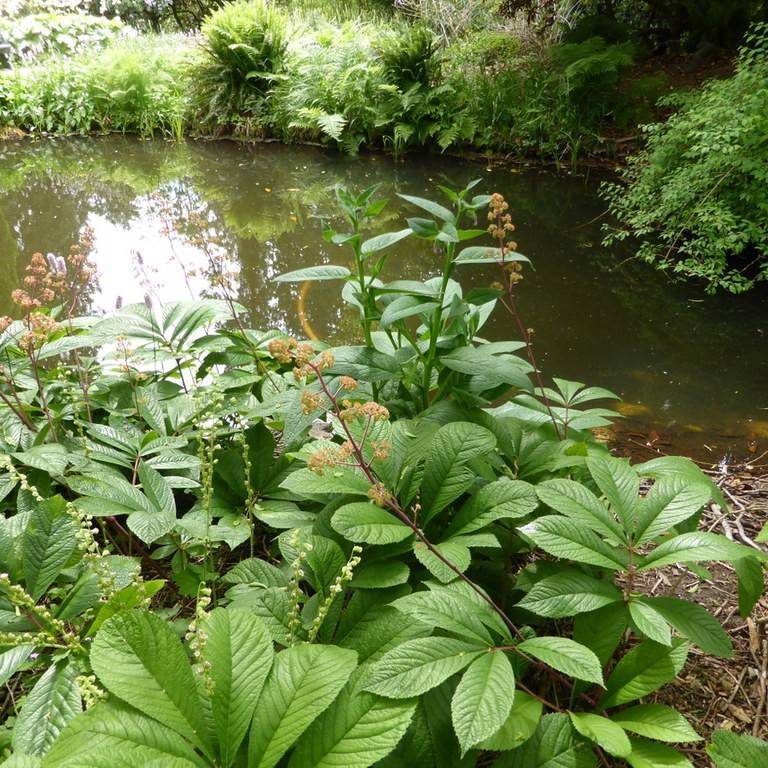
Elderberry Rodgersia
Rodgersia sambucifolia
Overview
Elderberry Rodgersia earns its common name from its large, pinnately compound leaves that closely resemble those of elderberry shrubs, with serrated, textured leaflets that develop rich bronze tones in cool weather. In mid to late summer, it produces tall, branching inflorescences of tiny, star-shaped flowers that rise above the foliage, creating a soft, feathery display. It thrives in cool, moist, shaded environments, making it a popular choice for woodland gardens, bog edges, and shaded water feature borders in temperate climates.
Care Guide
Watering
Keep the soil consistently moist at all times, never allowing it to dry out completely; water deeply and frequently during hot, dry periods to prevent wilting and leaf scorch. Avoid overwatering in poorly draining soil, as this can lead to root rot, but prioritize consistent moisture for optimal growth and foliage health.
Light
Grow best in partial to full shade, with protection from intense midday sun, which can scorch the delicate leaf edges and cause foliage to fade or wilt prematurely. In cooler, mild climates with low summer sun, it can tolerate a few hours of gentle morning sun to encourage more robust flowering.
Soil
Requires rich, humusy, moisture-retentive soil with a slightly acidic to neutral pH, amended with plenty of compost, leaf mold, or well-rotted manure before planting to boost organic content. Heavy clay soils are acceptable as long as they do not become waterlogged for extended periods; avoid sandy, fast-draining soils that cannot hold consistent moisture.
Fertilizer
Apply a balanced, slow-release granular fertilizer in early spring as new growth emerges, working it gently into the top layer of soil around the base of the plant without disturbing the shallow root system. Supplement with a diluted liquid organic fertilizer once a month during the active growing season if foliage appears pale or growth is stunted, avoiding overfertilization which can lead to weak, floppy stems.
Temperature
Thrives in cool temperate climates with average summer temperatures between 60-75°F (15-24°C), and is hardy in USDA zones 5 through 9, tolerating winter temperatures as low as -20°F (-29°C) when dormant. High summer temperatures above 85°F (29°C) combined with low humidity can cause leaf scorch, so provide extra shade and moisture during heatwaves to protect foliage.
Pruning
Remove spent flower stalks after blooming finishes in late summer if you prefer a tidier appearance, though leaving the dried seed heads can add winter interest to the garden. Cut back all dead foliage to the ground in late fall or early spring before new growth emerges to prevent overwintering pests and disease pathogens from lingering on old plant material.
Propagation
The most reliable method is division in early spring just as new growth begins, carefully digging up the clump and separating the rhizomatous root system into sections with at least one healthy growing point per division, replanting immediately at the same depth. It can also be grown from fresh seed sown in containers outdoors in fall, though germination is slow and irregular, and seed-grown plants may take 2-3 years to reach mature flowering size.
Humidity
Prefers moderate to high humidity levels between 50-70%, typical of its native mountain woodland habitat; dry indoor or outdoor air can cause leaf edges to brown and crisp. In low-humidity areas, mist the foliage regularly during dry spells, or situate plants near water features to boost ambient humidity around the root zone and foliage.
Repotting
If grown in containers, repot every 2-3 years in early spring before new growth emerges, using a rich, peat-free potting mix amended with plenty of leaf mold or compost to retain moisture. Choose a wide, heavy pot to accommodate the spreading root system and prevent the plant from tipping over as it grows taller, and ensure the pot has ample drainage holes to prevent root rot.
Uses & Symbolism
Elderberry Rodgersia is primarily used as an ornamental foliage plant in shaded perennial borders, woodland gardens, and along the edges of ponds or streams, where its large, textured leaves create a dramatic contrast with smaller, finer shade plants. Its tall, airy flower plumes attract pollinators including bees and butterflies, and the dried seed heads provide visual interest in winter gardens and cut flower arrangements. It is also well-suited for erosion control on moist, shaded slopes, thanks to its dense, spreading rhizomatous root system.
Diseases & Pests
It is relatively pest and disease resistant when grown in suitable conditions, but can be susceptible to slugs and snails that feed on young, tender emerging foliage in spring, especially in very moist, shaded sites. Fungal leaf spots and powdery mildew can occur if air circulation is poor around the plant, or if foliage remains consistently wet for extended periods without proper drying. Root rot may develop in heavy, waterlogged soils, particularly during prolonged periods of cool, wet weather, so ensure proper soil drainage to prevent this issue.
Related plants
Other plants you might like if you grow Elderberry Rodgersia.