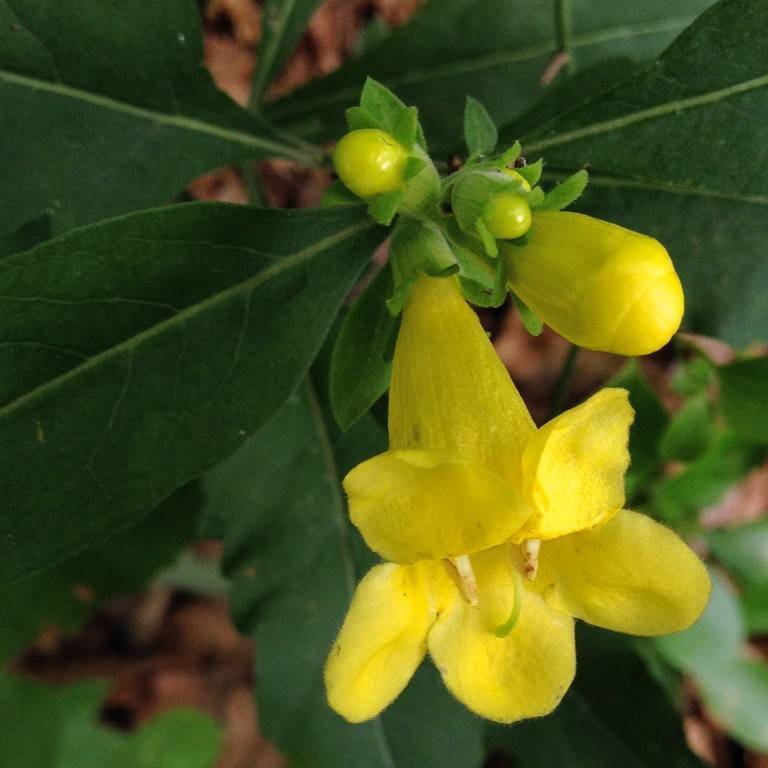
Downy False Foxglove
Aureolaria virginica
Overview
Downy false foxglove is a root hemiparasite that derives partial nutrients from the roots of oak tree hosts, though it also produces its own energy via photosynthesis. Its soft, fuzzy, lance-shaped leaves line upright, branching stems, which bear clusters of pendulous, 1-inch pale yellow tubular flowers from mid to late summer. This wildflower is adapted to the dappled light of deciduous forest understories, where it supports native pollinators including bumblebees and hummingbird moths.
Care Guide
Watering
Downy false foxglove prefers consistently moist, well-drained soil and requires regular watering during dry periods to prevent wilting, especially when first established. Avoid overwatering or allowing the root zone to become waterlogged, as this can cause root rot and damage the delicate parasitic root connections to host oaks. Once mature, it has moderate drought tolerance, as it accesses moisture through oak root networks.
Light
This species thrives in partial to full dappled shade, matching its native deciduous forest understory habitat. It can tolerate a few hours of direct morning sun, but harsh midday or afternoon sun will scorch its soft foliage and reduce flowering. Full shade is also tolerated, though flowering may be less abundant.
Soil
Downy false foxglove requires acidic, loamy, humus-rich soil that mimics forest floor conditions, with a pH between 4.5 and 6.0. It must be grown in proximity to oak trees (Quercus species) to form its required parasitic root connections, without which it will decline and die. Well-drained soil is critical to prevent root damage to both the false foxglove and its host.
Fertilizer
Fertilizer is generally unnecessary, as the plant draws nutrients from its oak host and forest floor organic matter. Excess nitrogen or synthetic fertilizers can disrupt the parasitic root relationship, leading to poor growth or death. A light annual topdressing of leaf mold or compost in early spring is sufficient to support healthy growth.
Temperature
It is hardy in USDA zones 3 through 8, tolerating winter lows down to -40°F (-40°C) when established. It prefers summer temperatures between 60°F and 85°F (15°C to 29°C), and will go dormant in the fall, dying back to the ground for winter. Extreme heat above 90°F (32°C) can cause foliage stress if the plant is not provided with adequate shade and moisture.
Pruning
Minimal pruning is required; spent flower spikes can be trimmed back after blooming to prevent self-seeding if desired, though self-sown seedlings are rarely aggressive. In late fall after the foliage dies back, cut stems to ground level to keep the planting area tidy and reduce overwintering pest habitat. Avoid pruning green foliage during the growing season, as this reduces the plant’s photosynthetic capacity.
Propagation
Downy false foxglove is most reliably propagated from seed, which requires 60 to 90 days of cold stratification to germinate. Sow seeds directly in fall within 3 feet of a young oak tree host, so emerging seedlings can form root connections quickly. Division of mature clumps is not recommended, as it damages the delicate parasitic root connections to the host oak, leading to high transplant mortality.
Humidity
It prefers moderate to high humidity between 50% and 70%, typical of its native forest understory habitat. Low humidity, such as in arid indoor environments, will cause foliage browning and wilting, so this plant is not suited to indoor cultivation. In dry outdoor climates, regular misting or a layer of organic mulch around the base can help maintain adequate ambient moisture.
Repotting
Repotting is not applicable for this species, as it must be grown outdoors in direct contact with oak tree roots to survive. Attempts to grow it in containers will fail unless a compatible oak sapling is planted in the same container, and even then, long-term survival is rare. Transplanted wild specimens rarely establish, as their parasitic root connections are destroyed during digging.
Uses & Symbolism
Downy false foxglove is primarily used in native pollinator gardens and woodland restoration projects, where it supports bumblebees, hummingbird moths, and specialized bee species. Its pale yellow flower spikes add subtle, natural color to shaded native plant landscapes, and it is a key component of oak ecosystem plant communities. While it contains similar cardiac glycosides to true foxglove, it is not used in modern herbal medicine due to inconsistent potency and high toxicity risk.
Diseases & Pests
Downy false foxglove is relatively pest and disease resistant, though it can be susceptible to powdery mildew in poorly ventilated, overly humid conditions. Root rot may occur if the soil is poorly drained or overwatered, damaging both the plant and its host oak’s fine root system. Aphids and spider mites may occasionally infest new foliage, though these are easily controlled with insecticidal soap or natural predator introductions.
Related plants
Other plants you might like if you grow Downy False Foxglove.