Devil's Club
Oplopanax horridus
Overview
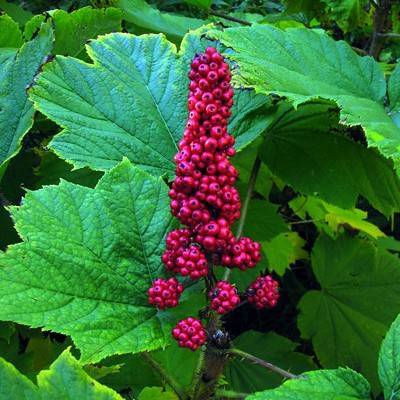
Devil's Club is a deciduous shrub recognizable by its thick, woody stems densely covered in sharp, brittle spines, and large, palmately lobed leaves that can reach 16 inches across. It thrives in moist, shaded forest understories, often growing alongside conifers in temperate rainforest habitats. In late spring to early summer, it produces dense clusters of small, creamy-white flowers, followed by bright red, berry-like drupes that are a food source for local wildlife.
Care Guide
Watering
Devil's Club requires consistently moist, well-drained soil and should never be allowed to dry out fully; water regularly to maintain even moisture, particularly during warm, dry periods. Avoid overwatering that leads to soggy, waterlogged soil, as this can cause root rot in young plants.
Light
This understory species prefers partial to full shade, mimicking its natural forest habitat where it receives dappled sunlight through tree canopies. It can tolerate a few hours of direct morning sun, but intense midday or afternoon sunlight will scorch its large leaves and stunt growth.
Soil
Plant in rich, humus-heavy, slightly acidic to neutral soil with a pH between 5.0 and 7.0, amended with organic matter such as leaf mold or compost to replicate forest floor conditions. Soil must have excellent drainage to prevent root rot, while retaining enough moisture to support the plant's high water needs.
Fertilizer
Fertilize once annually in early spring with a balanced, slow-release organic fertilizer, or top-dress with a thick layer of compost or well-rotted manure to provide steady nutrients throughout the growing season. Avoid over-fertilizing, as this can lead to excessive, weak growth that is more prone to pest infestations and damage.
Temperature
Devil's Club is cold-hardy, thriving in USDA zones 4 to 8, and can tolerate winter temperatures as low as -30°F (-34°C). It prefers cool, mild summer temperatures between 60-75°F (15-24°C), and will struggle in prolonged heat above 85°F (29°C) without extra shade and moisture.
Pruning
Prune only to remove dead, damaged, or diseased stems in late winter before new growth emerges, wearing thick protective gloves to avoid injury from the sharp spines. Avoid heavy pruning, as the plant grows slowly and will take several years to recover from excessive cutting; limit trimming to shaping only as needed.
Propagation
Devil's Club is most easily propagated from root cuttings taken in late winter while the plant is dormant, planting cuttings 2-3 inches deep in moist, shaded propagation beds. It can also be grown from fresh seed sown in fall, though seeds require 12-18 months of cold stratification to germinate, and growth from seed is very slow.
Humidity
This species prefers high humidity levels between 60-80%, typical of its native temperate rainforest habitat, and will suffer from leaf browning and drop in overly dry indoor or arid outdoor conditions. In dry climates, mist regularly or place the plant near a water feature to boost ambient humidity, or grow it in a shaded, sheltered location to retain moisture in the air around it.
Repotting
If grown in containers, repot every 2-3 years in early spring before new growth starts, using a rich, peat-based potting mix amended with perlite for drainage. Choose a wide, heavy pot to accommodate the plant's shallow, spreading root system and prevent it from tipping over as it grows larger.
Uses & Symbolism
Indigenous communities of the Pacific Northwest have long used Devil's Club root bark and inner bark for a wide range of traditional medicinal purposes, including treating respiratory ailments, arthritis, and skin conditions, and it is still harvested for herbal supplements today. Its large, textured leaves and architectural form make it a unique ornamental plant for shaded, moist native plant gardens, though its sharp spines mean it should be planted away from high-traffic areas. The red berries are eaten by bears, birds, and small mammals, making it a valuable addition to wildlife habitat gardens.
Diseases & Pests
Devil's Club is relatively pest and disease resistant in its native habitat, but may be susceptible to fungal leaf spots and powdery mildew in overly humid, poorly ventilated conditions, which can be treated with organic fungicides and by removing affected foliage. Root rot can occur if the plant is grown in heavy, poorly drained soil or overwatered, so ensuring proper soil structure and moisture levels is critical to prevent this issue. Aphids and spider mites may occasionally infest new growth, especially on stressed plants, and can be controlled with insecticidal soap or neem oil sprays.
Related plants
Other plants you might like if you grow Devil's Club.