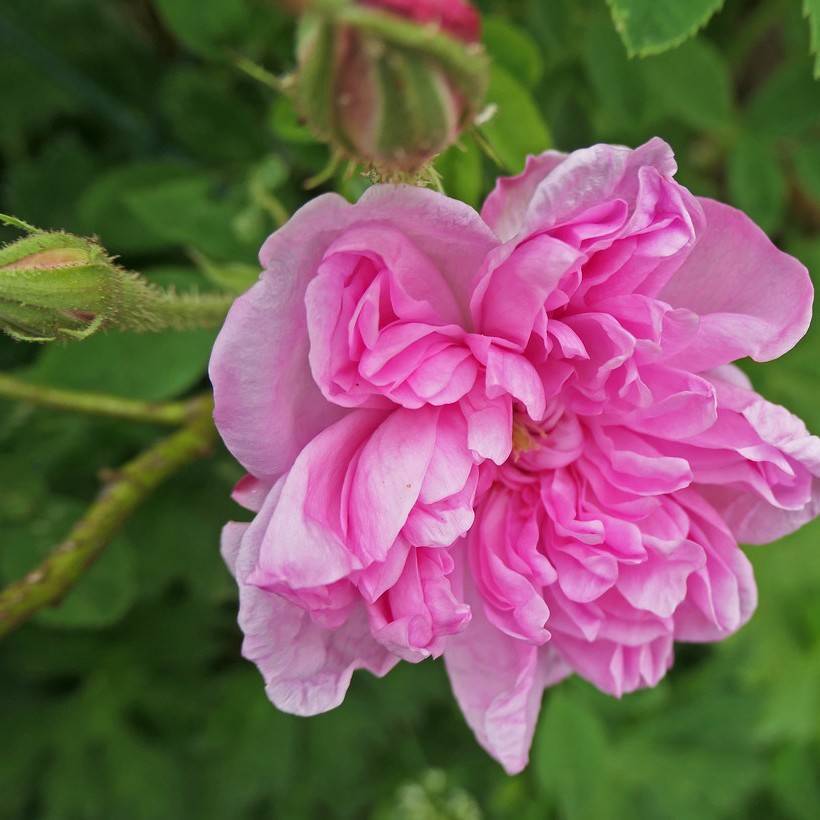
Damask Rose
Rosa × damascena
Overview
The Damask rose is a deciduous shrub with arching, thorny stems and matte, gray-green pinnate leaves, celebrated globally for its intense, sweet, heady floral fragrance. It produces clusters of double, soft pink to light crimson blooms once annually in summer, though repeat-blooming cultivars are also widely cultivated. Believed to have been grown for over 2,000 years, it is the primary commercial rose species used for rose oil, rose water, and rose absolute production across Bulgaria, Turkey, Iran, and Morocco.
Care Guide
Watering
Water deeply once or twice weekly during active growth, allowing the top 1-2 inches of soil to dry out between waterings to prevent root rot, and reduce frequency in winter dormancy. Avoid overhead watering to minimize fungal disease risk, directing water at the base of the shrub instead.
Light
Plant in full sun, receiving a minimum of 6 hours of direct, unfiltered sunlight daily to support robust bloom production and strong, disease-resistant growth. It can tolerate very light partial shade, but reduced light will lead to fewer flowers and increased susceptibility to fungal issues.
Soil
Grows best in fertile, loamy, well-drained soil with a slightly acidic to neutral pH between 6.0 and 7.0. Amend heavy clay or sandy soils with well-rotted compost or aged manure before planting to improve structure, nutrient content, and drainage.
Fertilizer
Apply a balanced, slow-release rose fertilizer in early spring as new growth emerges, followed by a second application of phosphorus-rich fertilizer just before bud break to support abundant blooms. Stop fertilizing 6-8 weeks before the first expected frost to avoid stimulating tender new growth that will be damaged by cold temperatures.
Temperature
Thrives in temperate climates with average summer temperatures between 60-85°F (15-29°C), and requires a period of winter dormancy with temperatures between 20-45°F (-7-7°C) to produce blooms the following season. It is cold hardy to USDA zone 5, tolerating winter lows down to -20°F (-29°C) when planted in a sheltered location with winter mulch protection.
Pruning
Prune in late winter or early spring while the shrub is still dormant, removing dead, diseased, or crossing branches to improve air circulation through the canopy. Cut back remaining healthy stems by one-third to one-half their length to encourage vigorous new growth and abundant summer blooms, and deadhead spent flowers during the blooming season to tidy the plant.
Propagation
Most commonly propagated via hardwood cuttings taken from mature, dormant stems in late fall or winter, rooted in well-drained potting mix under consistent moisture and indirect light. It can also be grafted onto hardy rose rootstock for improved disease resistance and adaptability to poorer soil conditions, though grafted plants may produce root suckers that require removal.
Humidity
Prefers moderate humidity levels between 40-60%, with good air circulation to prevent fungal leaf diseases like black spot and powdery mildew in higher humidity conditions. It can tolerate brief periods of low humidity, but prolonged dry air may lead to leaf browning and reduced flower fragrance.
Repotting
If grown in containers, repot every 2-3 years in late winter during dormancy, moving to a pot one size larger with fresh, fertile, well-drained potting mix amended with compost. Trim back any circling or damaged roots during repotting to encourage healthy root growth, and water thoroughly after repotting to settle the soil around the root ball.
Uses & Symbolism
Damask rose petals are the primary raw material for high-grade rose oil, rose water, and rose absolute, used extensively in perfumery, cosmetics, and aromatherapy products. Edible petals are used to flavor desserts, beverages, confections, and savory dishes across Middle Eastern, South Asian, and Mediterranean cuisines, while dried petals are used in herbal teas, potpourris, and traditional herbal remedies for mild anti-inflammatory and mood-supporting properties. It is also grown as an ornamental landscape shrub for its attractive blooms and iconic fragrance in cottage and heritage gardens.
Diseases & Pests
The most common diseases affecting Damask roses are fungal infections including black spot, powdery mildew, and rust, which thrive in damp, poorly ventilated conditions and can be prevented by proper spacing, avoiding overhead watering, and regular fungicidal treatments if needed. Common pests include aphids, spider mites, thrips, and Japanese beetles, which feed on new growth and petals, and can be controlled with insecticidal soap, neem oil, or targeted organic pest management methods. Root rot may occur in waterlogged, poorly drained soil, so ensuring proper soil structure and avoiding overwatering is critical for long-term plant health.
Related plants
Other plants you might like if you grow Damask Rose.