Cascara
Frangula purshiana
Overview
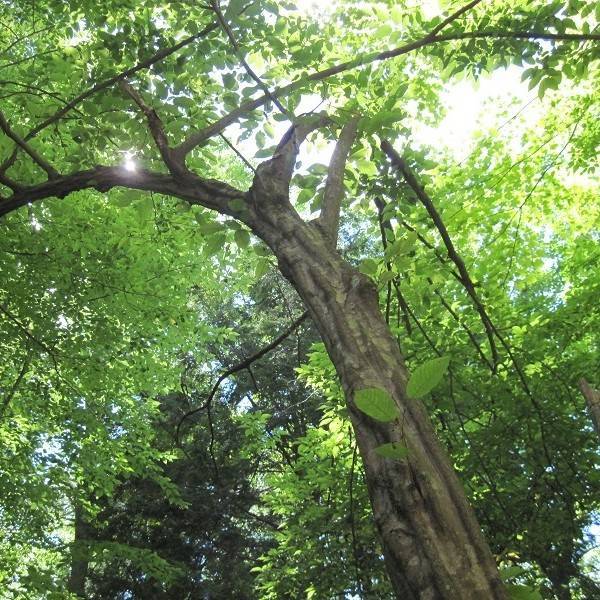
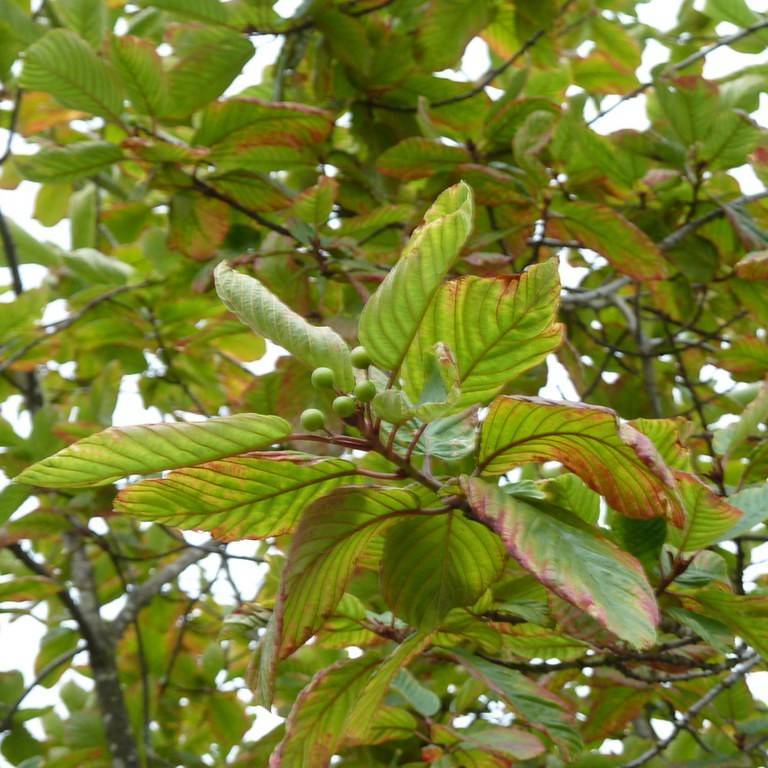
Cascara, also called cascara sagrada, is a slow-growing deciduous woody plant native to the moist forests and riparian zones of western North America. Its smooth, gray-brown bark has been harvested for centuries as a natural laxative, though unregulated harvest has led to population declines in some wild areas. The plant produces clusters of small, pale green flowers in spring, followed by dark purple-black berries that are a food source for local bird and wildlife species.
Care Guide
Watering
Cascara prefers consistently moist, well-drained soil, though it can tolerate short periods of drought once established. Water deeply every 7–10 days during dry periods, reducing frequency in winter when the plant is dormant. Avoid overwatering or allowing soil to become waterlogged, as this can lead to root rot.
Light
It thrives in partial shade to full sun, with younger plants benefiting from dappled shade to prevent leaf scorch in hot, dry climates. Mature specimens can tolerate full sun if soil moisture is maintained, but will grow more vigorously in partial shade conditions.
Soil
Cascara grows best in loamy, slightly acidic to neutral soil with a pH between 5.5 and 7.0, though it can adapt to sandy or clay soils as long as drainage is adequate. Amend heavy clay soils with organic matter such as compost or leaf mold to improve structure and drainage before planting.
Fertilizer
Fertilize young cascara plants annually in early spring with a balanced, slow-release 10-10-10 fertilizer to support healthy root and foliage growth. Mature plants rarely need supplemental fertilization, as they can obtain sufficient nutrients from organic matter in native forest soils. Over-fertilization can lead to excessive, weak foliage growth that is prone to pest damage.
Temperature
It is adapted to cool, temperate climates, with a hardiness range of USDA zones 4 through 8. It can tolerate minimum temperatures as low as -30°F (-34°C) when dormant, but new spring growth may be damaged by late frost events. In areas with hot summers, provide extra shade and moisture to prevent heat stress.
Pruning
Prune cascara in late winter while the plant is dormant to remove dead, damaged, or crossing branches, and to maintain a desired shape. Avoid heavy pruning, as this can stimulate excessive suckering from the root system. Do not harvest bark from living plants, as this can girdle and kill the specimen.
Propagation
Cascara is most commonly propagated from seed, which requires 90–120 days of cold stratification to break dormancy before sowing in moist potting mix. It can also be propagated from softwood cuttings taken in early summer, treated with rooting hormone, and kept in high humidity until roots form. Suckers from established root systems can be carefully dug up and transplanted in early spring for faster establishment.
Humidity
It prefers moderate to high humidity levels between 50% and 70%, typical of its native forest and riparian habitats. In dry, low-humidity environments, mist young plants occasionally or place a tray of water near the base to raise surrounding humidity. Mature plants are more tolerant of temporary low humidity conditions as long as soil moisture is sufficient.
Repotting
Cascara is rarely grown in containers long-term, as its deep taproot and large mature size make it unsuitable for pot culture. If growing a young specimen in a pot, repot every 2–3 years in early spring before new growth emerges, using a well-draining, loamy potting mix. Once the plant reaches 3–4 feet tall, transplant it to a permanent outdoor location to accommodate its root system.
Uses & Symbolism
Historically, dried aged cascara bark has been used as a gentle, stimulant laxative in both traditional Indigenous medicine and modern pharmaceutical products, though it is not recommended for long-term use. Ecologically, its berries provide food for songbirds, grouse, and small mammals, while its foliage supports native pollinator species. It is also planted as an ornamental shade tree or riparian buffer plant in native landscape restorations within its natural range.
Diseases & Pests
Cascara is relatively pest-resistant, but may be susceptible to aphid infestations on new growth, which can be controlled with insecticidal soap or horticultural oil. Fungal leaf spot and powdery mildew may occur in overly moist, poorly ventilated conditions, and can be prevented by providing adequate spacing between plants and avoiding overhead watering. Root rot can develop in waterlogged, heavy clay soils, so proper site selection with good drainage is critical for long-term health.
Related plants
Other plants you might like if you grow Cascara.