Cardinal Flower
Lobelia cardinalis
Overview
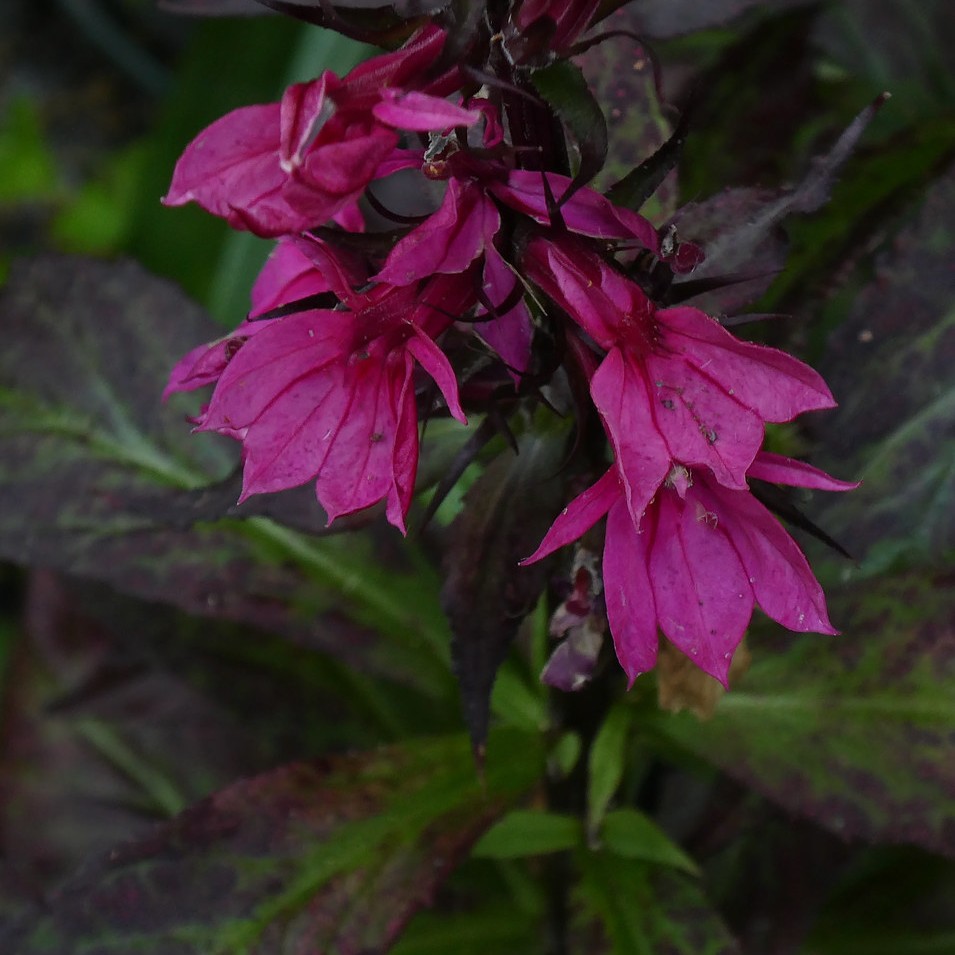
Named for the bright red robes worn by Roman Catholic cardinals, this herbaceous perennial produces tall, erect spikes of tubular, two-lipped flowers that bloom from mid-summer to early fall. It is a staple of rain gardens, bog edges, and native wildlife plantings, where its nectar-rich blooms are a primary food source for ruby-throated hummingbirds. It dies back to the ground in winter and re-emerges in spring, forming clumps that spread slowly via rhizomes over time.
Care Guide
Watering
Cardinal flower requires consistently moist, even wet soil, and will not tolerate prolonged drought; water deeply 1-2 times per week in dry periods, ensuring the root zone never fully dries out. It is well-adapted to periodically flooded sites, making it ideal for areas with poor drainage or near water features. Avoid overhead watering to reduce the risk of foliar fungal diseases.
Light
It grows best in partial shade, particularly in warmer southern climates where intense afternoon sun can scorch its leaves and dry out soil too quickly. In cooler northern regions, it can tolerate full sun as long as soil moisture remains consistently high. Too much deep shade will reduce flowering and cause stems to become leggy.
Soil
Cardinal flower prefers rich, loamy, slightly acidic to neutral soil with a pH between 6.0 and 7.0, and high organic matter content that retains moisture well. It will grow in heavy clay soils as long as they are not compacted, and can even thrive in shallow, standing water for short periods. Amending planting sites with compost or well-rotted manure before planting will improve moisture retention and nutrient content.
Fertilizer
Fertilize lightly in early spring with a balanced, slow-release 10-10-10 fertilizer, taking care not to over-fertilize as this can cause excessive leaf growth and weak, floppy stems. An optional top-dressing of compost in mid-summer will provide extra nutrients to support bloom production. Avoid high-nitrogen fertilizers, which prioritize foliage over flowers.
Temperature
It is hardy in USDA zones 3 through 9, tolerating winter lows as low as -40°F (-40°C) when the root zone is insulated with a layer of mulch. Summer temperatures between 65-85°F (18-29°C) are ideal, though it can tolerate short periods of higher heat if moisture levels are adequate. In zone 9, providing afternoon shade will help protect the plant from extreme summer heat.
Pruning
Remove spent flower spikes after blooming finishes in fall to encourage a light secondary bloom in milder climates, and to prevent unwanted self-seeding if desired. Cut back all dead foliage to the ground in late fall or early spring before new growth emerges to reduce overwintering pest and disease spores. Thin out crowded clumps every 2-3 years in early spring to improve air circulation.
Propagation
Cardinal flower can be propagated by seed, division, or stem cuttings. Seeds require 60 days of cold stratification to germinate, and can be sown directly outdoors in fall or started indoors after refrigeration. Divide clumps in early spring just as new growth emerges, ensuring each division has a healthy section of rhizome and several growing points.
Humidity
It thrives in moderate to high humidity levels between 50-70%, common to its native wetland and riparian habitats. In dry indoor or arid outdoor environments, misting the foliage regularly or placing the plant near a water source will help maintain adequate humidity. Low humidity can cause leaf browning and reduce bloom longevity.
Repotting
For container-grown cardinal flower, repot every 1-2 years in early spring using a moisture-retentive, organic potting mix. Choose a pot with drainage holes that is 2 inches wider than the previous container to accommodate rhizome spread, and ensure the root crown is planted at the same depth as it was in the original pot. Add a layer of mulch on top of the soil to help retain moisture between waterings.
Uses & Symbolism
It is a popular choice for native plant gardens, rain gardens, bog gardens, and pollinator habitats, where its bright red blooms attract hummingbirds, butterflies, and native bees. Historically, Indigenous North American communities used small, carefully prepared doses of the plant to treat respiratory and digestive ailments, though its toxicity makes modern medicinal use not recommended. Its long, sturdy flower spikes also make it a striking cut flower for fresh arrangements.
Diseases & Pests
Cardinal flower is susceptible to common foliar fungal diseases including powdery mildew, leaf spot, and rust, particularly in areas with poor air circulation or excessive overhead watering. Common pests include aphids, spider mites, and slugs, which feed on young foliage and tender stems, especially in cool, moist conditions. Root rot can occur if the plant is grown in poorly drained soil that stays saturated for extended periods.
Related plants
Other plants you might like if you grow Cardinal Flower.
%22%2F%3E%0A%20%20%20%20%20%20%3Ccircle%20cx%3D%22920%22%20cy%3D%22180%22%20r%3D%2290%22%20fill%3D%22%23cfe8d5%22%2F%3E%0A%20%20%20%20%20%20%3Cpath%20d%3D%22M600%20590c-90-180-215-255-310-280%200%20165%20118%20296%20270%20296h40z%22%20fill%3D%22%2379b88e%22%2F%3E%0A%20%20%20%20%20%20%3Cpath%20d%3D%22M600%20590c80-150%20198-212%20302-228-8%20142-123%20255-270%20255h-32z%22%20fill%3D%22%235c9f73%22%2F%3E%0A%20%20%20%20%20%20%3Cpath%20d%3D%22M600%20610V360%22%20stroke%3D%22%234f8c64%22%20stroke-width%3D%2218%22%20stroke-linecap%3D%22round%22%2F%3E%0A%20%20%20%20%20%20%3Ctext%20x%3D%22600%22%20y%3D%22700%22%20text-anchor%3D%22middle%22%20font-family%3D%22Arial%2C%20sans-serif%22%20font-size%3D%2244%22%20fill%3D%22%23365c45%22%3E%0A%20%20%20%20%20%20%20%20Plant%20image%20coming%20soon%0A%20%20%20%20%20%20%3C%2Ftext%3E%0A%20%20%20%20%3C%2Fsvg%3E%0A%20%20)