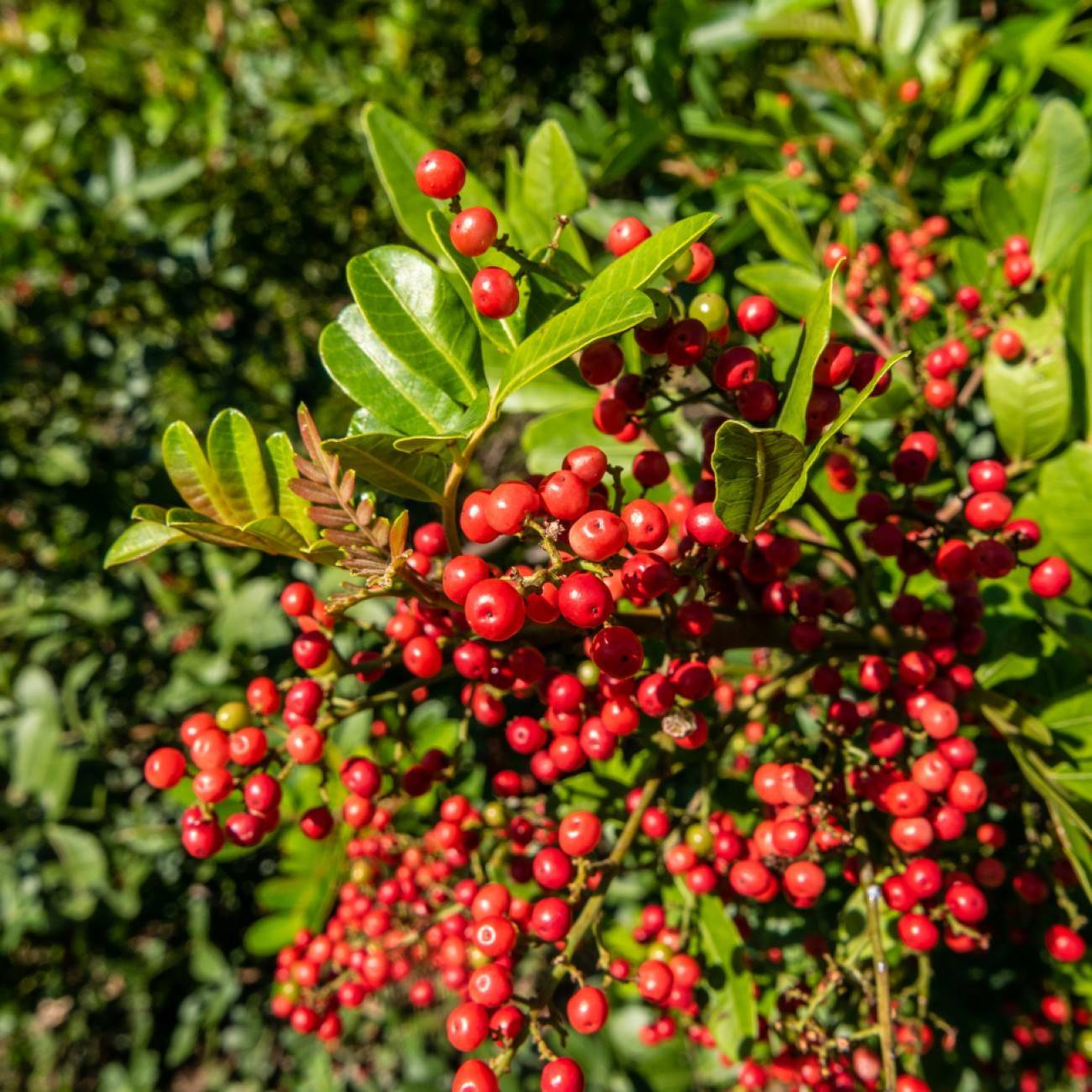
Brazilian Peppertree
Schinus terebinthifolia
Overview
The Brazilian Peppertree, also called Christmasberry or Florida Holly, features glossy, compound dark green leaves that emit a peppery aroma when crushed. Female plants produce dense clusters of small, round bright red berries in fall and winter that persist for months, providing winter interest. While prized for its drought tolerance and attractive foliage, it is listed as a noxious invasive species in parts of the southern U.S., Hawaii, and Oceania, where it outcompetes native vegetation.
Care Guide
Watering
Water newly planted Brazilian Peppertrees regularly for the first year to establish a deep root system, keeping soil consistently moist but not waterlogged. Once established, it is highly drought-tolerant, requiring only occasional watering during extended dry periods, and overwatering increases risk of root rot.
Light
Thrives in full sun for maximum foliage density and berry production, tolerating a minimum of 6 hours of direct sunlight daily. It can survive in partial shade, but growth will be leggier and berry yields will be significantly reduced.
Soil
Adaptable to a wide range of soil types including sandy, loam, clay, and limestone-based soils, as long as drainage is adequate. It tolerates mildly acidic to alkaline pH levels between 5.5 and 7.5, and even handles occasional saline soils in coastal regions.
Fertilizer
Feed young trees in early spring with a balanced slow-release 10-10-10 fertilizer to support vigorous growth. Mature specimens generally do not require regular fertilization, though a light application of low-nitrogen fertilizer can be applied in spring if growth appears stunted.
Temperature
Grows best in warm temperate to tropical climates, thriving in average temperatures between 60–85°F (16–29°C). It can tolerate light frost down to 20°F (-7°C) for short periods, but prolonged freezes will damage foliage and kill young branches.
Pruning
Prune in late winter before new growth emerges to shape the tree, remove dead or crossing branches, and maintain a desired size. Regular pruning also prevents the tree from spreading aggressively, as it readily resprouts from cut stumps, so all trimmed material should be disposed of properly to avoid unintended propagation.
Propagation
Most commonly propagated from fresh seed, which germinates readily within 2–4 weeks when sown in moist, well-draining potting mix; seeds are often dispersed by birds that eat the berries. It can also be propagated from semi-hardwood cuttings taken in summer, dipped in rooting hormone and kept in high humidity until roots develop.
Humidity
Tolerates a wide range of humidity levels, from arid semi-desert conditions to humid tropical environments, thriving in average humidity between 40–80%. It has no special humidity requirements when grown in suitable climates, though it may develop foliar issues in persistently foggy, high-humidity areas with poor air circulation.
Repotting
Brazilian Peppertrees are rarely grown in containers long-term, but young specimens intended for outdoor planting can be repotted annually in spring until they are planted in the ground. Use a well-draining general potting mix and choose a container 2 inches larger in diameter than the current one to accommodate root growth.
Uses & Symbolism
Ornamentally, it is planted as a drought-tolerant landscape tree, hedge, or screen in warm climates, valued for its evergreen foliage and vibrant winter berries. Historically, extracts from its bark, leaves, and berries have been used in traditional South American medicine to treat wounds, inflammation, and respiratory ailments, though medicinal use is not widely recommended today. In some regions, its dried berries are occasionally used as a spice substitute for black pepper, though they have a milder, fruitier flavor.
Diseases & Pests
Brazilian Peppertrees are relatively pest-resistant, but they may be susceptible to scale insects, spider mites, and whiteflies, which can be controlled with horticultural oil or insecticidal soap. Fungal diseases including powdery mildew, root rot, and leaf spot can occur in overly moist, poorly drained conditions or areas with limited air circulation. In its invasive range, it has few natural predators, allowing it to spread rapidly and outcompete native plant species.
Related plants
Other plants you might like if you grow Brazilian Peppertree.
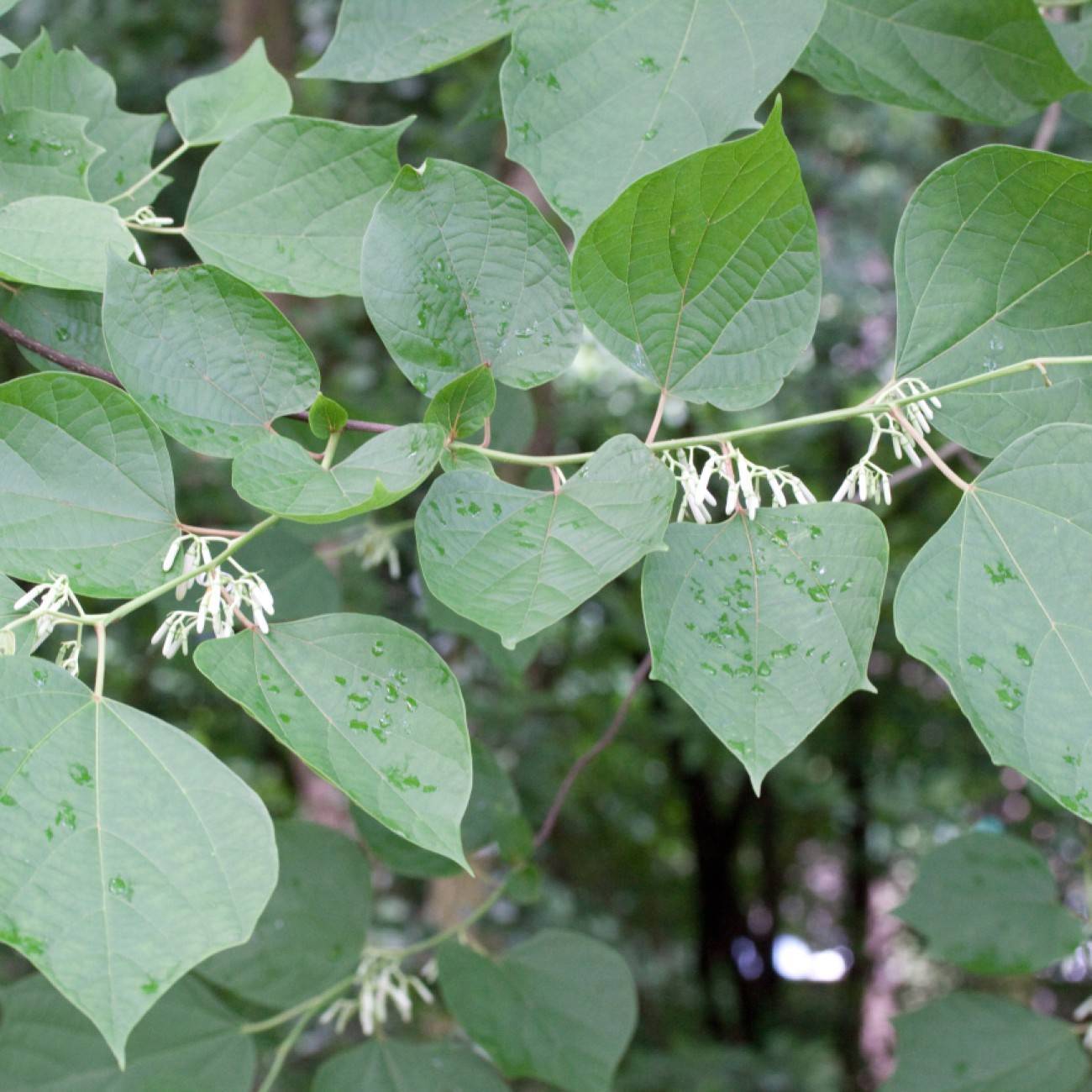
alangium
Alangium platanifolium var. macrophyllum
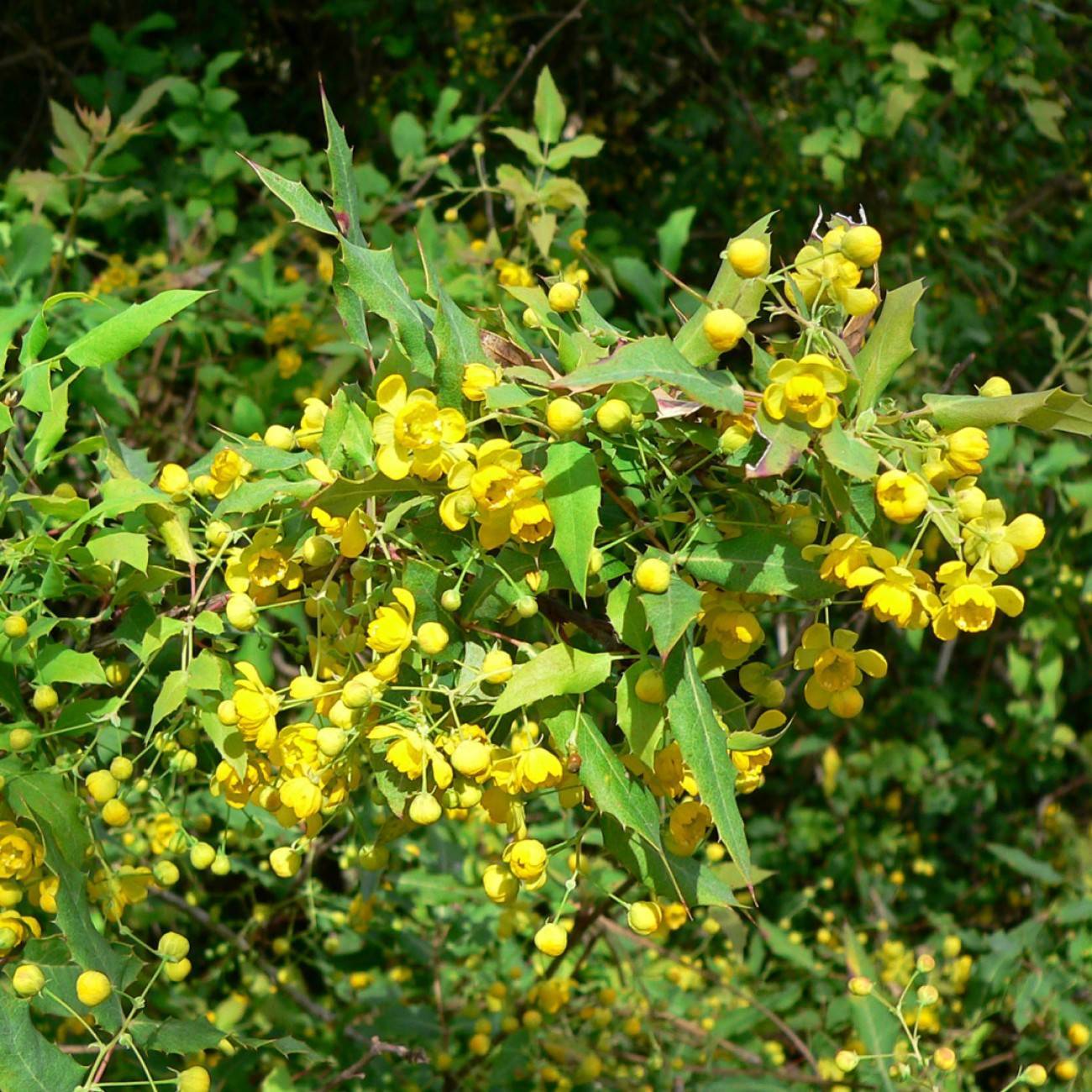
barberry
Berberis 'Soft Caress'
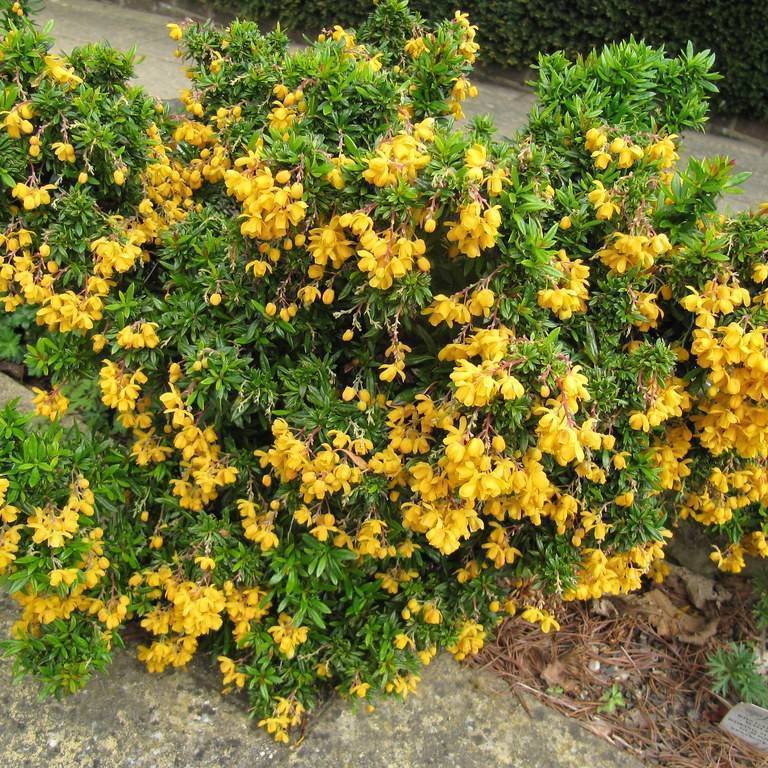
barberry
Berberis stenophylla 'Corallina Compacta'
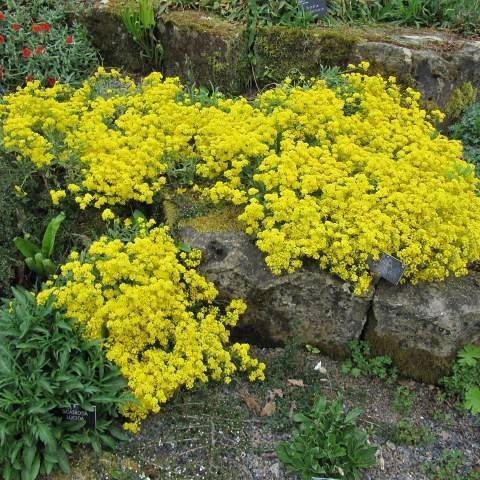
basket of gold
Aurinia saxatilis 'Gold Dust'
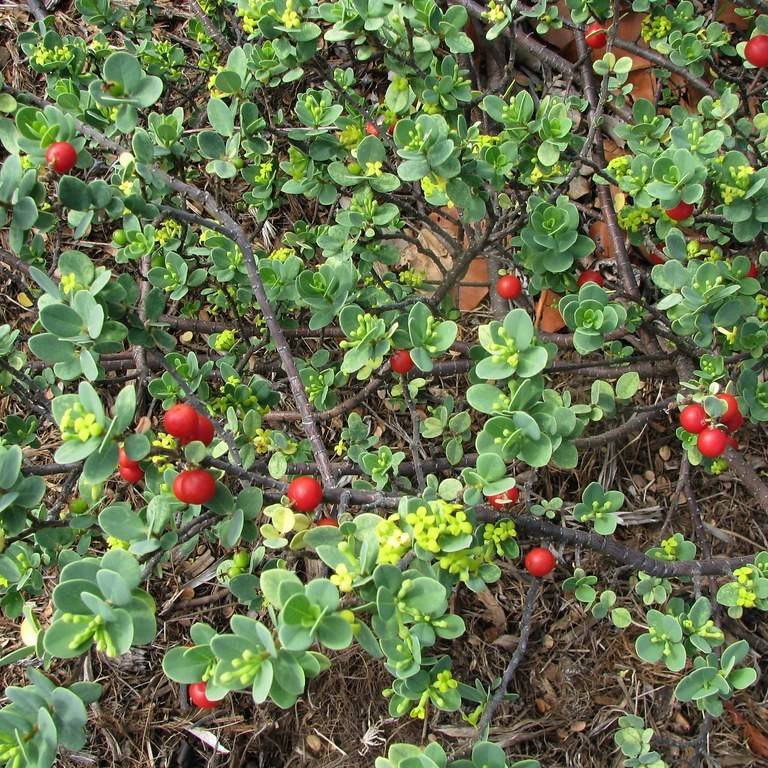
bearberry
Arctostaphylos uva-ursi 'Wood's Red'
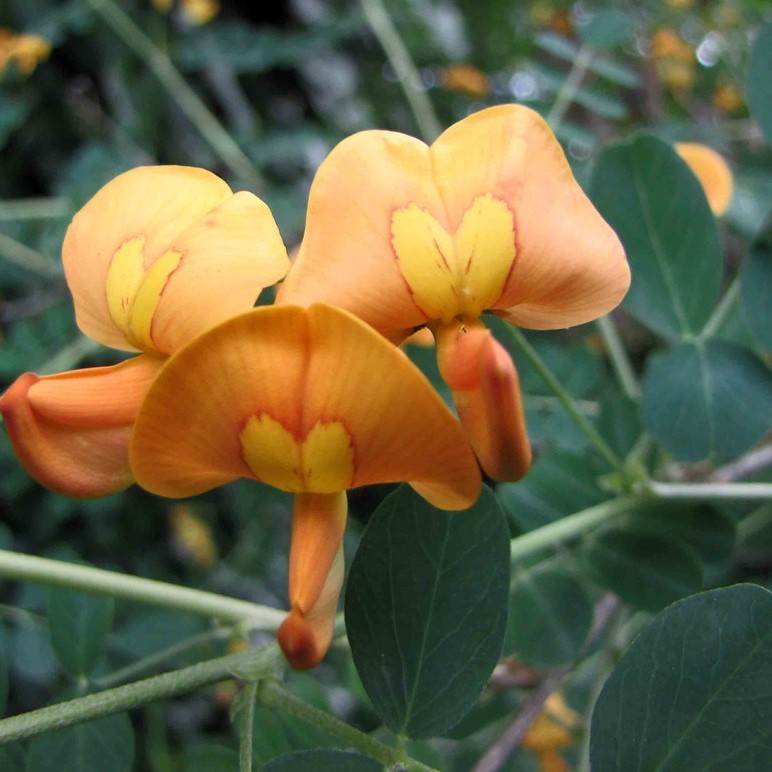
bladder senna
Colutea media
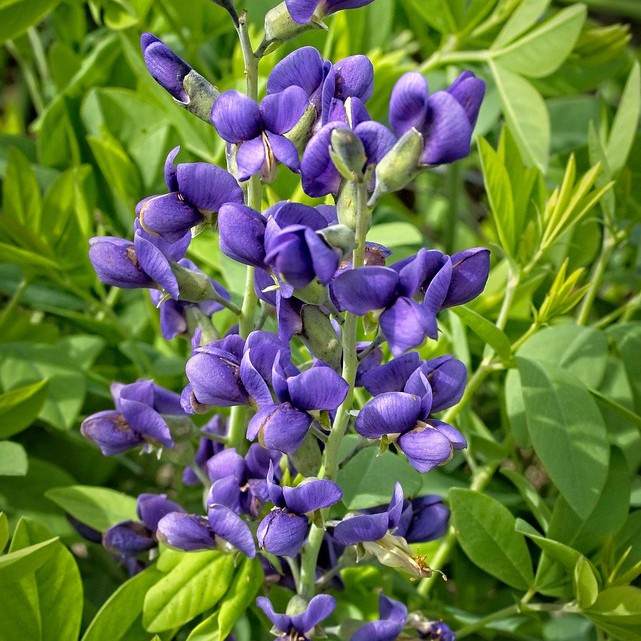
blue false indigo
Baptisia australis
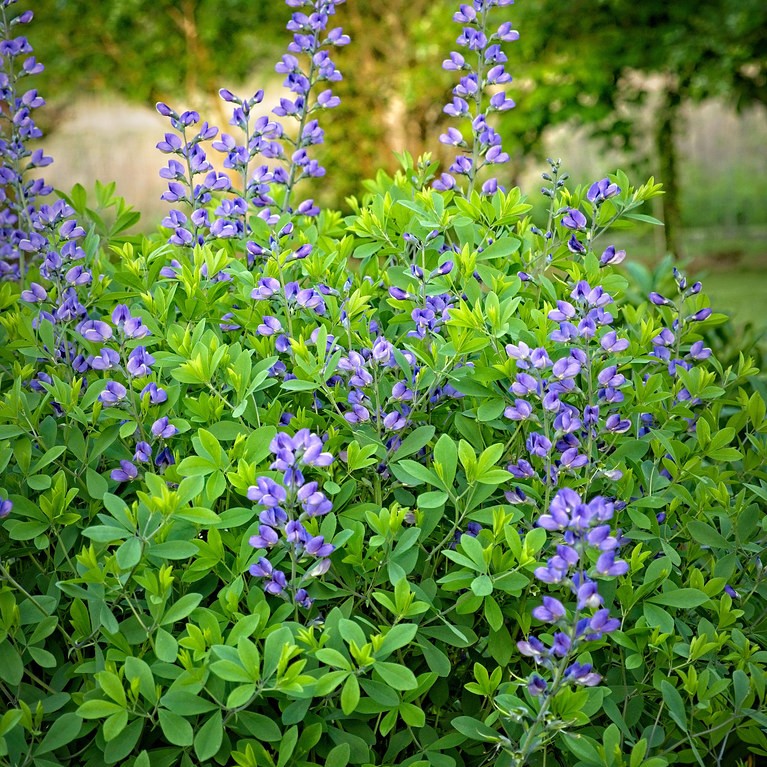
blue false indigo
Baptisia australis var. minor