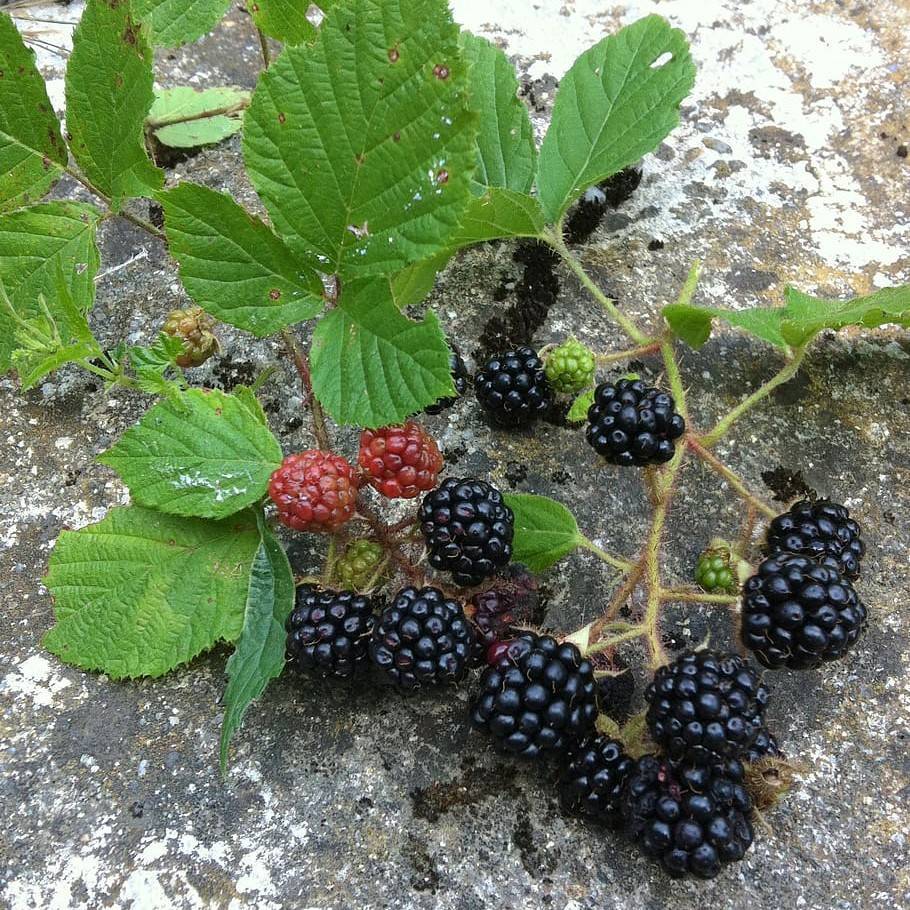
Blackberry
Rubus fruticosus agg.
Overview
Blackberry is a bramble shrub in the Rubus genus, characterized by thorny or thornless arching canes and compound, serrated leaves. It produces white to pale pink spring flowers that develop into glossy, deep purple aggregate berries composed of tiny drupelets. Widely cultivated for its edible fruit, it also naturalizes readily in disturbed areas and provides valuable food and shelter for pollinators and birds.
Care Guide
Watering
Water blackberry plants deeply once or twice weekly during active growth, keeping soil consistently moist but not waterlogged to prevent root rot. Reduce watering frequency in fall and winter when the plant is dormant, only supplementing during extended dry periods.
Light
Grow blackberry shrubs in full sun, meaning a minimum of 6 to 8 hours of direct, unfiltered sunlight daily for optimal fruit production and cane health. Plants grown in partial shade will produce fewer berries and may develop weak, leggy growth that is more susceptible to pest damage.
Soil
Blackberries thrive in well-drained, loamy or sandy-loam soil with a slightly acidic pH between 5.5 and 6.5. Avoid heavy, poorly draining clay soils, as standing water will quickly kill the plant’s shallow root system. Amending heavy soil with compost or aged manure before planting improves drainage and nutrient content.
Fertilizer
Apply a balanced 10-10-10 granular fertilizer in early spring before new growth emerges, scattering it evenly around the base of the canes and watering thoroughly to work it into the soil. A second light application of nitrogen-rich fertilizer can be applied in late spring to support cane growth, but avoid fertilizing after mid-summer to prevent tender new growth that is damaged by frost.
Temperature
Blackberry plants are cold-hardy in USDA zones 5 through 9, tolerating winter temperatures as low as -10°F (-23°C) for most common cultivars. They prefer average summer temperatures between 60°F and 85°F (15°C to 29°C), and may require partial shade or extra watering during extended heatwaves above 90°F (32°C) to prevent berry sunscald.
Pruning
Prune blackberry shrubs annually to remove spent, fruit-bearing canes (called floricanes) after harvest, as these canes die after producing fruit and will not bear again. In late winter, thin out weak, damaged, or overcrowded new canes (called primocanes) to leave 4 to 6 healthy canes per plant, which improves air circulation and increases fruit yield the following season.
Propagation
Blackberries are most commonly propagated via tip layering in late summer, where the tip of a flexible primocane is bent down, buried 2 to 3 inches deep in soil, and left to root over the fall before being severed from the parent plant the following spring. They can also be propagated from root cuttings taken in late winter, cutting 3 to 4 inch sections of healthy root and planting them horizontally in potting mix until new shoots emerge.
Humidity
Blackberries tolerate a wide range of humidity levels, thriving in average temperate humidity between 40% and 70%. High humidity combined with poor air circulation increases the risk of fungal diseases like powdery mildew and anthracnose, so proper pruning and spacing between plants is critical to reduce moisture buildup around foliage. Excessively low humidity during fruit development can cause berries to dry out and drop prematurely.
Repotting
Container-grown blackberries should be repotted every 2 to 3 years in late winter while dormant, moving to a pot one size larger with fresh, well-drained potting mix amended with compost. When repotting, gently loosen tangled roots and trim any dead or rotted root sections to encourage healthy new growth. Ensure the new pot has ample drainage holes to prevent waterlogged soil, and avoid planting the crown deeper than it was in the original pot to prevent rot.
Uses & Symbolism
Blackberry fruits are widely used fresh, baked into pies, jams, and desserts, or processed into juices, wines, and preserves, valued for their sweet-tart flavor and high antioxidant, vitamin C, and fiber content. The shrubs are also planted in wildlife gardens to provide food for pollinators, birds, and small mammals, and their dense, thorny growth makes an effective natural privacy hedge or barrier. Historically, the leaves and roots have been used in herbal medicine for their astringent properties to treat minor digestive complaints and sore throats.
Diseases & Pests
Blackberries are susceptible to fungal diseases including anthracnose, powdery mildew, and botrytis fruit rot, which spread in wet, humid conditions and can be managed through proper pruning for air circulation and avoiding overhead watering. Common pests include spotted wing drosophila, aphids, spider mites, and raspberry crown borers, which feed on fruit, foliage, or cane roots and can be controlled with insecticidal soap, neem oil, or targeted pheromone traps for severe infestations. Root rot is a major issue in poorly draining soils, causing wilting, yellowing foliage, and eventual plant death, which is best prevented by planting in well-drained sites and avoiding overwatering.
Related plants
Other plants you might like if you grow Blackberry.
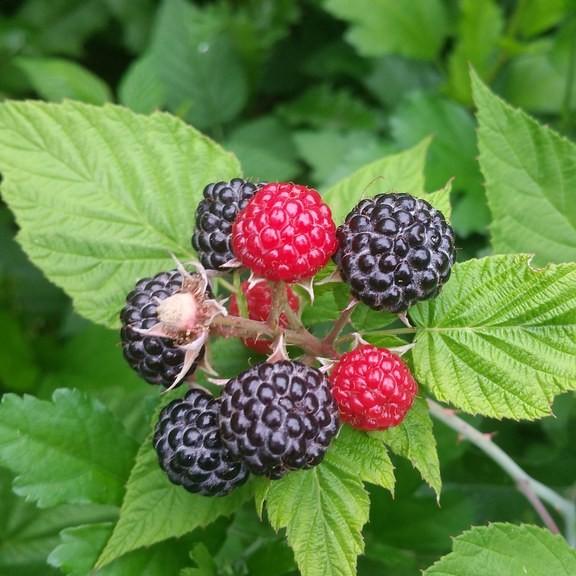
Black Raspberry
Rubus occidentalis
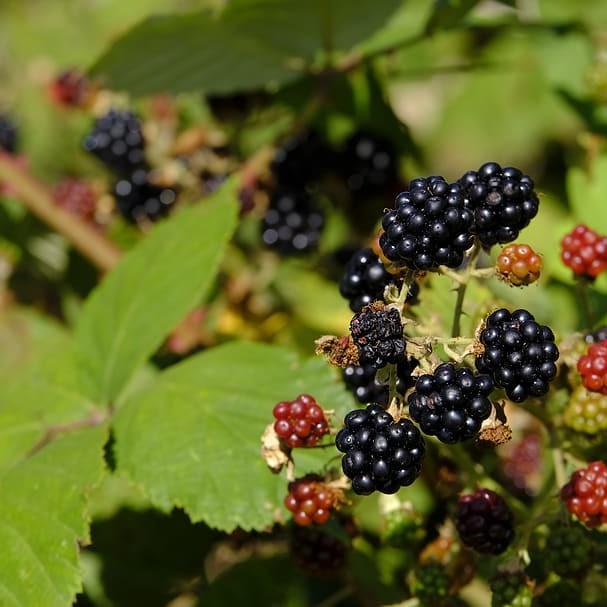
Boysenberry
Rubus ursinus × idaeus 'Boysen'
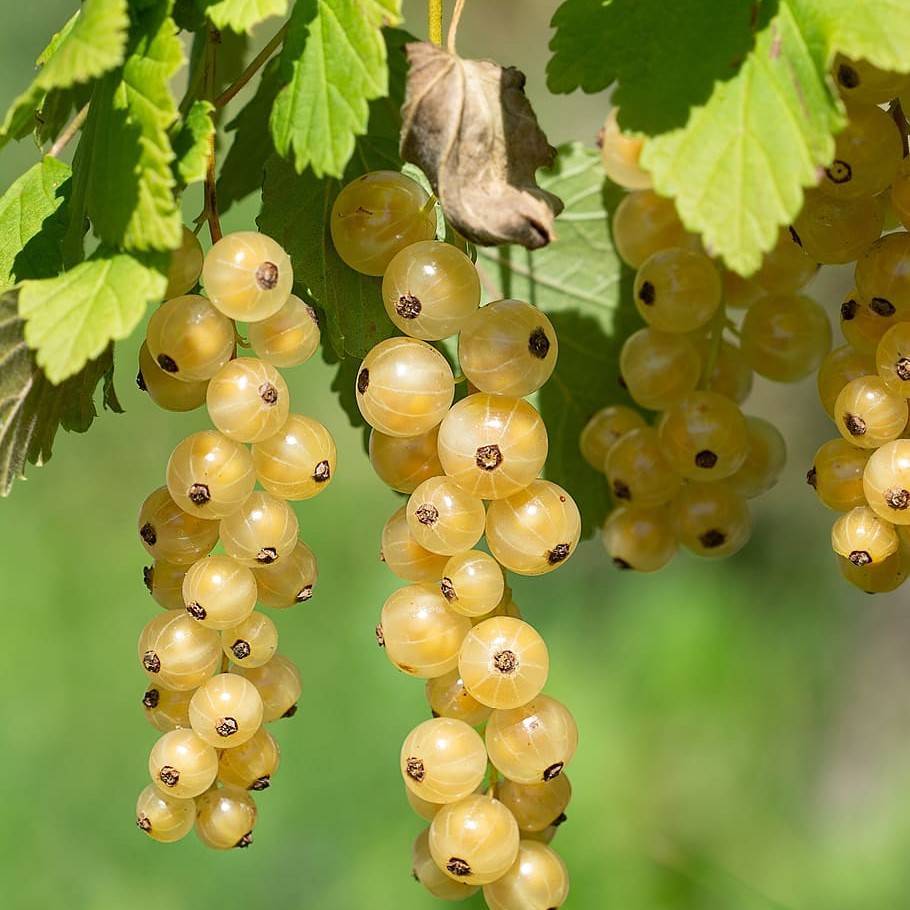
Currant
Ribes rubrum (red currant), Ribes nigrum (black currant), Ribes uva-crispa (white currant)
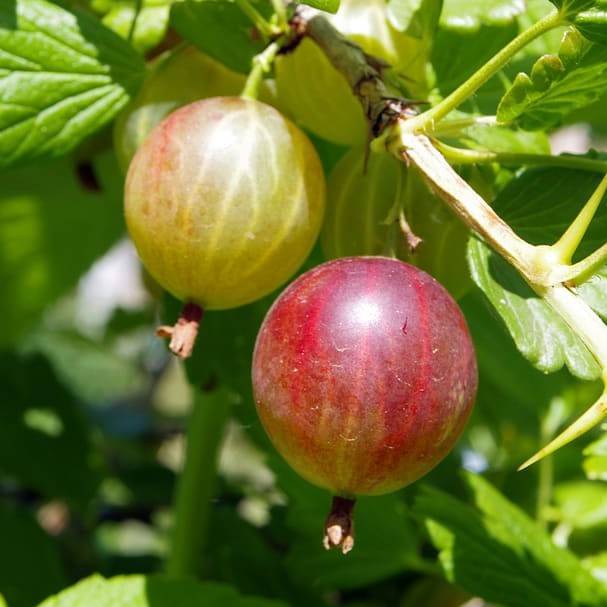
Gooseberry
Ribes uva-crispa
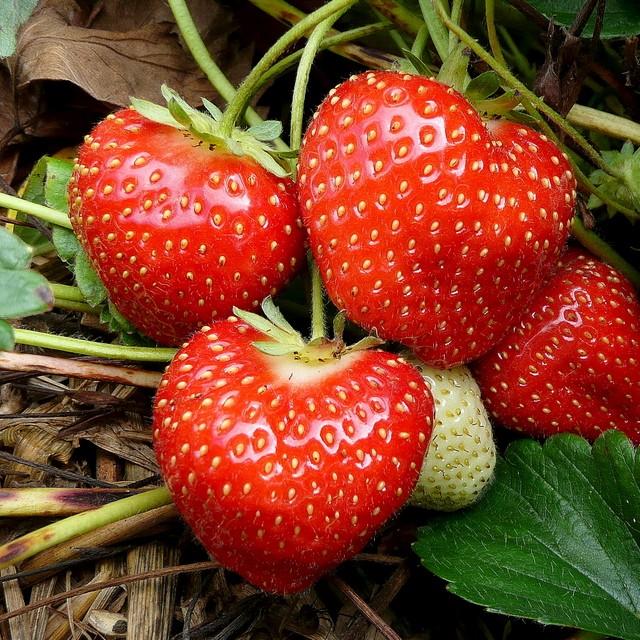
Junebearing Strawberry
Fragaria × ananassa (June-bearing cultivars)
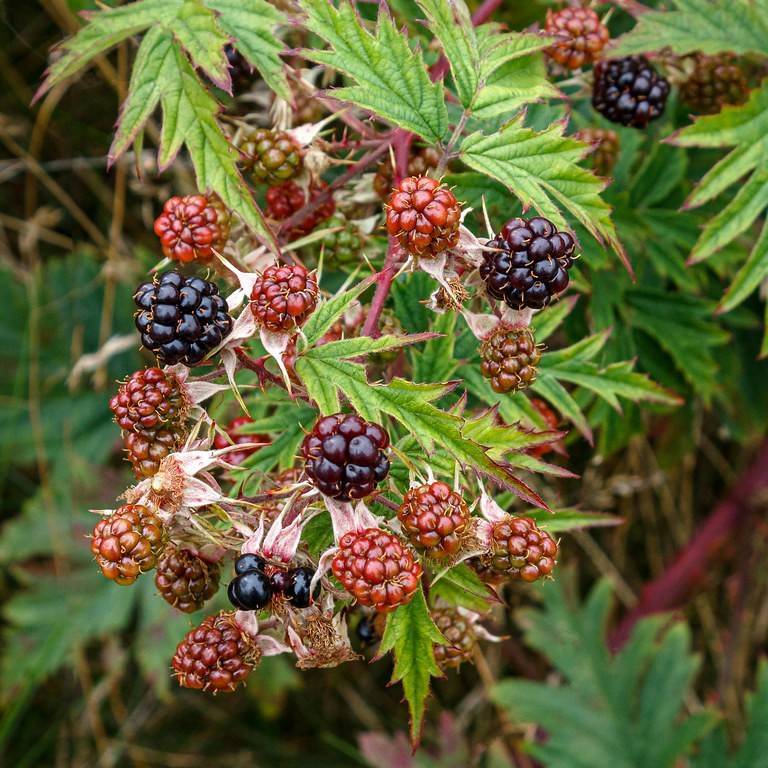
Evergreen Blackberry
Rubus laciniatus
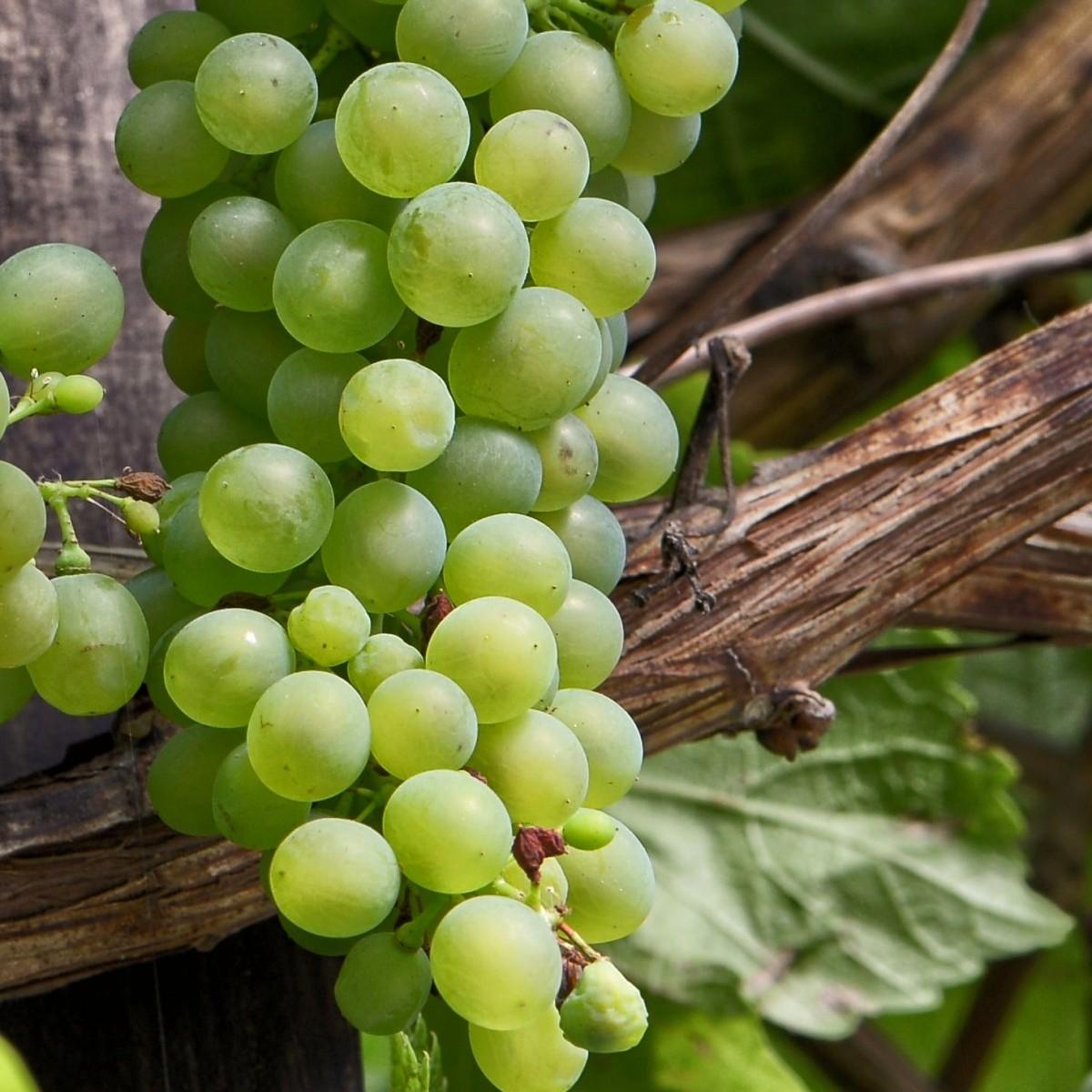
Grape
Vitis vinifera
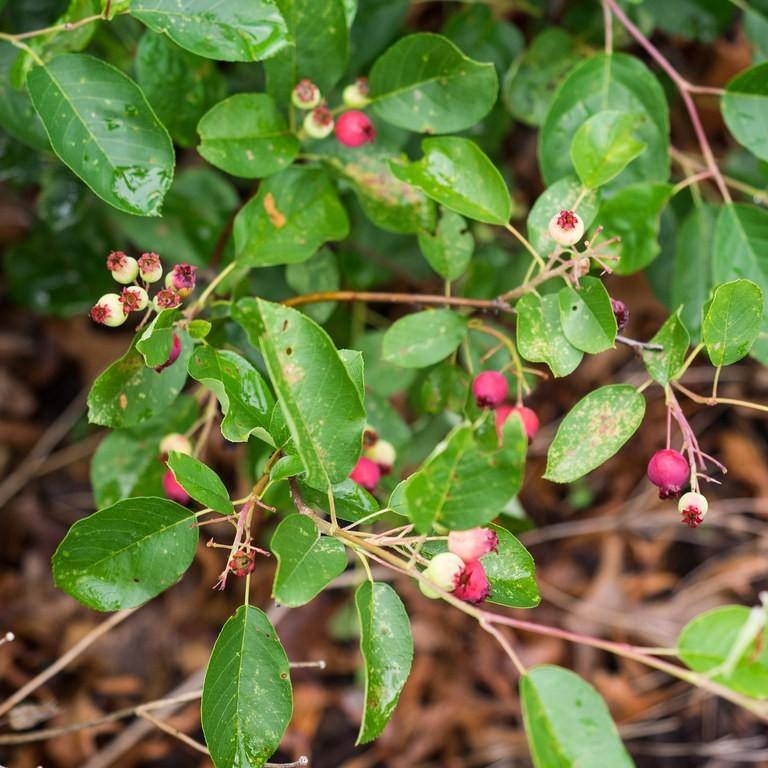
alder-leaved serviceberry
Amelanchier alnifolia 'Regent'