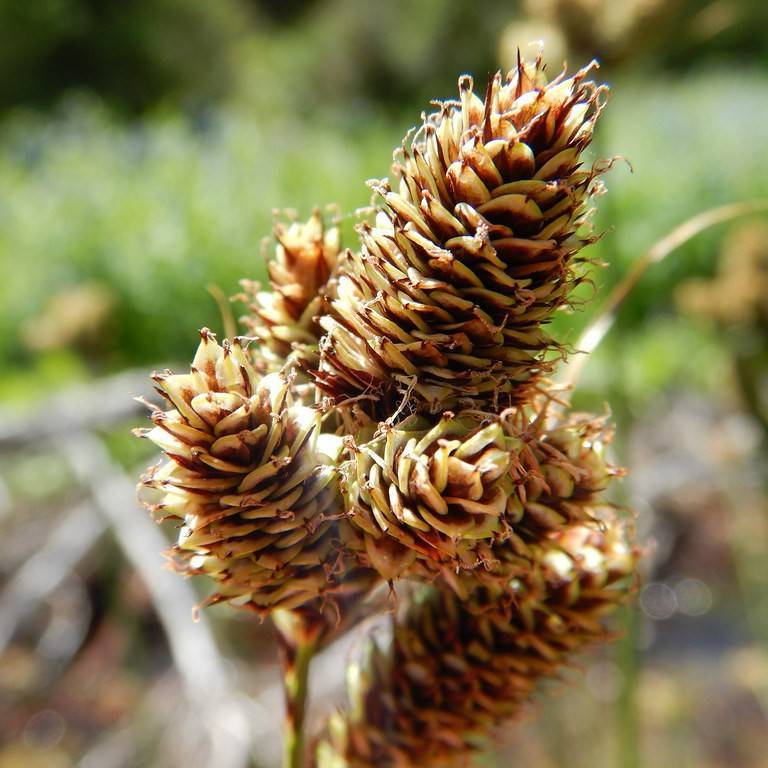
Blackened Sedge
Carex nigricans
Overview
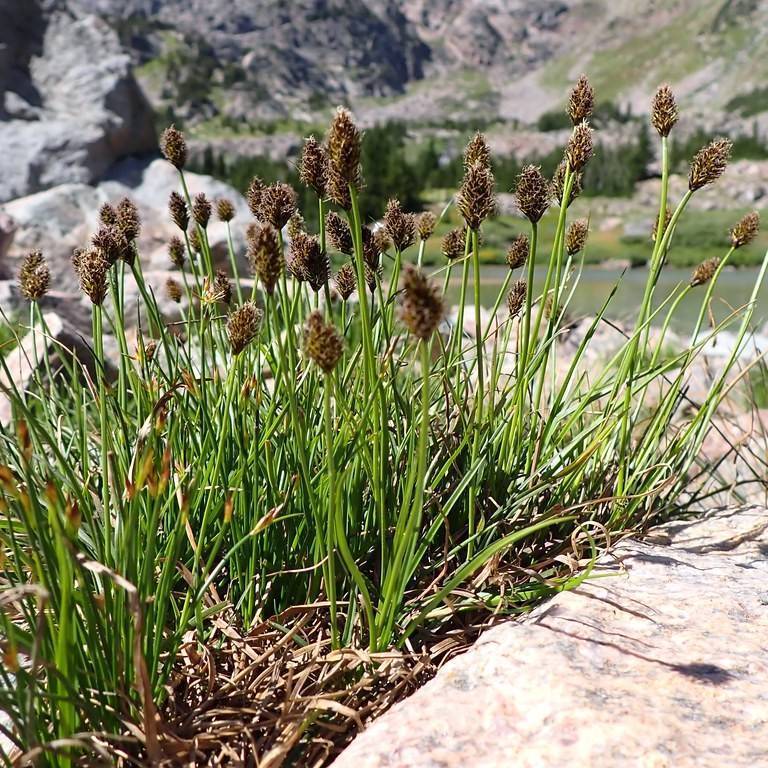
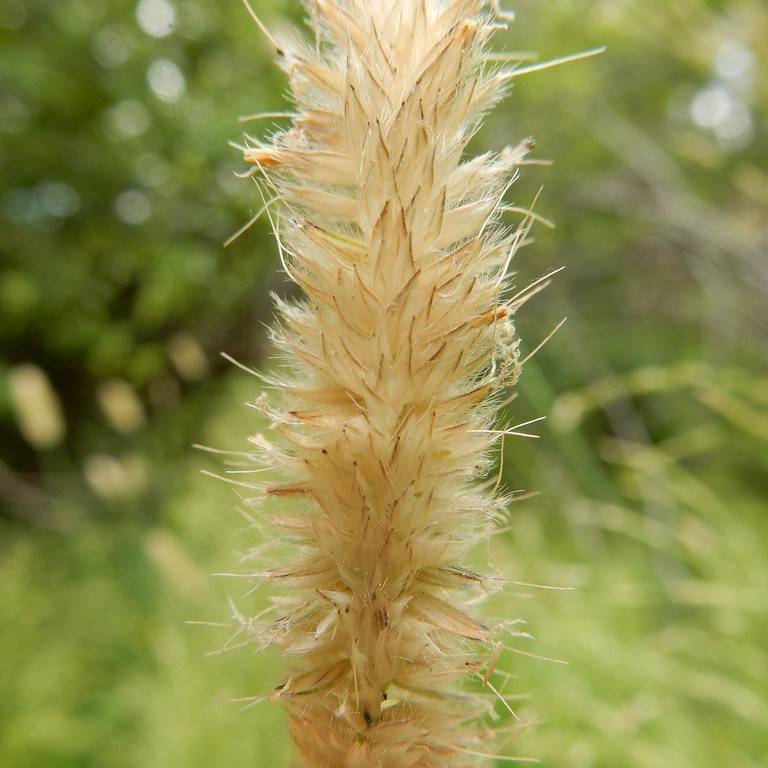
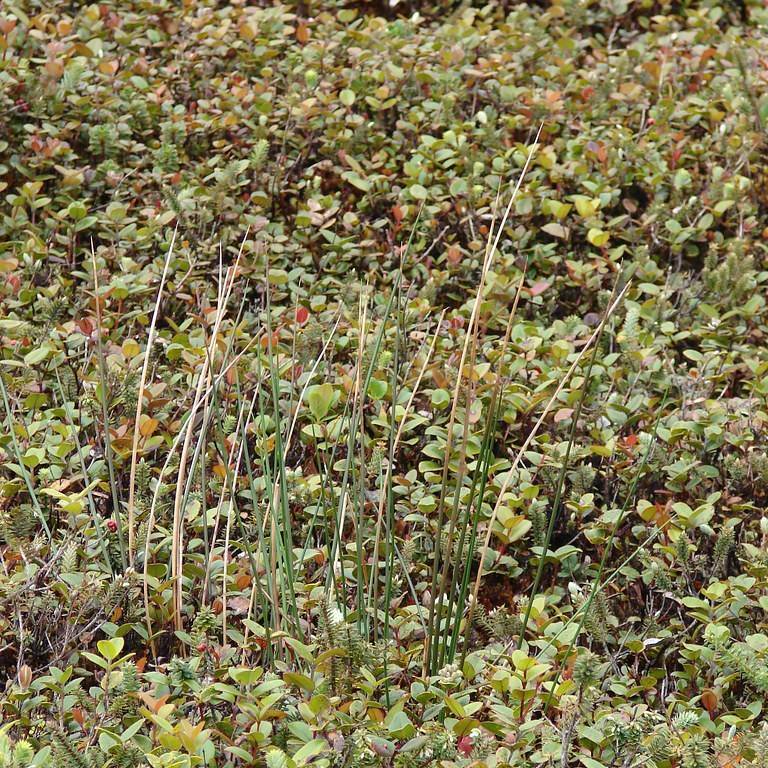
Blackened Sedge is a clumping, evergreen perennial adapted to harsh, cold alpine and arctic environments, recognized for its striking dark purple-black to black foliage that stands out against lighter rock and moss. It forms dense, spreading mats via short rhizomes, helping stabilize soil in moist, sloped areas, and produces small, inconspicuous dark brown flower spikes in late spring to early summer. Adapted to short growing seasons, it thrives in cool, wet conditions and is rarely affected by common garden pests, making it a low-maintenance choice for specialty cool-climate gardens.
Care Guide
Watering
Blackened Sedge prefers consistently moist, even wet soil, and should be watered frequently to avoid letting the root zone dry out completely, especially during warm summer months. It tolerates temporary standing water, making it suitable for rain gardens or the edges of shallow water features, but avoid prolonged submersion that can smother shallow roots. In cooler arctic or alpine conditions, natural precipitation is often sufficient, but supplemental watering may be needed in warmer temperate zones during dry spells.
Light
This species grows best in full sun in its native cool high-elevation or northern ranges, where intense sunlight is paired with cool temperatures. In warmer temperate climates, it benefits from partial afternoon shade to prevent foliage scorch and reduce moisture loss during the hottest parts of the day. It can survive in full shade, but growth will be slower and the dark foliage color may be less vibrant.
Soil
Blackened Sedge thrives in nutrient-poor, acidic to neutral sandy, loamy, or gravelly soils with excellent drainage, though it tolerates heavier wet soils better than many other ornamental sedges. It is adapted to rocky, shallow alpine soils, so it does not require deep planting beds, and can grow in crevices between rocks as long as roots can access consistent moisture. Avoid heavy, compacted clay soils that dry out completely in summer, as this will cause foliage dieback.
Fertilizer
As a species adapted to low-nutrient alpine soils, Blackened Sedge requires very little fertilization, and overfeeding can lead to leggy growth and reduced foliage color. A single light application of balanced, slow-release fertilizer in early spring, at half the recommended rate for general garden plants, is sufficient for the entire growing season. Avoid high-nitrogen fertilizers, as these will promote soft, green growth that loses the characteristic dark black pigment.
Temperature
Blackened Sedge is extremely cold hardy, tolerating winter temperatures as low as -40°F (-40°C) and thriving in USDA hardiness zones 2 through 7. It prefers cool summer temperatures below 75°F (24°C), and will struggle in prolonged heat above 85°F (29°C), often going semi-dormant in warm climates until temperatures cool in fall. It does not require winter protection in its suitable growing zones, even under heavy snow cover.
Pruning
Pruning needs are minimal for Blackened Sedge; simply trim back any dead or brown foliage in early spring before new growth emerges to keep clumps looking neat. If planted as a ground cover, you can mow it at a high setting (3-4 inches) once per year in early spring to remove winter-damaged foliage and encourage dense new growth. Avoid cutting back foliage in fall, as the evergreen leaves provide winter interest and protect the crown from cold damage.
Propagation
Blackened Sedge is most easily propagated by division in early spring, just as new growth begins to emerge; simply dig up mature clumps, split them into smaller sections with intact roots and growing points, and replant immediately in moist soil. It can also be grown from seed, which requires a 3-month cold stratification period to break dormancy, sown on the surface of moist, acidic soil in cool, bright conditions. Seed-grown plants will take 2-3 years to reach mature clumping size, while divided plants will establish and spread quickly in their first growing season.
Humidity
This species tolerates a wide range of humidity levels, from dry alpine air to moist coastal arctic conditions, as long as soil moisture remains consistent. In low-humidity warm climates, regular misting or placing the plant near a water feature can help prevent leaf tip browning, though it is not strictly necessary if soil is kept wet. It does not suffer from high humidity, making it suitable for bog gardens and wetland edge plantings.
Repotting
When grown in containers, Blackened Sedge should be repotted every 2-3 years in early spring, before new growth begins, using a coarse, acidic potting mix amended with perlite or gravel to improve drainage. Choose a shallow, wide pot to accommodate its spreading rhizomatous growth, and ensure the pot has ample drainage holes to prevent waterlogging of shallow roots. When repotting, you can divide overgrown clumps to create new plants, and refresh the potting mix to replenish minimal nutrients needed for growth.
Uses & Symbolism
Blackened Sedge is widely used as a decorative ground cover in alpine rock gardens, bog gardens, and rain gardens, where its dark foliage provides a striking contrast to light-colored rocks, mosses, and bright flowering alpine plants. It is also planted to stabilize soil on cool, moist slopes and prevent erosion, as its dense mat of roots holds soil in place even in shallow, rocky conditions. In traditional Arctic Indigenous cultures, the strong, flexible stems of Blackened Sedge were historically used for weaving mats and cordage.
Diseases & Pests
Blackened Sedge is highly resistant to most common garden pests and diseases, due to its adaptation to harsh, low-nutrient environments. In warm, overly wet conditions with poor air circulation, it may occasionally develop fungal leaf spot or root rot, which can be prevented by planting in well-drained soil and avoiding overcrowding of clumps. Slugs and snails may occasionally feed on young foliage in moist temperate gardens, though damage is rarely severe enough to require treatment.
Related plants
Other plants you might like if you grow Blackened Sedge.