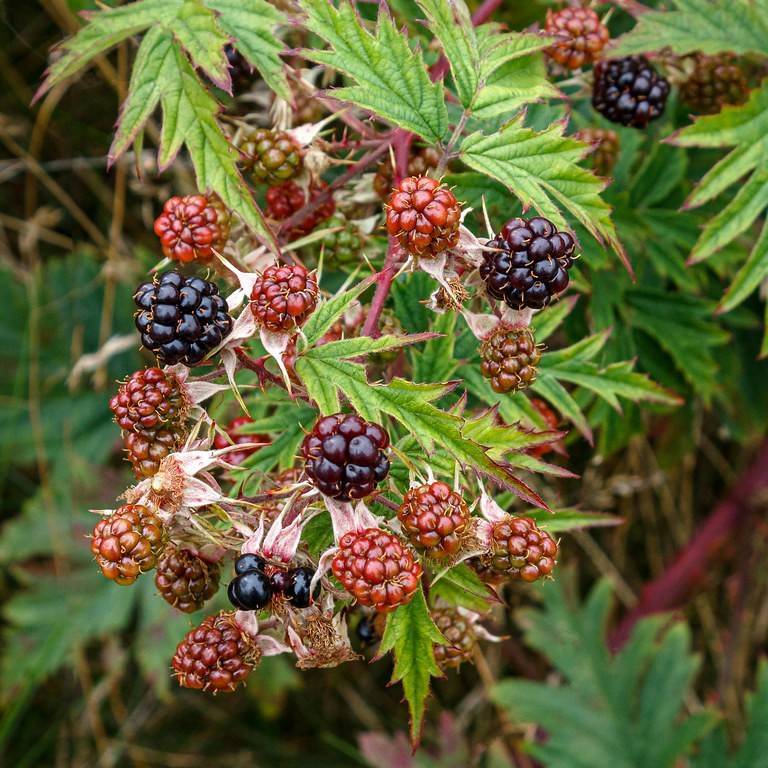
Evergreen Blackberry
Rubus laciniatus
Overview
Evergreen blackberry is a trailing bramble distinguished by its deeply lobed, jagged evergreen foliage that persists year-round in regions with mild winters. It produces clusters of small white to pale pink spring flowers that develop into glossy, deep purple-black berries in mid to late summer. Introduced from Europe as a fruit crop, it has naturalized in many temperate regions, valued for its abundant, flavorful fruit though it can become invasive in unmanaged areas.
Care Guide
Watering
Water newly planted evergreen blackberries deeply 1–2 times per week to keep soil consistently moist but not waterlogged, as saturated soil can cause root rot. Established plants are moderately drought tolerant, but require regular moisture during fruit development to prevent small, seedy berries. Reduce watering frequency in fall and winter when growth slows, only watering if the top 2–3 inches of soil are dry.
Light
Evergreen blackberries thrive in full sun, defined as 6 or more hours of direct unfiltered sunlight per day, which maximizes flower and fruit production and reduces fungal disease risk. They can tolerate partial shade, but berry yields will be lower and canes may become leggy and more prone to pest infestations. In extremely hot climates, provide light afternoon shade to prevent foliage scorch and sunburn on ripening fruit.
Soil
Plant evergreen blackberries in well-drained, loamy or sandy loam soil with a slightly acidic pH between 5.5 and 6.5 for optimal growth. Heavy clay soils that hold standing water are unsuitable, as they cause rapid root rot; amend heavy soils with compost or aged manure to improve drainage before planting. Maintain a 2–3 inch layer of organic mulch around the base of plants to suppress weeds, regulate soil temperature, and retain consistent moisture.
Fertilizer
Apply a balanced 10-10-10 NPK fertilizer in early spring as new growth emerges, spreading it evenly around the base of canes at a rate of 1 pound per 10 feet of row to support vegetative growth and flower development. Apply a second light feeding of a nitrogen-rich fertilizer immediately after harvest to support healthy cane growth for the following year’s crop. Avoid fertilizing late in the growing season, as this can stimulate tender new growth that is vulnerable to frost damage.
Temperature
Evergreen blackberries grow best in temperate climates with average summer temperatures between 60–85°F (15–29°C), and are hardy to USDA zones 5–9, withstanding winter lows down to -10°F (-23°C) when canes are dormant. In colder regions, protect overwintering canes by mounding mulch around their base or laying them flat and covering with straw before the first frost. High temperatures above 90°F (32°C) can cause fruit to ripen prematurely and become sunscalded if not provided with adequate moisture and light shade.
Pruning
Prune evergreen blackberries in late winter or early spring while plants are dormant, removing all old, fruit-bearing canes that produced berries the previous year, as these will not fruit again. Thin new, healthy canes to 4–6 per plant to improve air circulation, reduce disease risk, and channel energy into larger, higher-quality fruit. After harvest, trim back the tips of new canes to 3–4 feet to encourage lateral branching, which increases the number of fruiting sites the following year.
Propagation
Evergreen blackberries are most easily propagated via tip layering, done in late summer by bending the tip of a healthy young cane down to the ground, covering it with 2–3 inches of soil, and leaving the top 6 inches of the cane exposed; roots will form over the fall and winter, and the new plant can be severed from the parent and transplanted the following spring. They can also be propagated from hardwood cuttings taken in late winter, using 6–8 inch sections of dormant, mature cane planted in moist potting mix until roots develop. Division of established clumps can be done in early spring before new growth emerges, though this method is less commonly used than layering.
Humidity
Evergreen blackberries prefer moderate humidity levels between 40–60%, which supports healthy growth and fruit development without increasing fungal disease risk. High humidity above 70%, especially combined with poor air circulation, can lead to powdery mildew, botrytis fruit rot, and other fungal infections on foliage and berries. In areas with high summer humidity, ensure plants are spaced adequately for airflow and avoid overhead watering to keep foliage dry.
Repotting
If grown in containers, repot evergreen blackberries every 2–3 years in late winter while dormant, moving them to a container 2–3 inches larger than the current one with fresh, well-drained potting mix amended with compost. Choose a container with multiple drainage holes to prevent waterlogging, as blackberry roots are highly susceptible to rot in saturated soil. When repotting, prune back any circling or damaged roots and trim canes to 3–4 feet to reduce transplant shock and encourage healthy new growth.
Uses & Symbolism
Evergreen blackberries are primarily cultivated for their sweet, tart berries, which are eaten fresh, used in jams, jellies, pies, smoothies, and baked goods, or frozen for long-term storage. Their dense, thorny trailing growth makes them an effective natural hedge or barrier planting to deter unwanted foot traffic, while their evergreen foliage provides year-round ornamental interest in mild climates. The leaves can also be dried and used to make herbal teas with mild astringent properties.
Diseases & Pests
Evergreen blackberries are susceptible to common bramble fungal diseases including anthracnose, powdery mildew, and botrytis fruit rot, which thrive in wet, humid conditions with poor air circulation; these can be prevented by spacing plants adequately, avoiding overhead watering, and removing infected foliage promptly. Common pests include spotted wing drosophila, which lays eggs in ripening fruit, aphids that suck sap from new growth, and raspberry crown borers that damage plant roots and stems; these can be managed with organic insecticidal soaps, neem oil, or targeted pheromone traps for drosophila. Root rot is a major issue in poorly drained soils, which can kill plants rapidly; avoid overwatering and amend heavy soils with organic matter to improve drainage before planting.
Related plants
Other plants you might like if you grow Evergreen Blackberry.
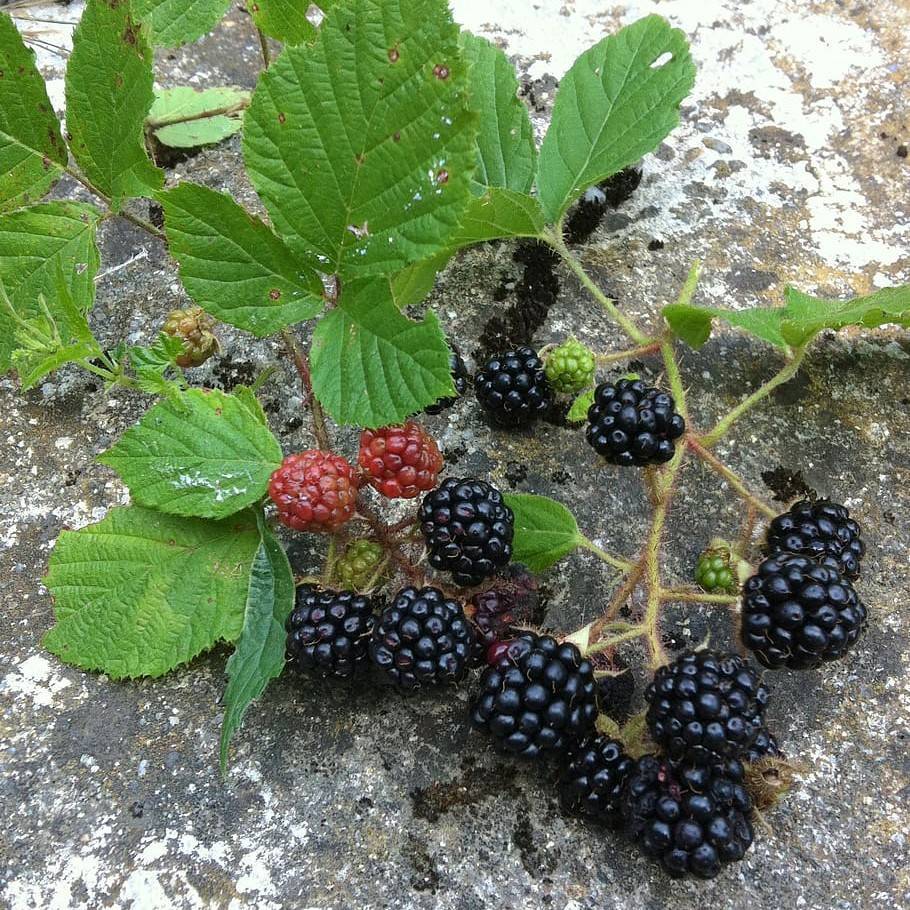
Blackberry
Rubus fruticosus agg.
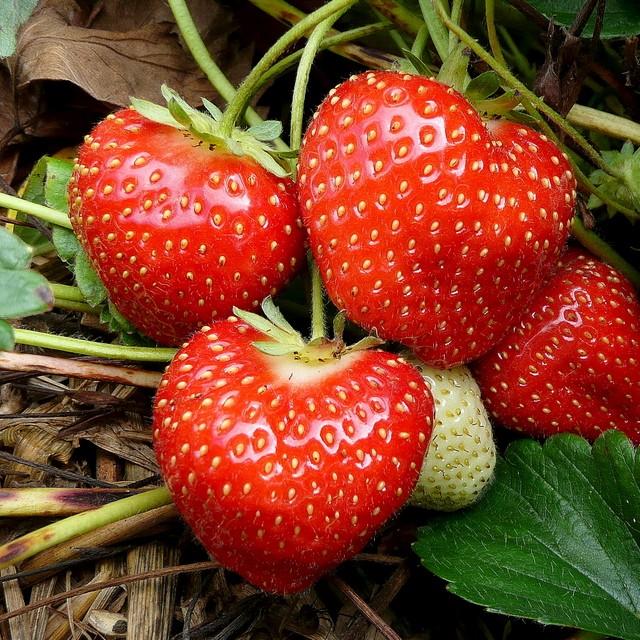
Junebearing Strawberry
Fragaria × ananassa (June-bearing cultivars)
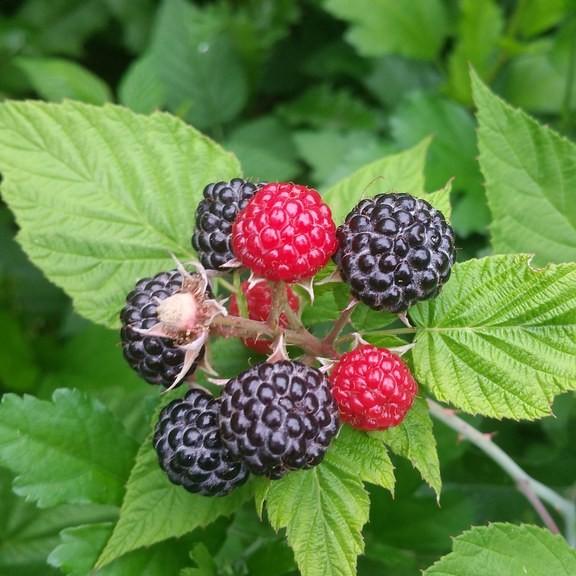
Black Raspberry
Rubus occidentalis
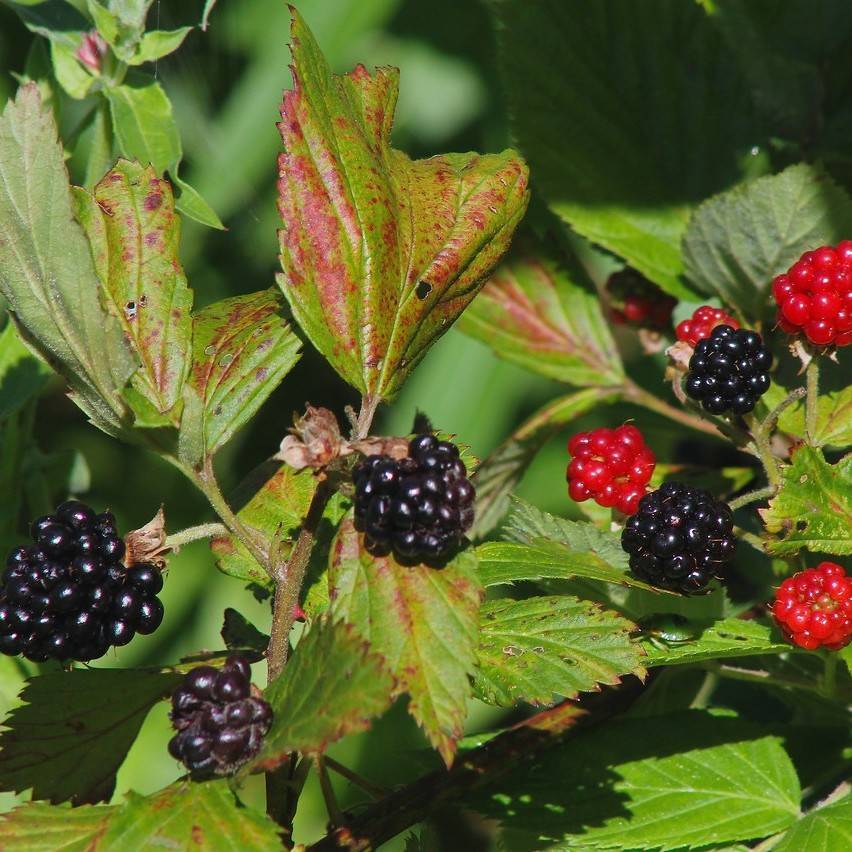
Common Blackberry
Rubus fruticosus
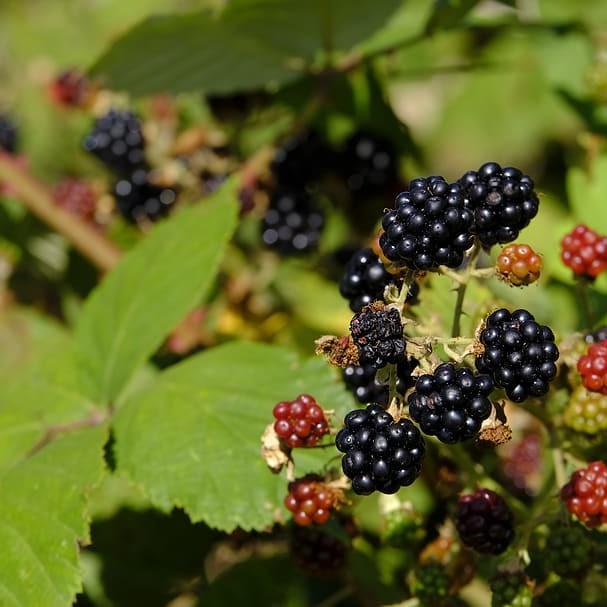
Boysenberry
Rubus ursinus × idaeus 'Boysen'
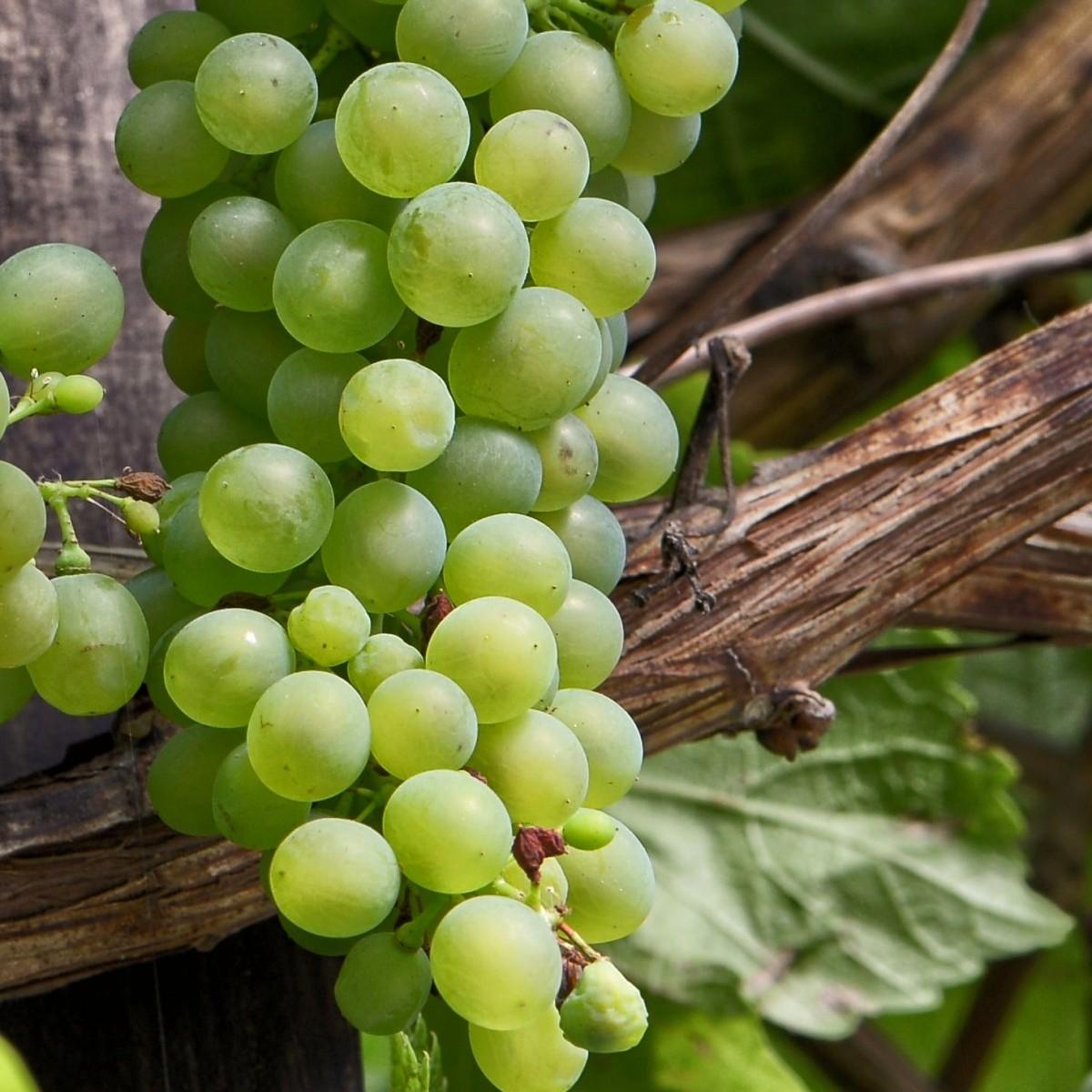
Grape
Vitis vinifera
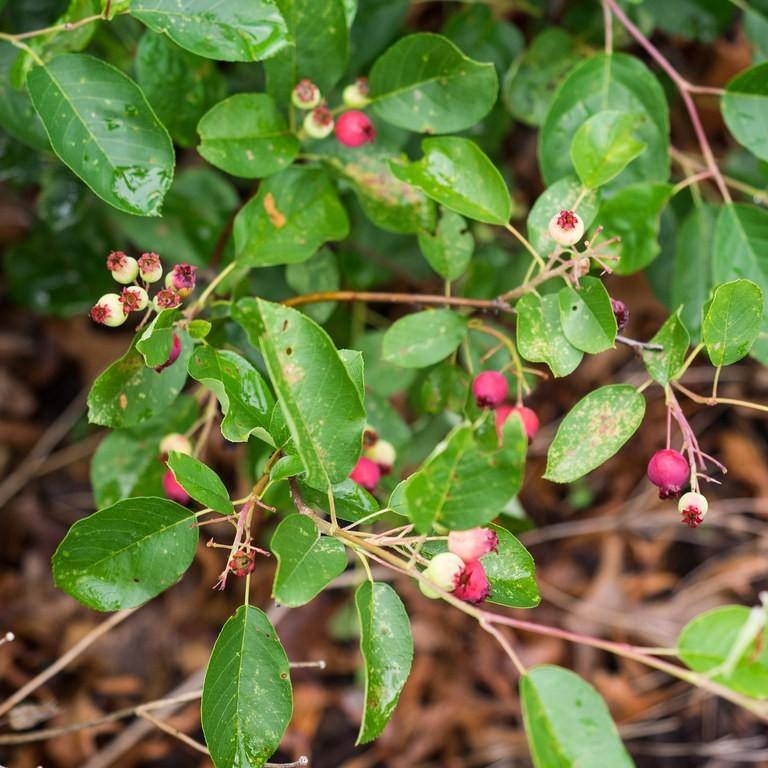
alder-leaved serviceberry
Amelanchier alnifolia 'Regent'
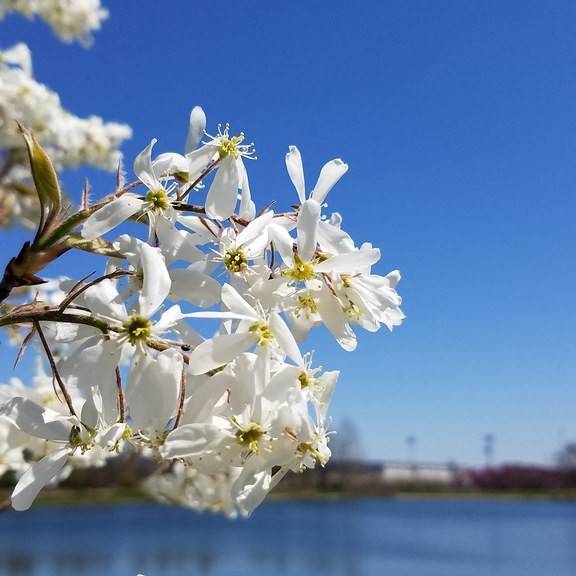
Allegheny serviceberry
Amelanchier laevis