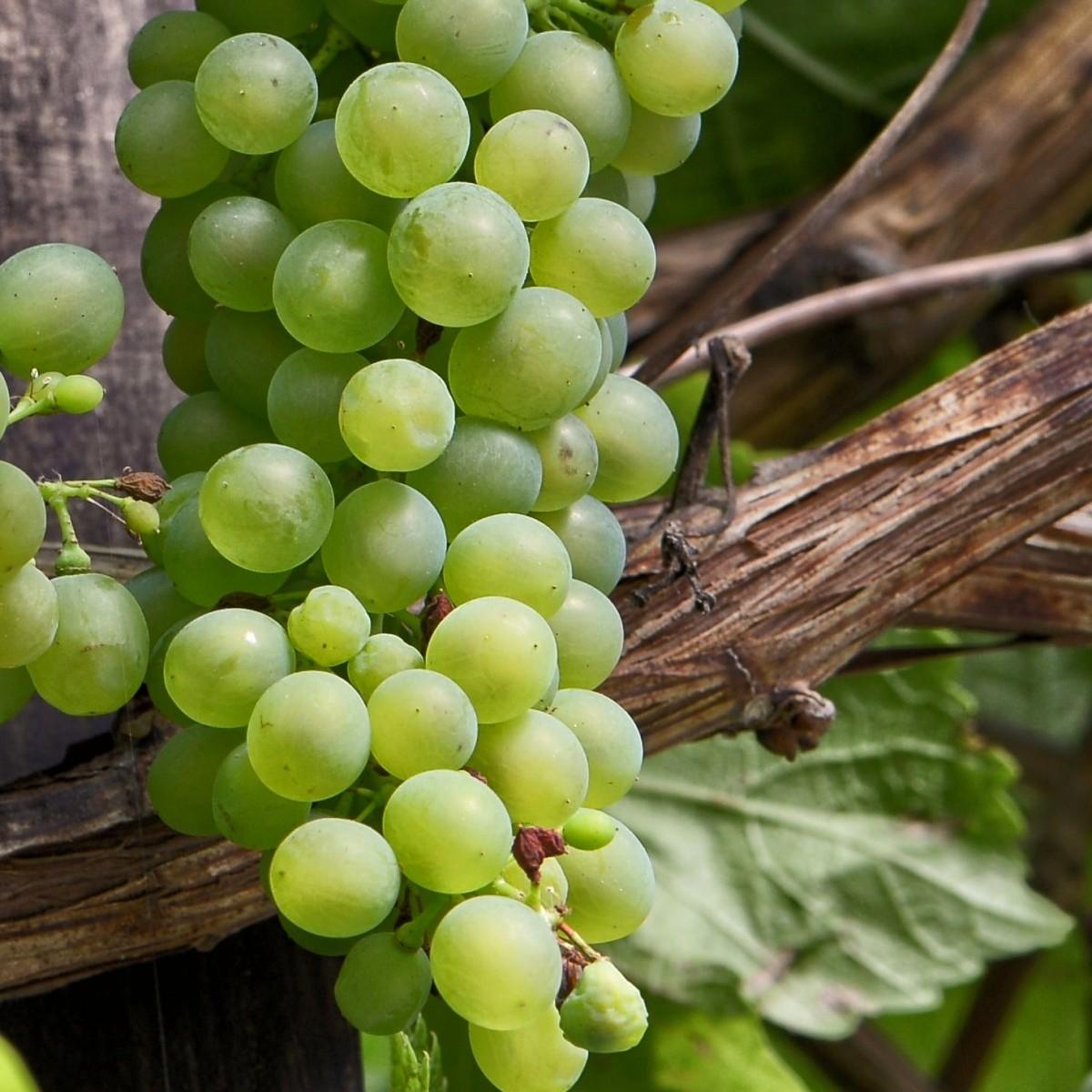
Grape
Vitis vinifera
Overview
Grapevines are deciduous climbing plants with lobed, palmate leaves and coiling tendrils that cling to supports for upward growth. They produce clusters of small, round to oval fruits in shades of green, red, purple, or black, depending on the cultivar. Cultivated for over 8,000 years, grapes are one of the world’s most economically important fruit crops, with thousands of specialized varieties for eating, winemaking, and processing.
Care Guide
Watering
Grapevines require deep, infrequent watering, allowing the top 6-12 inches of soil to dry out between sessions to encourage deep root growth; avoid overwatering, which can cause root rot and dilute fruit flavor. Reduce watering significantly during the fruit ripening stage to concentrate sugars and prevent berry splitting. Newly planted vines need regular, consistent moisture for their first 2-3 years until established.
Light
Grapes require full, direct sunlight for a minimum of 6-8 hours per day to produce abundant, high-quality fruit and support healthy foliage growth. Insufficient light leads to sparse fruiting, weak growth, and increased susceptibility to fungal diseases. In indoor or shaded settings, supplemental grow lights are rarely sufficient for fruit production, making outdoor cultivation ideal.
Soil
Grapevines thrive in well-drained, loamy or sandy soil with a pH between 5.5 and 7.0; they tolerate poor, rocky soils better than heavy, waterlogged clay. Good drainage is critical, as standing water will quickly damage the plant’s deep root system. Amend heavy soils with compost or coarse sand before planting to improve permeability, and avoid overly fertile soils that promote excessive leaf growth over fruiting.
Fertilizer
Mature grapevines have low fertilizer needs; apply a balanced, slow-release 10-10-10 fertilizer once annually in early spring before new growth emerges. Avoid high-nitrogen fertilizers, which stimulate excessive vegetative growth at the expense of fruit production. If leaf yellowing or stunted growth occurs, test soil to address specific nutrient deficiencies, as over-fertilization is more harmful than under-fertilization for grapes.
Temperature
Grapevines prefer temperate climates with summer temperatures between 60-90°F (15-32°C) during the growing season, and require 100-1,500 hours of winter chilling below 45°F (7°C) to break dormancy and produce fruit the following year. Most cultivars are cold-hardy to 10-20°F (-12 to -7°C), though cold-sensitive varieties need winter protection in regions with harsh frosts. Extreme summer heat above 100°F (38°C) can scorch leaves and damage ripening fruit without adequate water.
Pruning
Prune grapevines heavily during dormant winter months to remove 70-90% of the previous year’s growth, as fruit is produced on new shoots emerging from 1-year-old wood. Thin overcrowded growth in early summer to improve air circulation and light penetration to the fruit clusters, reducing fungal disease risk. Remove any suckers growing from the rootstock to direct energy to the main fruiting vines, and trim back excessive leaf growth that shades ripening fruit.
Propagation
Grapes are most commonly propagated from hardwood cuttings taken during winter dormancy: select 1-year-old, pencil-thick stems with 3-4 buds, plant in moist, well-drained soil, and keep shaded until new growth emerges. Grafting is often used for commercial cultivation to combine desirable fruiting varieties with disease-resistant or soil-adapted rootstocks. Growing grapes from seed is rare, as seedlings do not retain the characteristics of the parent plant, and take many years to produce fruit.
Humidity
Grapevines prefer moderate humidity levels between 50-70% during the growing season; high humidity combined with poor air circulation increases the risk of powdery mildew, downy mildew, and botrytis bunch rot. Ensure vines are spaced and pruned to allow air flow through the canopy to reduce moisture buildup around leaves and fruit. Low humidity is generally well-tolerated as long as the vines receive adequate water, though extreme dryness can cause leaf wilting.
Repotting
Container-grown grapevines should be repotted every 2-3 years in late winter during dormancy, moving to a pot one size larger with fresh, well-drained potting mix amended with perlite or sand to improve drainage. Choose a large, heavy container with drainage holes, as mature vines have extensive root systems and can become top-heavy when fully leafed out. Trim back up to one-third of the root ball during repotting to control size and encourage new, healthy root growth.
Uses & Symbolism
Table grapes are eaten fresh, while wine grapes are fermented to produce wine, the most economically significant use of the crop; grapes are also processed into jams, jellies, juice, vinegar, and dried to make raisins, currants, and sultanas. Grapevine leaves are used in many cuisines to wrap stuffed dishes such as dolmas, and extracts from grape skins and seeds are used in dietary supplements for their antioxidant properties. Ornamental grape varieties are grown for their attractive foliage and autumn color, used to cover arbors, trellises, and fences for shade and landscape interest.
Diseases & Pests
Grapevines are highly susceptible to fungal diseases including powdery mildew, downy mildew, and botrytis bunch rot, which thrive in humid, poorly ventilated conditions and can damage leaves, stems, and fruit clusters. Common pests include grape phylloxera, a root-feeding aphid that devastates non-resistant rootstocks, as well as Japanese beetles, spider mites, and grape berry moths that feed on foliage and fruit. Proper pruning to improve air flow, regular monitoring, and targeted fungicide or pest control applications, along with the use of resistant rootstocks, help prevent most serious issues.
Guides that mention Grape
Related plants
Other plants you might like if you grow Grape.