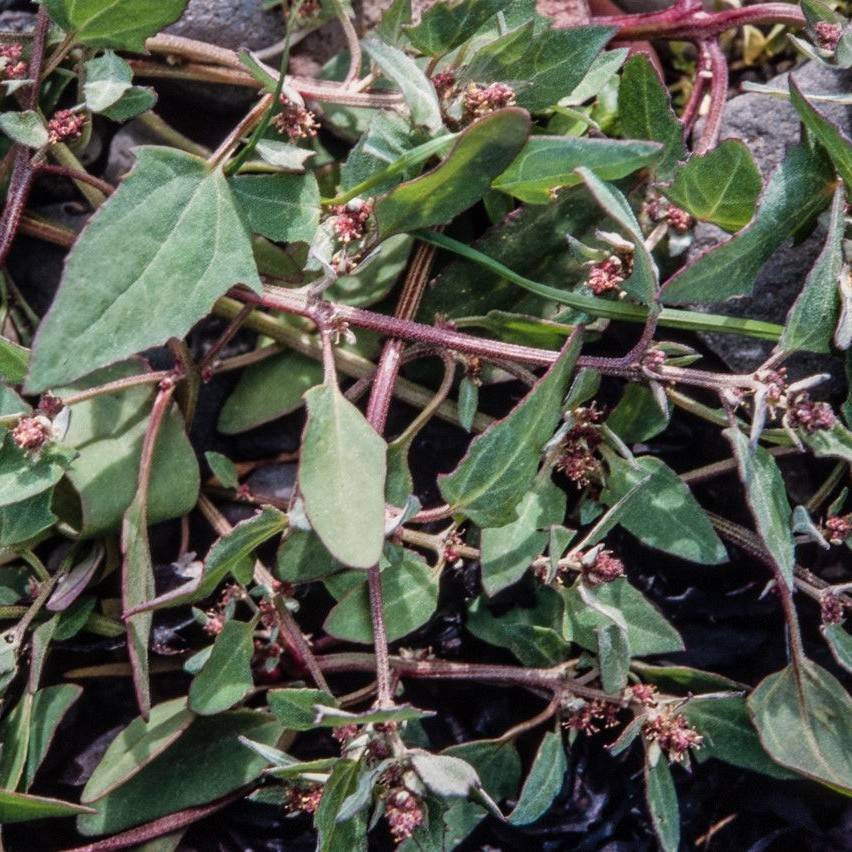
Acadian Saltbush
Atriplex glabriuscula
Overview
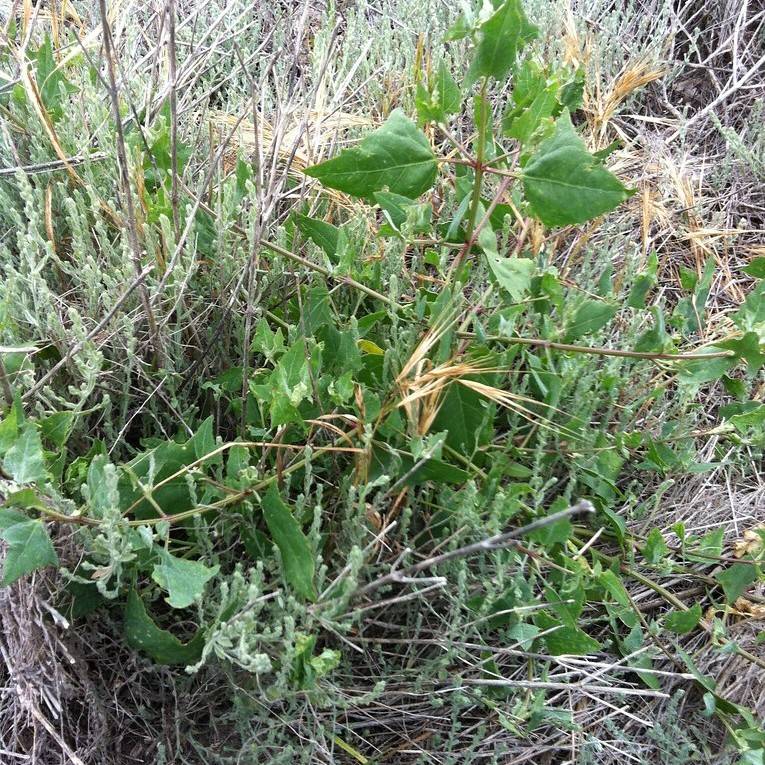
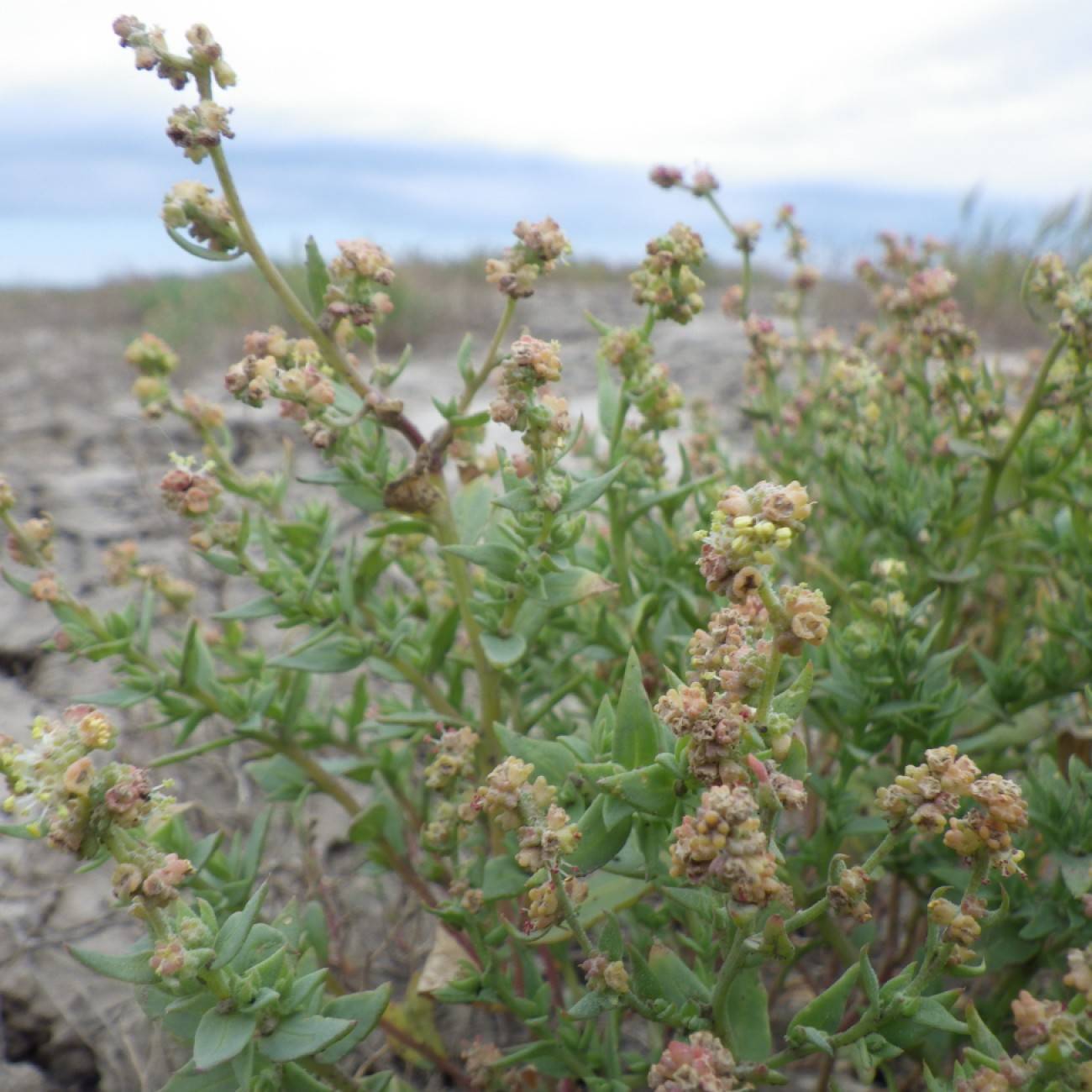
Acadian Saltbush is a hardy, sprawling semi-woody shrub native to North America’s Atlantic coast, thriving in salt marshes, dunes, and rocky shorelines. Its small, oval, silvery-gray leaves have a waxy coating that helps it retain moisture and tolerate high salt exposure, making it a signature species of coastal habitats. The plant produces tiny, greenish unisexual flowers in late summer, with female plants bearing small, papery winged fruits that disperse easily via wind and tides.
Care Guide
Watering
Acadian Saltbush is highly drought and salt tolerant once established, requiring only occasional deep watering during prolonged dry periods; overwatering, especially in poorly drained soil, will cause root rot. For container-grown specimens, allow the top 2 to 3 inches of soil to dry completely between waterings, and avoid using softened water high in sodium unless the plant is acclimated to saline conditions. In its native coastal habitat, it receives most of its moisture from rainfall and occasional salt spray, so it does not need frequent supplemental irrigation.
Light
This species requires full sun, meaning a minimum of 6 to 8 hours of direct unobstructed sunlight daily to develop its characteristic silvery foliage and compact growth habit. It can tolerate very light partial shade, but growth will become leggy, foliage will lose its distinctive silver hue, and flowering will be significantly reduced. It is well-adapted to the intense, reflective sunlight common to coastal dune and shoreline environments, so it does not suffer from leaf scorch even in hot, sunny summer conditions.
Soil
Acadian Saltbush tolerates a very wide range of soil types, including sandy, rocky, saline, and nutrient-poor coastal soils that are unsuitable for most other plant species. It prefers well-drained soil with a neutral to slightly alkaline pH between 6.5 and 8.5, and it can even grow in mildly clay soils as long as drainage is excellent to prevent root rot. It is adapted to low-fertility soils, so it does not require rich organic amendments, which can actually cause overly lush, weak growth that is more susceptible to storm damage in coastal locations.
Fertilizer
This plant is adapted to low-nutrient coastal soils, so it requires very little supplemental fertilization; over-fertilizing will lead to excessive soft growth that is less tolerant of salt, wind, and cold temperatures. For landscape specimens, a single light application of balanced, slow-release 10-10-10 fertilizer in early spring is sufficient, if any feeding is needed at all. Container-grown plants can be given a half-strength balanced liquid fertilizer once per month during the growing season, but skip feeding entirely in fall and winter when the plant is dormant.
Temperature
Acadian Saltbush is cold hardy in USDA zones 3 through 8, tolerating winter temperatures as low as -40°F (-40°C) when established, and it is also highly tolerant of summer heat up to 100°F (38°C) as long as it receives adequate sunlight. It is well-adapted to the extreme temperature fluctuations common to coastal environments, including sudden cold snaps, wind chill, and intense summer heat reflected off sand or rock. In areas outside its native range, it should be planted in a location protected from harsh inland winter winds to prevent desiccation of foliage during cold, dry months.
Pruning
Pruning is rarely required for Acadian Saltbush, but you can trim back any dead, damaged, or leggy growth in early spring before new foliage emerges to encourage a compact, bushy habit. If planted as a ground cover for erosion control, you can mow or shear the entire stand back to 6 inches above the soil line every 2 to 3 years in early spring to rejuvenate growth and prevent woody overgrowth. Avoid heavy pruning in late fall, as this can stimulate new tender growth that will be damaged by incoming winter cold.
Propagation
Acadian Saltbush is most easily propagated from seed, which can be sown directly outdoors in fall or cold-stratified for 30 to 60 days and sown in spring after the last frost date; seeds require light to germinate, so do not cover them with soil, only press them gently into the surface. It can also be propagated from semi-hardwood cuttings taken in mid to late summer, which should be dipped in rooting hormone, planted in a well-drained sandy medium, and kept moist until roots develop in 4 to 6 weeks. Division of established clumps can be done in early spring before new growth starts, though the plant has a deep taproot that makes division more labor-intensive than seed or cutting propagation.
Humidity
This species tolerates a wide range of humidity levels, from the high, salt-laden humidity of coastal shorelines to the drier air of inland locations, as long as it has adequate soil drainage and sunlight. It does not require any supplemental misting or humidity adjustments, even when grown indoors as a container plant, as its waxy foliage retains moisture very effectively. High humidity does not cause issues for the plant, but poor air circulation combined with constantly wet foliage can lead to minor fungal leaf spot, so ensure adequate space between plants for airflow in dense plantings.
Repotting
Container-grown Acadian Saltbush only needs repotting every 2 to 3 years, when roots begin to grow out of the drainage holes or the plant becomes root-bound, as it prefers to be slightly root-bound and tolerates poor soil conditions well. Repot in early spring before new growth starts, using a well-drained, sandy potting mix with a neutral to alkaline pH, and choose a pot that is only 1 to 2 inches larger in diameter than the current pot to avoid overwatering issues associated with excess unused soil. After repotting, water lightly and place the plant in full sun to minimize transplant shock, and avoid fertilizing for the first 3 months to allow new roots to establish without burn.
Uses & Symbolism
Acadian Saltbush is widely used for coastal erosion control and dune restoration, as its extensive root system stabilizes sandy or rocky shorelines and its foliage buffers wind and wave impact on coastal soils. Its young, tender leaves are edible, with a mild, salty, spinach-like flavor that can be eaten raw in salads, cooked as a potherb, or used as a salt substitute in low-sodium diets, as they naturally accumulate salt from their environment. It is also planted as a low-maintenance ornamental landscape shrub in xeriscapes, rock gardens, and roadside plantings where salt tolerance is needed for de-icing runoff, and its silvery foliage provides attractive contrast to green-leaved garden plants.
Diseases & Pests
Acadian Saltbush is highly resistant to most pests and diseases, with the most common issue being root rot caused by overwatering or poorly drained soil, which can be avoided by ensuring soil drains freely and watering only when the top layer of soil is dry. It may occasionally be affected by minor fungal leaf spot diseases in overly wet, poorly ventilated conditions, which can be treated by removing affected foliage and improving air circulation around plants. Aphids and spider mites may infest stressed plants, especially indoor container specimens, but these can be controlled with a strong spray of water or insecticidal soap, and healthy outdoor plants are rarely bothered by pest infestations.
Related plants
Other plants you might like if you grow Acadian Saltbush.