Hooker's Willow
Salix hookeriana
Overview
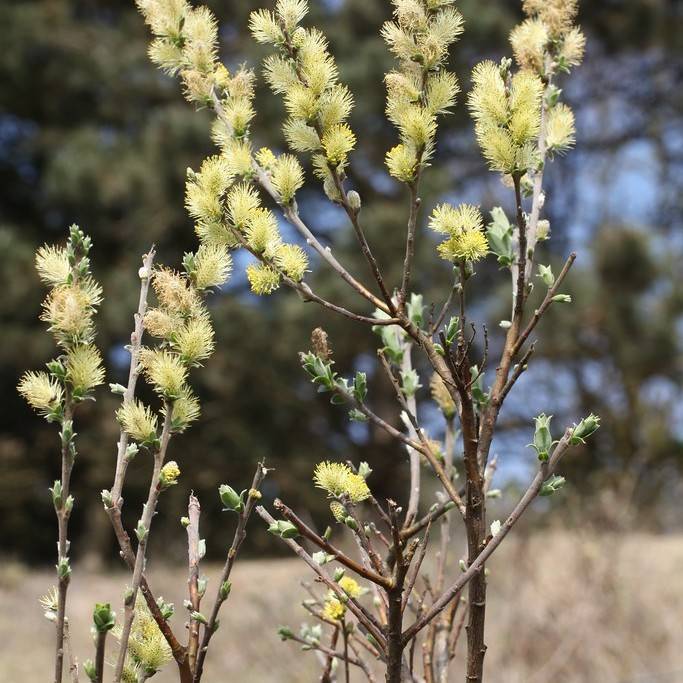
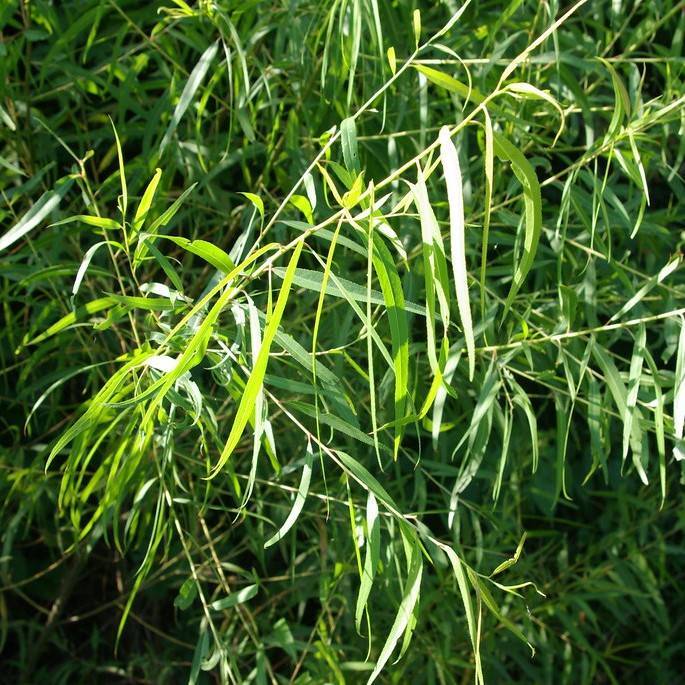
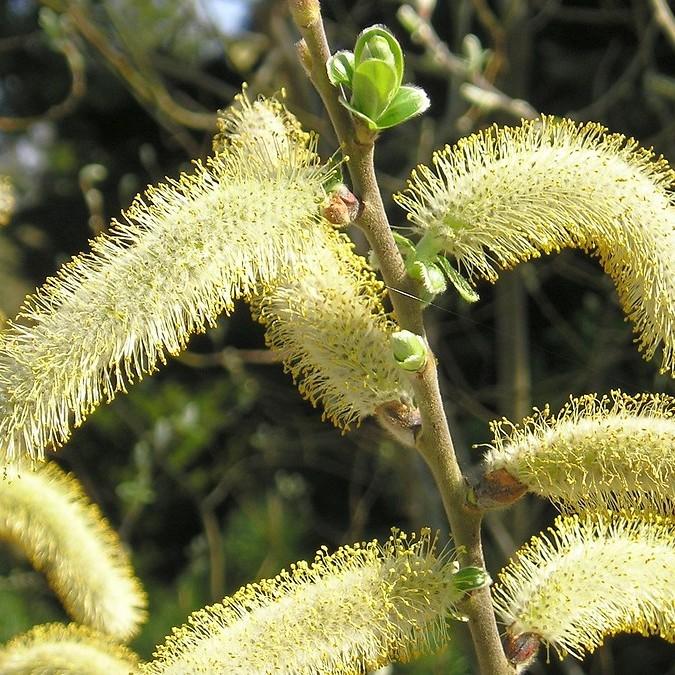
Hooker's willow is a fast-growing deciduous shrub or small tree adapted to coastal and riparian habitats, often forming dense thickets in marshes, dunes, and stream banks. Its broad, oval leaves have a fuzzy, silver-white underside, and it produces fuzzy yellow-green catkins in early spring before foliage emerges. This hardy species is tolerant of salt spray and periodic flooding, making it a staple for coastal restoration projects across its native range.
Care Guide
Watering
Prefers consistently moist to wet soil, and can withstand prolonged flooding and saturated conditions that would kill most other woody plants. Water regularly during establishment, and avoid letting the root ball dry out completely even in mature specimens.
Light
Thrives in full sun, requiring at least 6 hours of direct sunlight daily for optimal growth and catkin production. It can tolerate partial shade, but growth will be sparser and it will produce fewer flowers.
Soil
Adapted to a wide range of soil types, including sandy dune soils, heavy clay, and peaty wetland substrates, with a preferred pH range of 5.0 to 7.5. It tolerates high salinity and poorly drained, anaerobic soils common in coastal and riparian zones.
Fertilizer
Generally does not require supplemental fertilization in its native habitat, as it is adapted to low-nutrient wet soils. If grown in nutrient-poor upland sites, apply a balanced slow-release fertilizer in early spring to support new growth.
Temperature
Hardy in USDA zones 5 to 9, tolerating winter temperatures as low as -20°F (-29°C) and high summer coastal heat with adequate moisture. It is highly resistant to salt spray and cold coastal winds, making it ideal for exposed shoreline plantings.
Pruning
Prune in late winter or early spring while the plant is dormant to remove dead, damaged, or crossing branches, and to maintain a desired shape. It tolerates heavy coppicing, and can be cut back to near ground level every 2-3 years to encourage dense, bushy growth for erosion control or wildlife cover.
Propagation
Most easily propagated from hardwood cuttings taken in late winter, which root readily when planted directly in moist soil without rooting hormone. It can also be grown from seed, but seeds remain viable for only a few weeks after ripening in late spring and require constant moisture to germinate.
Humidity
Thrives in the moderate to high humidity of its native coastal and riparian habitats, tolerating humidity levels between 50% and 80%. It can adapt to lower humidity conditions if provided with consistent soil moisture, but may experience leaf browning at the edges in very dry environments.
Repotting
Rarely grown in containers, as its extensive, fast-growing root system quickly outgrows pots and it prefers unrestricted root access to wet soil. If grown temporarily in a container, repot annually in early spring into a larger pot with a loamy, moisture-retentive soil mix, and plant out in the landscape as soon as possible.
Uses & Symbolism
Widely planted for coastal and riparian erosion control, as its dense root system stabilizes dunes, stream banks, and shorelines against wave action and flooding. It provides critical early-spring nectar for native pollinators, and its thickets offer nesting habitat and food for birds and small mammals. Historically, Indigenous peoples of the Pacific Northwest used its flexible branches for basket weaving and its bark for medicinal remedies containing salicylic acid.
Diseases & Pests
Susceptible to common willow pests including aphids, willow leaf beetles, and scale insects, which typically cause cosmetic leaf damage but rarely threaten the health of established plants. Fungal diseases such as rust, leaf spot, and willow blight may occur in overly humid, poorly ventilated conditions, and can be managed by removing affected foliage and improving air circulation around the plant. Root rot is rare in its preferred wet soils, but may occur if planted in poorly drained upland sites with heavy, compacted clay that stays saturated for extended periods in cool weather.
Related plants
Other plants you might like if you grow Hooker's Willow.