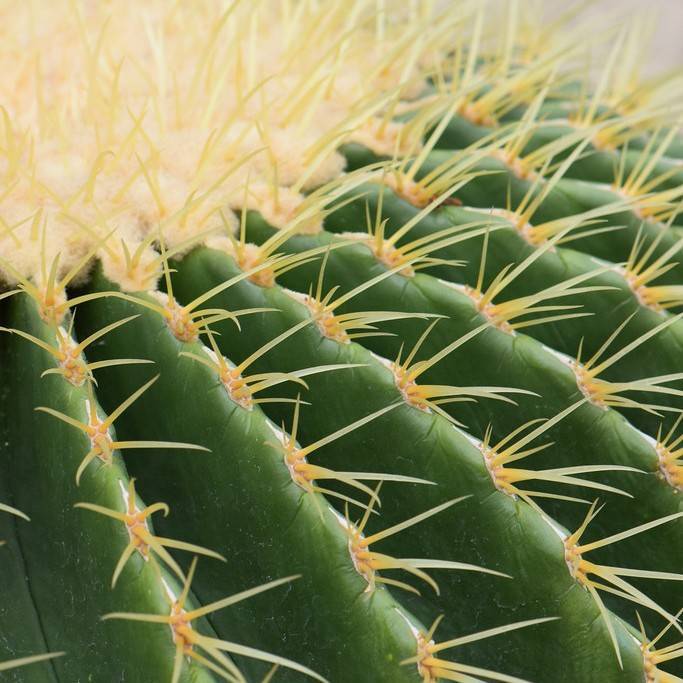
Golden Barrel Cactus
Echinocactus grusonii
Overview
The golden barrel cactus is a iconic desert succulent recognizable by its rounded, ribbed body and dense covering of sharp, golden-yellow spines that run along each vertical rib. Wild populations are considered endangered in their native Mexican habitat due to habitat loss and overcollection, though they are widely cultivated commercially for ornamental use. Mature specimens can live for over 100 years, and produce small, bright yellow flowers in a ring around the crown once they reach 20 years or older.
Care Guide
Watering
Golden barrel cacti are extremely drought-tolerant, requiring infrequent watering only when the soil is completely dry; overwatering is the most common cause of rot. During the active growing season (spring to fall), water thoroughly and allow all excess moisture to drain away, while withholding water almost entirely during the winter dormant period.
Light
This cactus thrives in full, direct sunlight, requiring a minimum of 6 hours of unfiltered light per day to maintain its compact shape and vibrant golden spine color. When grown indoors, place it in a south-facing window, and rotate it periodically to prevent uneven growth toward the light source.
Soil
Use a well-draining, gritty cactus or succulent mix with a high proportion of perlite, pumice, or coarse sand to ensure rapid water drainage and prevent root rot. The ideal soil pH is slightly acidic to neutral, between 6.0 and 7.5, with minimal organic matter to avoid retaining excess moisture.
Fertilizer
Fertilize sparingly only during the active growing season, using a diluted, low-nitrogen cactus fertilizer once every 4 to 6 weeks to support healthy growth without encouraging soft, weak tissue. Avoid fertilizing during the winter dormant period, as this can disrupt the plant's natural growth cycle and lead to root damage.
Temperature
Golden barrel cacti prefer warm, dry temperatures between 60°F and 85°F (15°C to 29°C) during the growing season, and can tolerate brief dips as low as 20°F (-7°C) if kept completely dry. Indoor specimens should be protected from cold drafts and extreme temperature fluctuations, particularly during the winter months.
Pruning
Pruning is rarely required for golden barrel cacti, as they naturally maintain their rounded form; only remove any dead or rotting tissue at the base using a sterile, sharp tool if damage occurs. Always wear thick, puncture-resistant gloves when handling the plant to avoid injury from its sharp, rigid spines.
Propagation
Golden barrel cacti are most commonly propagated from seed, as mature plants rarely produce offsets; sow seeds in a well-draining cactus mix in warm, bright conditions, and keep the medium slightly moist until germination occurs in 2 to 6 weeks. Cuttings are not a viable propagation method for this species, as they cannot regenerate new growth from cut sections of the globe.
Humidity
This cactus is adapted to low-humidity desert environments, thriving in relative humidity levels between 10% and 30%, making it well-suited to dry indoor household air. Avoid placing it in high-humidity areas such as bathrooms, as excess moisture in the air can increase the risk of fungal rot and pest infestations.
Repotting
Repot young golden barrel cacti every 2 to 3 years to refresh the soil and accommodate root growth, while mature specimens only need repotting every 5 to 10 years when they become severely root-bound. Always repot during the spring growing season, and wait at least a week after repotting to water to allow any damaged root tissue to heal.
Uses & Symbolism
Golden barrel cacti are widely used as ornamental specimens in xeriscape, rock, and desert-themed gardens, where their striking shape and golden spines create a dramatic focal point. They are also popular low-maintenance houseplants for sunny windowsills, requiring minimal care to thrive in indoor environments. In their native range, they were historically used as a source of water and emergency food by Indigenous communities, though wild harvesting is now prohibited due to their endangered status.
Diseases & Pests
The most common issue affecting golden barrel cacti is root rot, caused by overwatering or poorly draining soil, which presents as soft, mushy tissue at the base of the plant and discolored roots. Common pests include mealybugs and scale insects, which can be removed with a cotton swab dipped in rubbing alcohol or treated with a neem oil solution. Fungal spots may also appear on the cactus body if exposed to prolonged high humidity or excess moisture on the skin, which can be prevented by ensuring good air circulation around the plant.
Related plants
Other plants you might like if you grow Golden Barrel Cactus.