Corncob Plant
Euphorbia mammillaris
Overview
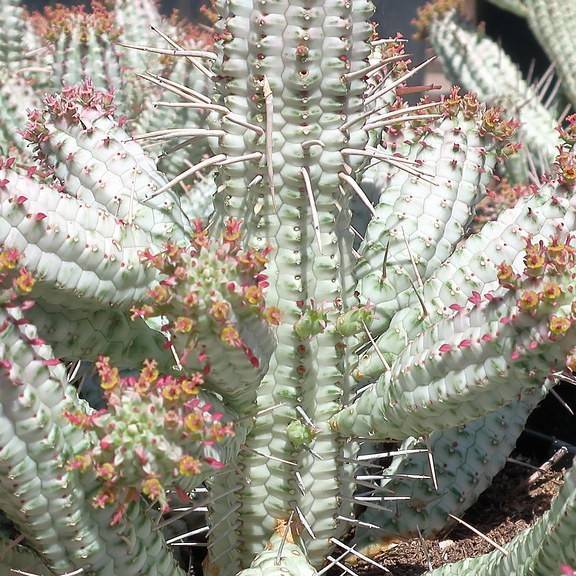
The corncob plant gets its common name from its ribbed, knobby cylindrical stems that closely resemble the texture and shape of a dried corncob. It is a small, slow-growing succulent native to arid regions of South Africa, adapted to survive long periods of drought with minimal care. Mature specimens may produce small, pale yellow flowers around the stem tips during the growing season, adding subtle ornamental interest. All parts of the plant exude a thick, milky sap when damaged, which is a characteristic defense mechanism of the Euphorbia genus.
Care Guide
Watering
Allow the entire soil volume to dry out completely between waterings, as overwatering is the most common cause of root rot for this succulent. Reduce watering to once every 4-6 weeks during the winter dormant period, when growth slows significantly. Always water at the base of the plant, avoiding contact with the stems to prevent rot.
Light
Thrives in bright, direct sunlight for at least 4-6 hours per day, making it ideal for placement on south or west-facing windowsills. It can tolerate partial light conditions, but growth will become leggy and lose its characteristic compact corncob shape if light levels are too low. Gradually acclimate the plant to direct sun after purchase to avoid scorching the stems.
Soil
Requires a fast-draining, gritty succulent or cactus soil mix with a pH between 6.0 and 7.0 to prevent water retention around the roots. Amend regular potting soil with 50% perlite, pumice, or coarse sand to improve drainage and aeration if a pre-made succulent mix is not available. Avoid heavy, moisture-retentive soils that contain high amounts of peat moss or compost.
Fertilizer
Feed sparingly once per month during the active growing season (spring and summer) using a balanced, water-soluble succulent fertilizer diluted to half the recommended strength. Do not fertilize during the fall and winter dormant period, as excess nutrients will build up in the soil and damage the plant’s delicate root system. Skip fertilization entirely for the first year after repotting, as fresh soil contains sufficient nutrients for new growth.
Temperature
Prefers warm temperatures between 65-85°F (18-29°C) during the active growing season, consistent with typical indoor household conditions. It can tolerate short periods of temperatures as low as 50°F (10°C), but frost or prolonged exposure to temperatures below 40°F (4°C) will cause permanent tissue damage. Avoid placing the plant near cold drafts from windows, doors, or air conditioning units during the winter.
Pruning
Pruning is rarely required for the corncob plant, as it maintains a naturally compact, upright growth habit with minimal intervention. Remove any yellowed, shriveled, or rotted stems at the base using sharp, sterilized pruning shears if they appear damaged or diseased. Always wear gloves when pruning to avoid contact with the toxic milky sap, and clean tools thoroughly after use to remove sap residue.
Propagation
The easiest method of propagation is from stem cuttings, taken in spring or early summer during active growth. Cut a 2-3 inch section of a healthy stem, allow the cut end to callus over for 3-7 days in a dry, shaded location, then plant in moist, well-draining succulent soil. Keep the soil slightly moist until roots form in 2-4 weeks, then transition to regular watering practices.
Humidity
Adapted to arid conditions, the corncob plant thrives in low to moderate humidity levels between 30-50%, which aligns with average indoor household humidity. It does not require additional misting or humidity boosting, and high humidity levels above 60% can increase the risk of stem and root rot. Avoid placing the plant in high-humidity areas such as bathrooms or laundry rooms unless ventilation is excellent.
Repotting
Repot only once every 2-3 years, when the plant has outgrown its current container and roots begin to emerge from the drainage holes. Choose a pot that is only 1-2 inches larger in diameter than the previous one, as excess soil volume will hold unnecessary moisture and increase rot risk. Repot during the spring growing season, and wait 1-2 weeks after repotting to water to allow damaged roots to heal.
Uses & Symbolism
Primarily grown as a low-maintenance ornamental houseplant, perfect for small spaces, succulent collections, and xeriscaped indoor gardens. It is also a popular choice for beginner gardeners due to its high drought tolerance and minimal care requirements. In its native South Africa, it is sometimes used in traditional medicine, though its toxic sap requires careful handling to avoid adverse reactions.
Diseases & Pests
The most common issue is root rot caused by overwatering or poorly draining soil, which presents as mushy, discolored stems and wilted growth. Mealybugs and spider mites may occasionally infest the crevices between the stem ribs, which can be treated with insecticidal soap or neem oil applied directly to affected areas. Stem scorch can occur if the plant is moved abruptly from low light to intense direct sun, so gradual acclimation is recommended to prevent permanent blemishes.
Related plants
Other plants you might like if you grow Corncob Plant.