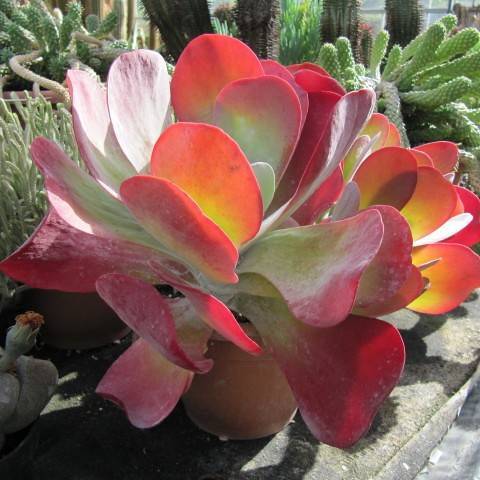
Kalanchoe
Kalanchoe blossfeldiana
Overview
Kalanchoe is a popular flowering succulent best known for its dense clusters of red, pink, orange, yellow, or white blooms that last for weeks or months. Native to the arid regions of Madagascar, it has adapted to store water in its thick, waxy, oval-shaped leaves, making it highly drought-tolerant. It is widely grown as both a houseplant and a seasonal outdoor ornamental in warm climates, valued for its minimal care requirements and vibrant floral displays.
Care Guide
Watering
Allow the top 1 to 2 inches of soil to dry out completely between waterings, as overwatering is the most common cause of root rot. Reduce watering frequency significantly in winter when growth slows, only providing enough moisture to prevent the leaves from shriveling. Always water at the base of the plant, avoiding wetting the foliage to prevent fungal growth.
Light
Kalanchoe thrives in bright, indirect light for 4 to 6 hours per day, which supports healthy foliage growth and abundant flowering. Direct midday sun can scorch its leaves, so provide filtered light or partial shade during the hottest parts of the day in outdoor settings. Insufficient light will lead to leggy growth and reduced flower production.
Soil
Plant kalanchoe in a well-draining, porous succulent or cactus mix with a pH between 6.0 and 7.0 to prevent waterlogged conditions. You can create your own mix by combining equal parts potting soil, perlite, and coarse sand to improve drainage and aeration. Avoid heavy, moisture-retentive garden soils that hold water for extended periods.
Fertilizer
Feed kalanchoe lightly once per month during the active growing season (spring and summer) with a balanced, water-soluble fertilizer diluted to half strength. Do not fertilize during the fall and winter dormant period, as this can lead to excessive leaf growth and reduced flowering. Stop fertilizing entirely once flower buds begin to form, resuming only after blooms have faded.
Temperature
Kalanchoe prefers average room temperatures between 60 and 85°F (15 and 29°C) for optimal growth. It can tolerate brief dips down to 40°F (4°C) but will suffer damage if exposed to freezing temperatures for extended periods. Avoid placing the plant near cold drafts, heating vents, or air conditioning units that cause sudden temperature fluctuations.
Pruning
Prune faded flower stalks down to the base of the plant once blooming ends to encourage new foliage growth and future flowering. Trim back leggy, overgrown stems by up to one-third of their length in late spring to maintain a compact, bushy shape. Remove any yellow, damaged, or diseased leaves as they appear to keep the plant healthy and tidy.
Propagation
Kalanchoe is most easily propagated from stem or leaf cuttings taken in spring or summer. Allow cut surfaces to callus over for 1 to 2 days before planting in moist, well-draining succulent mix, then keep the soil lightly moist until roots develop in 2 to 4 weeks. Many kalanchoe varieties also produce small plantlets along the edges of their leaves, which can be separated and potted individually.
Humidity
Kalanchoe adapts well to average indoor humidity levels between 30% and 50%, requiring no extra humidification in most home environments. Excessively high humidity, above 60%, can increase the risk of fungal leaf spots and root rot in home-grown kalanchoe. Avoid misting the foliage, as the plant’s thick leaves retain enough moisture on their own.
Repotting
Repot kalanchoe only once every 2 to 3 years, or when it becomes root-bound and roots start growing out of the drainage holes. Choose a pot that is only 1 to 2 inches larger in diameter than the current one, as an overly large pot will hold excess moisture that can cause root rot. Repot in spring after blooming has finished, using fresh succulent mix and taking care not to damage the plant’s delicate root system.
Uses & Symbolism
Kalanchoe is primarily grown as an ornamental houseplant and seasonal garden plant, prized for its long-lasting, vibrant blooms that add color to indoor displays, patio containers, and warm-climate flower beds. In some traditional medicinal practices, kalanchoe extracts have been used topically to treat minor wounds, burns, and inflammation, though internal use is not recommended due to its toxicity. It is also a popular choice for low-maintenance gift plants, as it requires minimal care and remains in bloom for several weeks.
Diseases & Pests
Overwatering is the primary cause of root rot, a fungal condition that causes yellowing leaves, wilting, and soft, mushy stems; it can be prevented by allowing the soil to dry out between waterings and using a well-draining potting mix. Common pests include mealybugs, aphids, and spider mites, which can be removed with a cotton swab dipped in rubbing alcohol or treated with insecticidal soap. Fungal leaf spots may occur if foliage is kept consistently wet, so avoid overhead watering and ensure the plant has good air circulation to reduce disease risk.
Related plants
Other plants you might like if you grow Kalanchoe.