Forest Bell Bush
Mackaya bella
Overview
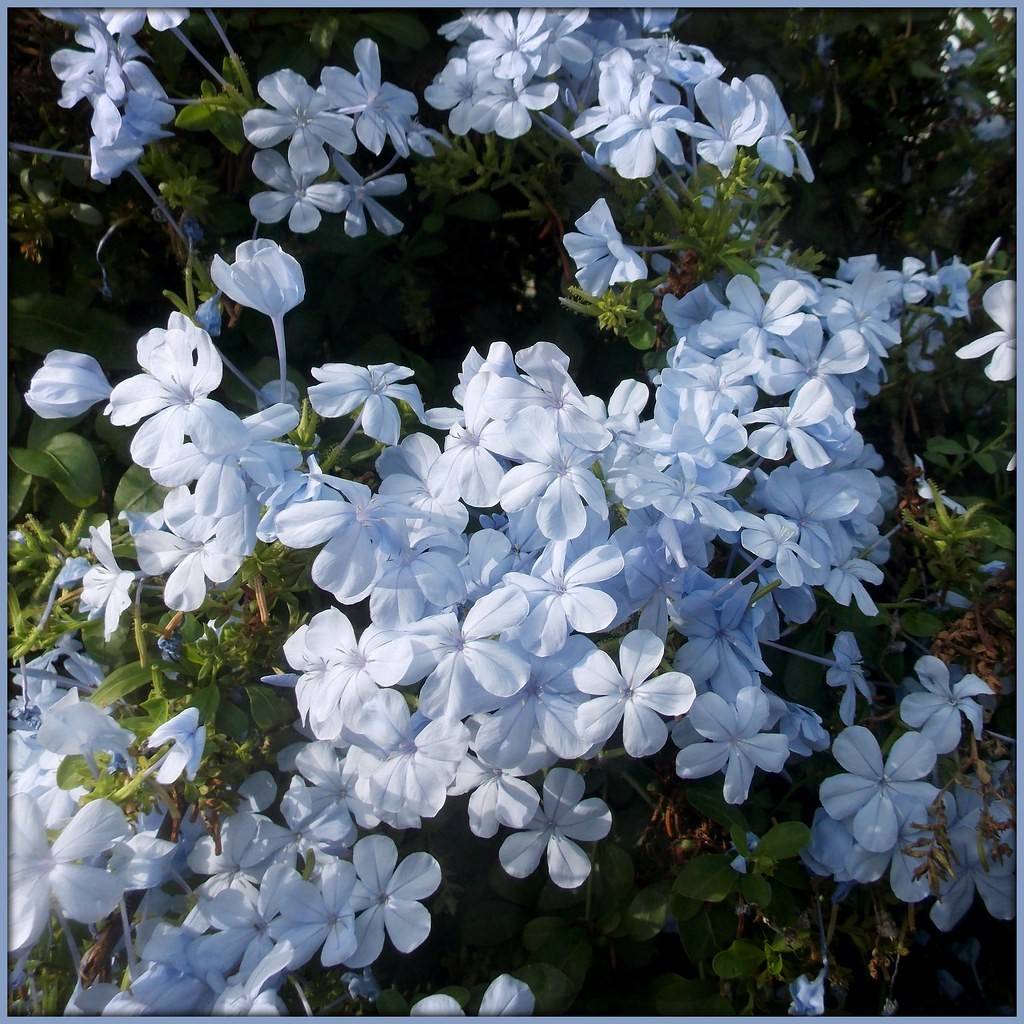
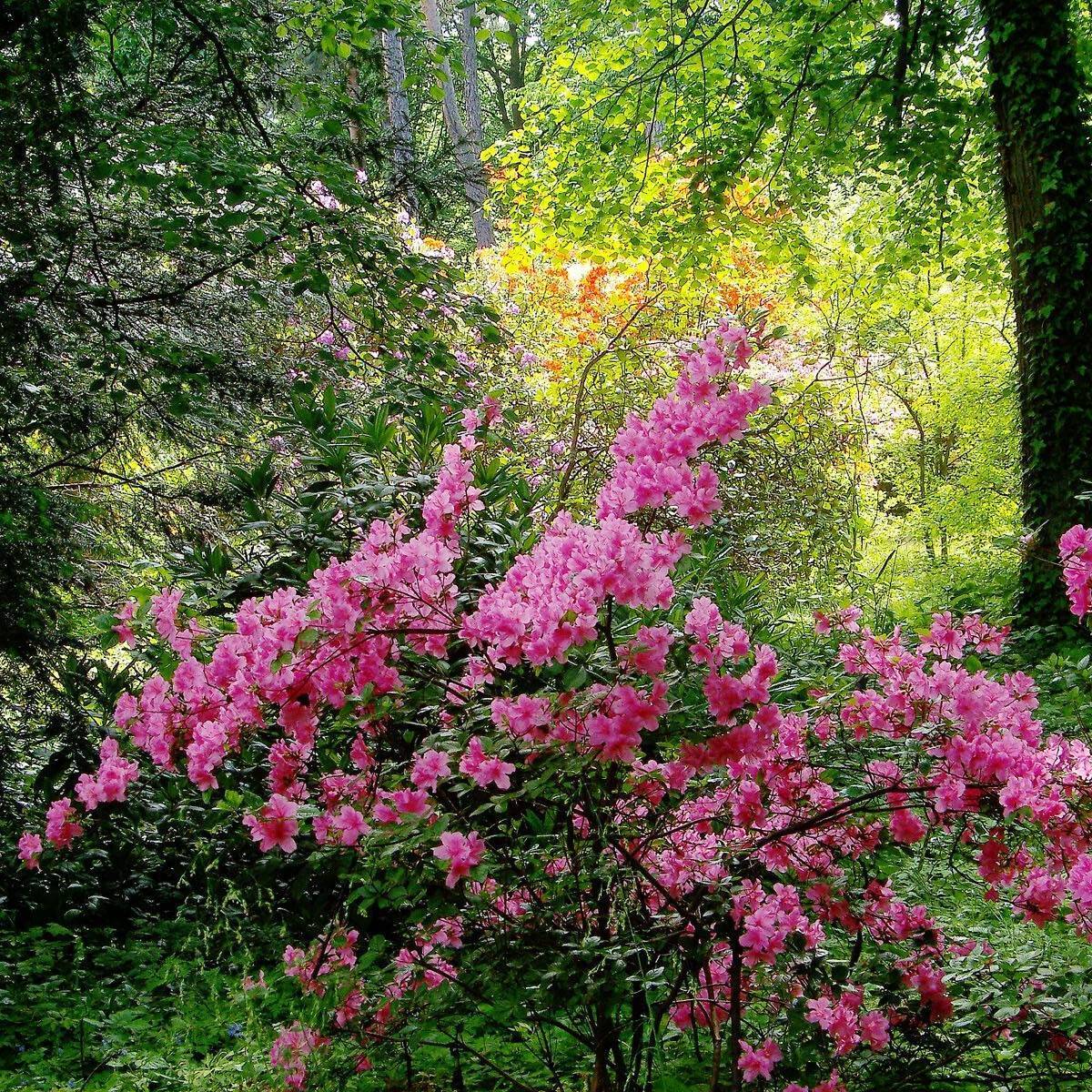
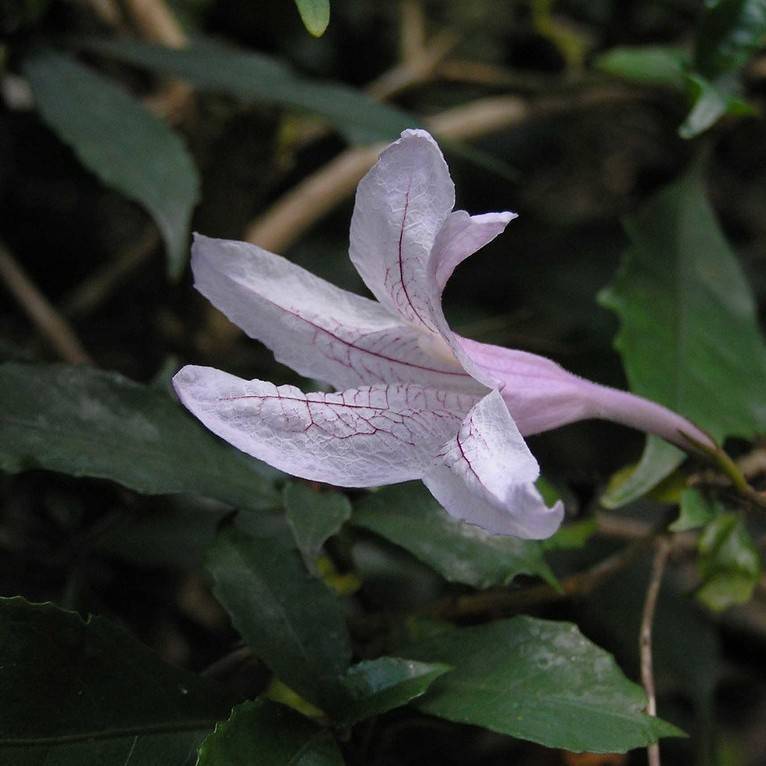
Forest bell bush is an upright, evergreen shrub native to the dappled understory of southern Africa’s subtropical forests. It produces clusters of trumpet-shaped, pale lilac or white flowers marked with delicate purple veins, which bloom profusely from spring to early summer. Its glossy, deep green, oval leaves add year-round visual interest, making it a popular choice for shaded gardens or indoor container displays in temperate climates.
Care Guide
Watering
Keep soil consistently moist but not waterlogged during the active growing season from spring to fall, watering when the top 1 inch of soil feels dry to the touch. Reduce watering frequency in winter, allowing the top 2 inches of soil to dry out between sessions to prevent root rot. Avoid using hard, chlorinated water, as this can cause leaf tip burn on sensitive foliage.
Light
Thrives in bright, indirect light or dappled shade, replicating its native forest understory habitat. Avoid direct midday sun, which can scorch its delicate leaves and cause unsightly brown patches. It can tolerate low light conditions for short periods, but reduced light will result in fewer flowers and sparser foliage growth.
Soil
Requires well-draining, loamy, slightly acidic soil with a pH between 5.5 and 6.5 to support healthy root growth. A mix of peat moss, perlite, and compost works well for container-grown specimens, providing both moisture retention and adequate aeration. Heavy, clay soils that hold excess moisture will quickly lead to root rot, so amend with organic matter before planting in garden beds.
Fertilizer
Feed with a balanced, water-soluble fertilizer diluted to half strength every 4 weeks during the active growing season from spring to late summer. Avoid fertilizing in fall and winter, when the plant enters a period of dormancy and new growth slows. Excess nitrogen will encourage lush foliage growth at the expense of flower production, so use a formula with equal parts nitrogen, phosphorus, and potassium.
Temperature
Prefers mild temperatures between 60-75°F (15-24°C) during the growing season, and can tolerate brief dips down to 30°F (-1°C) if grown in a sheltered location. Frost will damage foliage and kill above-ground growth, so container-grown specimens should be moved indoors before temperatures drop below 40°F (4°C) in cool climates. Avoid placing it near cold drafts or heating vents, which can cause leaf drop.
Pruning
Prune lightly immediately after flowering to maintain a compact, bushy shape and remove any spent flower clusters to encourage additional bloom production the following year. Remove dead, damaged, or crossing branches at any time to improve air circulation and reduce the risk of fungal disease. Hard pruning can be done in early spring to rejuvenate overgrown specimens, as the plant will readily sprout new growth from old wood.
Propagation
Most commonly propagated from semi-hardwood cuttings taken in late summer or early fall, using 4-6 inch stem sections with at least two sets of leaves. Dip cut ends in rooting hormone powder, plant in a moist, well-draining propagation mix, and keep in a warm, humid location with bright indirect light until roots form in 4-6 weeks. It can also be grown from fresh seed sown in spring, though seed-grown plants take 2-3 years to reach flowering maturity.
Humidity
Thrives in moderate to high humidity levels between 50-70%, replicating its native subtropical forest environment. Indoor-grown specimens benefit from regular misting, a pebble tray filled with water, or placement near a humidifier to counteract dry indoor air. Low humidity can cause leaf tip browning and reduced flower production, so avoid placing it near dry heat sources.
Repotting
Repot container-grown forest bell bush every 2-3 years in early spring, before new growth emerges, moving it to a pot just 1-2 inches larger in diameter than the previous one to avoid excess soil moisture retention. Gently loosen tangled roots before repotting, and use a fresh, well-draining potting mix amended with compost to provide nutrients for the coming growing season. Mature specimens can be top-dressed with fresh compost annually instead of repotting to reduce root disturbance.
Uses & Symbolism
Forest bell bush is widely grown as an ornamental shrub in shaded garden beds, woodland gardens, and container displays, valued for its long-lasting, attractive flowers and evergreen foliage. It is a popular choice for indoor houseplant collections in cool climates, where it adds lush greenery and seasonal blooms to low-light spaces. In its native range, it is occasionally used in traditional medicine to treat minor ailments such as coughs and skin irritations.
Diseases & Pests
Forest bell bush is susceptible to common fungal diseases including powdery mildew, leaf spot, and root rot, typically caused by overwatering, poor air circulation, or overly damp conditions. Common pests include aphids, whiteflies, and spider mites, which tend to infest new growth and can be controlled with insecticidal soap or neem oil applications. Overexposure to direct sun can cause leaf scorch, while low humidity or overfertilization leads to unsightly brown leaf tips.
Related plants
Other plants you might like if you grow Forest Bell Bush.
%22%2F%3E%0A%20%20%20%20%20%20%3Ccircle%20cx%3D%22920%22%20cy%3D%22180%22%20r%3D%2290%22%20fill%3D%22%23cfe8d5%22%2F%3E%0A%20%20%20%20%20%20%3Cpath%20d%3D%22M600%20590c-90-180-215-255-310-280%200%20165%20118%20296%20270%20296h40z%22%20fill%3D%22%2379b88e%22%2F%3E%0A%20%20%20%20%20%20%3Cpath%20d%3D%22M600%20590c80-150%20198-212%20302-228-8%20142-123%20255-270%20255h-32z%22%20fill%3D%22%235c9f73%22%2F%3E%0A%20%20%20%20%20%20%3Cpath%20d%3D%22M600%20610V360%22%20stroke%3D%22%234f8c64%22%20stroke-width%3D%2218%22%20stroke-linecap%3D%22round%22%2F%3E%0A%20%20%20%20%20%20%3Ctext%20x%3D%22600%22%20y%3D%22700%22%20text-anchor%3D%22middle%22%20font-family%3D%22Arial%2C%20sans-serif%22%20font-size%3D%2244%22%20fill%3D%22%23365c45%22%3E%0A%20%20%20%20%20%20%20%20Plant%20image%20coming%20soon%0A%20%20%20%20%20%20%3C%2Ftext%3E%0A%20%20%20%20%3C%2Fsvg%3E%0A%20%20)