Dyer's Woad
Isatis tinctoria
Overview
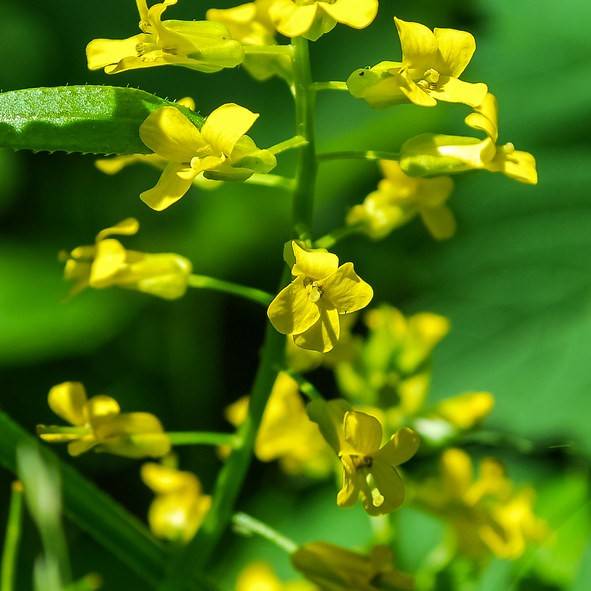
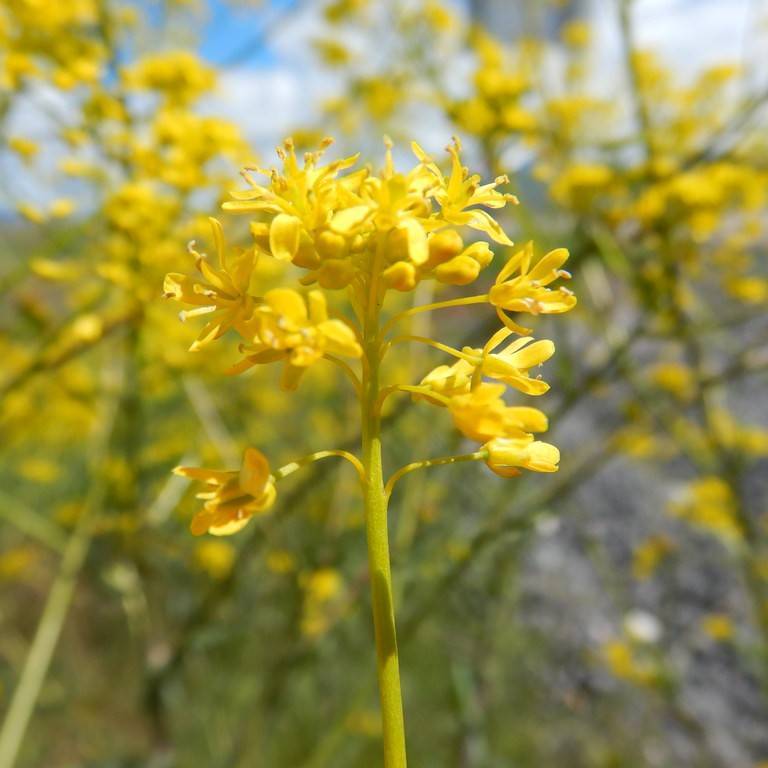
Dyer's woad is a robust, upright biennial best known for its centuries-long role as a primary source of indigo-like blue dye before synthetic alternatives became widespread. In its first year, it produces a low rosette of bluish-green, oblong leaves, while second-year plants send up tall, branching stems topped with clusters of small, bright yellow four-petaled flowers. After flowering, it develops flat, dark brown seed pods that disperse readily, leading the plant to be classified as invasive in some regions of North America and Australia.
Care Guide
Watering
Dyer's woad is highly drought-tolerant once established, requiring only occasional deep watering during prolonged dry periods; overwatering will lead to root rot, so allow the top several inches of soil to dry out completely between waterings. First-year rosettes may need more consistent moisture to become established, but avoid saturating the soil at any growth stage.
Light
This plant thrives in full, direct sunlight, requiring a minimum of 6 hours of unobstructed sun per day to produce healthy foliage and robust flowering stems in its second year. It can tolerate very light partial shade, but growth will be stunted and dye content in leaves will be significantly reduced in low-light conditions.
Soil
Dyer's woad adapts to a wide range of soil types, including poor, rocky, or sandy soils, as long as the growing medium has excellent drainage. It prefers a neutral to slightly alkaline pH between 6.5 and 8.0, and will struggle in heavy, waterlogged clay soils that retain excess moisture around the root zone.
Fertilizer
This plant grows well in low-nutrient soils and rarely requires supplemental fertilization; excessive nitrogen will promote soft, leggy growth and reduce the concentration of dye compounds in the leaves. If grown in extremely depleted soil, a single light application of balanced, slow-release fertilizer in early spring of the first year is sufficient to support healthy development.
Temperature
Dyer's woad is cold-hardy, tolerating winter temperatures as low as -30°F (-34°C) in its first-year rosette stage, making it suitable for growth in USDA hardiness zones 4 through 9. It prefers cool growing conditions for foliage development, but second-year plants tolerate warm summer temperatures up to 90°F (32°C) as they flower and set seed.
Pruning
If growing dyer's woad for dye production, harvest mature first-year leaves in late summer before the first frost, taking no more than ⅓ of the rosette per harvest to avoid killing the plant. To prevent unwanted self-seeding and invasive spread, cut back flowering stalks immediately after blooms fade before seed pods mature and disperse.
Propagation
Dyer's woad is most easily propagated from seed, which can be sown directly outdoors in early spring as soon as the soil can be worked, or in late fall for overwintering and earlier germination the following spring. Seeds require no pre-treatment, and will germinate in 7 to 14 days when kept in moist soil at temperatures between 55°F and 70°F (13°C to 21°C).
Humidity
This plant is adapted to dry, temperate climates and thrives in average to low humidity levels between 30% and 50%. High humidity, especially combined with poor air circulation, increases the risk of fungal leaf spots and powdery mildew, so ensure plants are spaced appropriately to allow for good airflow.
Repotting
Dyer's woad is rarely grown in containers, as its long taproot requires deep growing space to develop properly. If grown in pots, use a deep, 5-gallon or larger container with drainage holes, and repot only in the first year before the taproot becomes established and prone to damage during transplanting.
Uses & Symbolism
Historically, dyer's woad was one of the most important natural blue dye sources in Europe and Western Asia, used to color textiles, paint, and ink from the Bronze Age through the Middle Ages until synthetic indigo replaced it commercially. Today it is cultivated by heritage craft enthusiasts and small-scale natural dyers for its unique soft blue hue, and it is occasionally used in traditional herbal medicine for its astringent and anti-inflammatory properties. Some research is also ongoing into its potential bioactive compounds for pharmaceutical applications.
Diseases & Pests
Dyer's woad is relatively pest and disease resistant, but may be affected by common brassica pests such as aphids, flea beetles, and cabbage white caterpillars, which feed on its foliage and can reduce dye yield if populations are large. Fungal issues including powdery mildew, downy mildew, and root rot occur most often in overly moist, poorly drained soil or high-humidity conditions with insufficient air circulation. In its native range, it may also be affected by white rust, a fungal disease that causes yellow pustules on leaves and stunts growth.
Related plants
Other plants you might like if you grow Dyer's Woad.