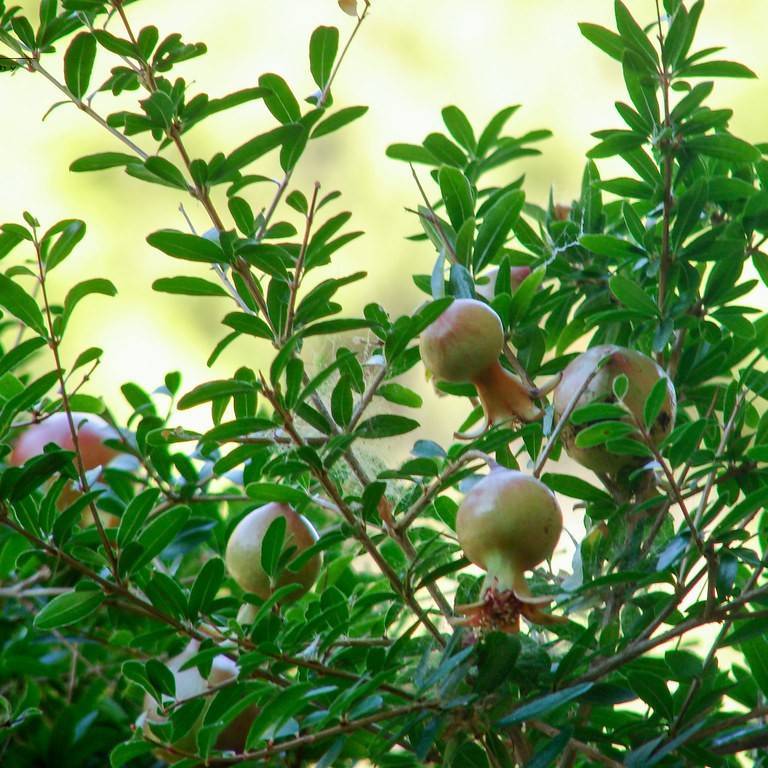
Dwarf Pomegranate
Punica granatum var. nana
Overview
The dwarf pomegranate is a compact, deciduous shrub that retains all the ornamental and edible traits of its full-size relative in a space-saving form. It produces showy, funnel-shaped orange-red flowers from late spring to early fall, followed by small, 2-3 inch diameter pomegranates with tart, edible arils. Its dense, glossy green foliage turns a warm yellow in autumn, and it responds extremely well to pruning, making it a popular choice for bonsai enthusiasts and small-space gardeners alike.
Care Guide
Watering
Water dwarf pomegranates deeply when the top 1-2 inches of soil feel dry to the touch, reducing frequency in winter when the plant is dormant. Avoid overwatering or allowing the plant to sit in standing water, as this can cause root rot, though it tolerates short periods of drought once established. Container-grown specimens may require more frequent watering during hot, dry weather, as potting mix dries out faster than garden soil.
Light
This shrub thrives in full sun, requiring a minimum of 6-8 hours of direct sunlight daily to produce abundant flowers and fruit. When grown indoors, place it in a south-facing window or supplement with grow lights to prevent leggy growth and poor blooming. Insufficient light will lead to reduced flowering, sparse foliage, and no fruit set.
Soil
Dwarf pomegranate prefers well-draining, loamy or sandy soil with a slightly acidic to neutral pH between 5.5 and 7.5. For container plantings, use a high-quality potting mix amended with perlite or coarse sand to improve drainage, and avoid heavy, clay-heavy soils that retain excess moisture. It tolerates poor, rocky soils better than many fruiting shrubs, making it adaptable to a range of garden conditions.
Fertilizer
Feed established plants with a balanced, slow-release 10-10-10 fertilizer in early spring just as new growth emerges, and again in mid-summer to support flowering and fruit development. Avoid over-fertilizing with high-nitrogen formulas, as this will promote lush foliage growth at the expense of flowers and fruit. Potted specimens benefit from a diluted liquid fertilizer applied every 4-6 weeks during the growing season, with no feeding in winter.
Temperature
It grows best in temperatures between 60-85°F (15-29°C) during the active growing season, and tolerates light frost down to 10°F (-12°C) once mature, though young plants need protection from freezing conditions. When grown indoors, it requires a cool dormant period in winter with temperatures between 40-50°F (4-10°C) to support healthy flowering the following year. Extended exposure to temperatures above 90°F (32°C) may cause flower drop without adequate water.
Pruning
Prune in late winter or early spring before new growth emerges to shape the shrub, remove dead or crossing branches, and improve air circulation within the canopy. Pinch back new growth during the growing season to encourage bushier form, especially if growing as a bonsai or compact container specimen. Remove any suckers that grow from the base of the plant to maintain a tidy, single-trunk form if desired.
Propagation
Dwarf pomegranate is most commonly propagated from semi-hardwood cuttings taken in late summer, rooted in moist, well-draining potting mix under high humidity. It can also be grown from seed saved from ripe fruit, though seed-grown plants may take 2-3 years to produce flowers, while cutting-grown specimens often bloom in their first year. Air layering is another successful propagation method for larger, more mature specimens.
Humidity
This shrub tolerates a wide range of humidity levels, thriving in average household humidity between 30-50% when grown indoors. It adapts well to the dry conditions of Mediterranean climates and arid regions, though very low humidity below 20% may cause leaf tip browning. No extra humidity is required, but occasional misting during very dry spells can help keep foliage looking healthy.
Repotting
Repot container-grown dwarf pomegranates every 2-3 years in late winter during dormancy, moving up one pot size only when the plant becomes root-bound. Use fresh, well-draining potting mix at repotting time, and gently trim back any circling or overly long roots to encourage healthy new root growth. Bonsai specimens require annual root pruning and repotting to maintain their compact size and health.
Uses & Symbolism
Dwarf pomegranate is widely grown as an ornamental shrub for borders, container displays, and bonsai, valued for its long bloom period and attractive foliage and fruit. The small, tart arils are edible and can be used in juices, salads, and garnishes, though they are smaller and less sweet than full-size pomegranate varieties. It is also planted in xeriscapes and drought-tolerant gardens for its low water needs once established.
Diseases & Pests
Dwarf pomegranate is relatively pest-resistant, but may be affected by aphids, whiteflies, and scale insects, which can be controlled with insecticidal soap or neem oil applications. Overwatering or poorly draining soil can lead to root rot, the most common fungal issue affecting this plant, which is preventable by allowing soil to dry between waterings. It may also develop leaf spot or powdery mildew in overly humid, poorly ventilated conditions, which can be mitigated by improving air circulation around the plant.
Related plants
Other plants you might like if you grow Dwarf Pomegranate.