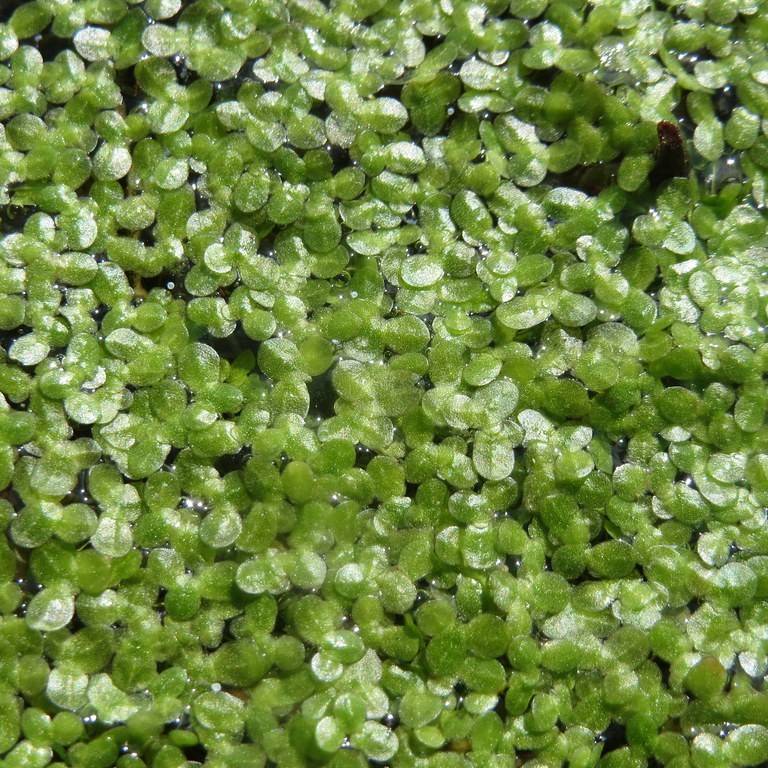
Common Duckweed
Lemna minor
Overview
Common duckweed is one of the smallest flowering plants on Earth, consisting of a single oval, bright green frond with a single root hanging below the water surface. It reproduces rapidly via vegetative budding, doubling its population in as little as 2-3 days under ideal conditions, and forms thick, continuous mats on calm ponds, lakes, and slow-moving streams. While it provides shelter for small aquatic organisms and food for waterfowl, unregulated growth can sometimes block sunlight from submerged plants and deplete oxygen in stagnant water.
Care Guide
Watering
Grows fully submerged at the water surface, requiring consistent still or very slow-moving freshwater to thrive; avoid strong currents or turbulent water that disrupts floating mats. If cultivated in containers, maintain a consistent water level, topping off with dechlorinated water as evaporation occurs to prevent fronds from drying out.
Light
Thrives in full sun to partial shade, requiring a minimum of 4-6 hours of direct or bright indirect light daily for optimal growth. Too much intense, unfiltered midday sun in very hot climates may cause frond yellowing, while insufficient light leads to sparse growth and pale foliage.
Soil
Requires no soil, as it absorbs all necessary nutrients directly from the water through its fine, hanging root system. It grows best in nutrient-rich water with high levels of nitrogen and phosphorus, typical of organically enriched freshwater ecosystems.
Fertilizer
No supplemental fertilizer is required when grown in nutrient-rich natural water bodies or pond systems that accumulate organic waste from fish or decomposing plant matter. In container cultivation, add a diluted balanced liquid aquatic fertilizer every 2-4 weeks if water is low in nutrients to support healthy, fast growth.
Temperature
Prefers water temperatures between 60-85°F (16-29°C), with optimal growth occurring in the 70-75°F (21-24°C) range. It can tolerate brief dips to 32°F (0°C), though growth stops; in cold climates, it overwinters by producing dormant turions that sink to the water bottom until temperatures warm in spring.
Pruning
No traditional pruning is required, but excess growth should be skimmed from the water surface regularly to prevent overcrowding, which can lead to oxygen depletion in the water below. Remove any yellowed, dying fronds during skimming to prevent organic buildup that can alter water quality.
Propagation
Propagates almost exclusively via vegetative division in cultivation: simply separate a small portion of healthy fronds from an existing mat and place them on the surface of fresh, nutrient-rich water. Under ideal conditions, the small colony will spread rapidly to cover the available water surface in a matter of weeks.
Humidity
As an aquatic floating plant, it requires near 100% ambient humidity directly above the water surface to prevent fronds from desiccating. In indoor container cultivation, avoid placing near drafty vents or heaters that can dry out the air above the water and damage fronds.
Repotting
Requires no repotting, as it does not grow in soil; transfer excess fronds to new water containers as needed to establish additional colonies. If water in a container becomes overly murky or depleted of nutrients, simply skim healthy fronds and move them to a fresh container of properly conditioned water.
Uses & Symbolism
Common duckweed is widely used in bioremediation projects to remove excess nitrogen, phosphorus, and heavy metals from agricultural runoff, wastewater, and eutrophic pond systems. It is harvested as a high-protein, sustainable feed supplement for poultry, pigs, fish, and livestock, with protein content comparable to soybeans. It is also used as a fast-growing food source for herbivorous aquarium and pond fish, and as a shelter for fry and small aquatic invertebrates.
Diseases & Pests
Common duckweed is relatively pest-resistant, but may be fed on by duckweed weevils, aphids, and certain species of caterpillars that target floating aquatic vegetation. Overcrowded mats in stagnant water can develop fungal and bacterial rot, leading to widespread frond die-off if water oxygen levels drop too low. Algal blooms can outcompete duckweed for nutrients and light, reducing its growth rate if nutrient levels are excessively high in the water body.
Related plants
Other plants you might like if you grow Common Duckweed.