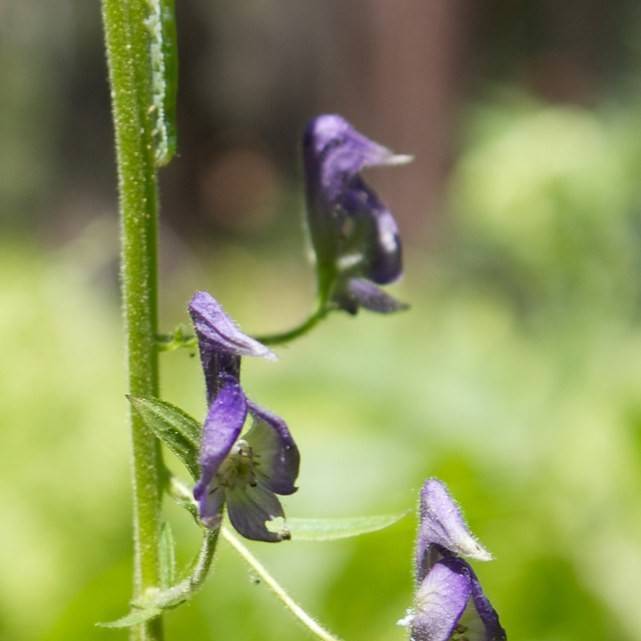
Columbian Monkshood
Aconitum columbianum
Overview
Columbian Monkshood is a herbaceous perennial native to damp mountain meadows, stream banks, and open woodlands across western North America. It produces tall, upright spikes of helmet-shaped, deep purple-blue flowers from mid to late summer, drawing pollinators like bumblebees adapted to reach its hidden nectar. Its deeply lobed, dark green foliage resembles that of related delphiniums, though it is far more toxic than many other garden ornamentals in the buttercup family.
Care Guide
Watering
Columbian Monkshood requires consistently moist, well-drained soil, and should never be allowed to dry out completely, especially during hot summer months. Water deeply and regularly to maintain even soil moisture, avoiding over-saturation that can lead to root rot in poorly draining sites. In drier garden locations, apply a layer of organic mulch around the base to help retain soil moisture and regulate root temperature.
Light
This species thrives in partial shade, particularly in regions with hot summer climates where intense midday sun can scorch its foliage. It can tolerate full sun only in cooler, northern or high-elevation areas where temperatures remain mild and soil moisture stays consistent. Too much deep shade will reduce flowering and cause tall stems to become leggy and require staking.
Soil
Columbian Monkshood prefers fertile, humus-rich, loamy soil with a neutral to slightly acidic pH between 6.0 and 7.0. The soil must have excellent drainage to prevent root rot, even as it retains consistent moisture, so amending heavy clay soils with compost or leaf mold is recommended before planting. Avoid sandy, fast-draining soils that cannot hold sufficient moisture for this moisture-loving species.
Fertilizer
Feed established plants in early spring with a balanced, slow-release organic fertilizer, such as compost or well-rotted manure, to support robust stem growth and abundant flowering. Avoid high-nitrogen fertilizers, which can promote excessive foliage growth at the expense of blooms and make tall stems more prone to flopping. A light top-dressing of compost in mid-summer can provide additional nutrients without over-fertilizing.
Temperature
Columbian Monkshood is cold-hardy in USDA zones 3 through 8, tolerating winter temperatures as low as -40°F (-40°C) when dormant. It prefers cool summer temperatures between 60–75°F (15–24°C), and struggles in extended periods of heat above 85°F (29°C), which can cause foliage wilting and stress. In warmer parts of its range, planting in partial shade and ensuring consistent moisture helps mitigate heat stress.
Pruning
Deadhead spent flower spikes immediately after blooming to encourage a possible second flush of smaller flowers later in the season and prevent unwanted self-seeding. Cut back the entire plant to ground level in late fall after foliage dies back naturally, wearing gloves at all times to avoid contact with toxic plant sap. Remove any weak or damaged stems in early spring to improve air circulation and reduce the risk of fungal disease.
Propagation
Columbian Monkshood is most commonly propagated by division of mature root clumps in early spring or late fall, when the plant is dormant, with all handlers wearing protective gloves to avoid toxin exposure. It can also be grown from seed, which requires a 3-month cold stratification period to break dormancy, and may take 2–3 years to reach flowering size when started from seed. Take care to avoid leaving root fragments or discarded plant material accessible to children or pets, as even dried plant parts remain toxic.
Humidity
This species adapts well to average ambient humidity levels common in its native mountain habitats, typically between 40–60% relative humidity. It does not require extra humidity in garden settings, but in very arid climates, regular watering and mulching will help compensate for low atmospheric moisture. Excessively high humidity combined with poor air circulation can increase the risk of fungal leaf spot and powdery mildew.
Repotting
Columbian Monkshood is rarely grown in containers, but if potted, it should be repotted every 2–3 years in early spring before new growth emerges, using a rich, well-draining potting mix. Select a deep pot to accommodate its extensive root system, and always wear gloves when handling the roots to avoid contact with toxic compounds. Ensure pots have adequate drainage holes to prevent waterlogging, which can quickly lead to root rot.
Uses & Symbolism
Columbian Monkshood is primarily grown as an ornamental perennial in shade and cottage gardens, valued for its tall, dramatic flower spikes that add vertical interest to damp, partially shaded planting beds. Historically, Indigenous peoples of western North America used extremely diluted preparations of the plant for limited medicinal purposes, and processed the toxic roots to create poison for hunting arrows. Due to its extreme toxicity, it is not used for any culinary or modern medicinal purposes, and is only planted in gardens where access by children and pets can be strictly restricted.
Diseases & Pests
Columbian Monkshood is relatively pest-resistant, though it can be susceptible to common garden aphids and spider mites that feed on the underside of leaves, particularly in dry, warm conditions. Fungal diseases including powdery mildew, leaf spot, and crown rot can occur in poorly draining soil or in areas with high humidity and poor air circulation around the foliage. Deer and rabbits avoid feeding on this plant due to its toxic alkaloid content, making it a good choice for gardens prone to wildlife browsing.
Related plants
Other plants you might like if you grow Columbian Monkshood.