Bitter Cassava
Manihot esculenta subsp. esculenta (bitter cultivar group)
Overview
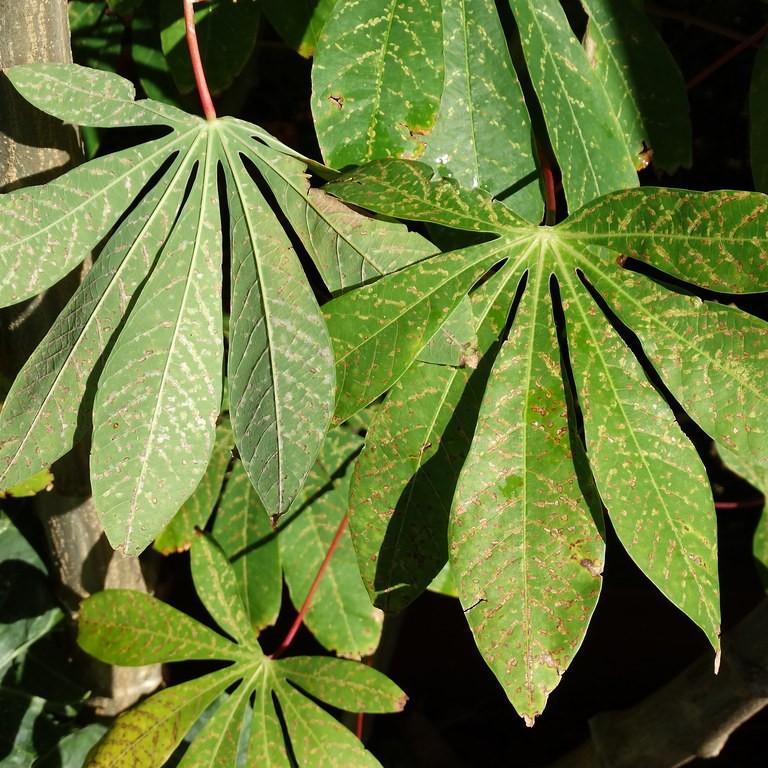
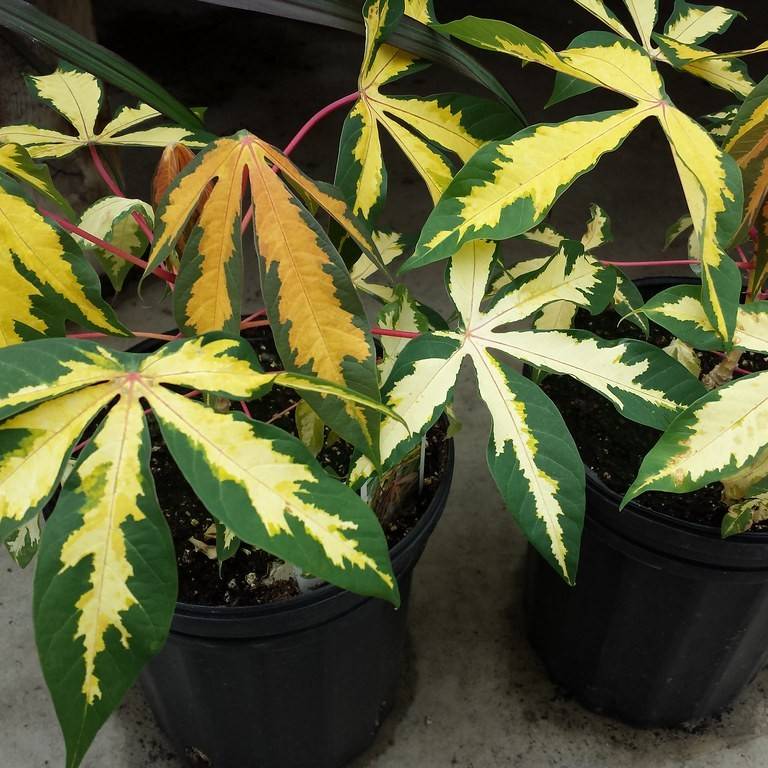
Bitter cassava is a woody perennial shrub in the spurge family, distinguished from sweet cassava by its far higher cyanogenic glycoside content, making it unsuitable for raw consumption. It is widely grown across tropical regions of Africa, Asia, and the Americas as a drought-tolerant staple food crop, with its high starch yield making it a critical food security resource for over 500 million people globally. The plant features palmately lobed green leaves and long, tapered brown tubers that can grow up to 3 feet in length under optimal growing conditions.
Care Guide
Watering
Bitter cassava is highly drought tolerant, requiring only occasional deep watering during extended dry periods; overwatering can lead to root rot, particularly in poorly drained soils. It is adapted to seasonal rainfall patterns, and can survive short periods of water scarcity with minimal yield loss, though consistent moisture during the first 3 months of growth supports robust establishment.
Light
Bitter cassava requires full, direct sunlight for at least 6 hours per day to produce high tuber yields, as shaded conditions slow growth and reduce starch accumulation in the roots. It cannot tolerate heavy shade, and plants grown in low light will produce sparse foliage and small, underdeveloped tubers.
Soil
Bitter cassava adapts to a wide range of soil types, including low-fertility, sandy, and loamy soils, but performs best in well-drained, slightly acidic to neutral soils with a pH of 5.5 to 7.0. It cannot survive in waterlogged or heavy clay soils, which cause tuber rot and stunted growth, and it tolerates low nutrient levels far better than most staple food crops.
Fertilizer
Bitter cassava has low nutrient requirements, and typically only needs a light application of balanced NPK fertilizer at planting time if grown in very poor, depleted soils. Excess nitrogen fertilizer will promote excessive foliage growth at the expense of tuber development, so avoid overfertilizing, particularly during the later stages of the growing cycle.
Temperature
Bitter cassava thrives in tropical temperatures between 77°F and 90°F (25°C to 32°C), and cannot tolerate frost or temperatures below 50°F (10°C), which will kill foliage and damage tubers. It is adapted to warm, humid tropical and subtropical climates, and prolonged cool temperatures will slow growth significantly and reduce yield.
Pruning
Pruning is rarely required for bitter cassava, though removing dead or damaged foliage can improve air circulation and reduce the risk of fungal disease. Some growers cut back upper foliage 1 to 2 months before harvest to redirect plant energy to tuber maturation, though this is optional and not required for a successful crop.
Propagation
Bitter cassava is almost exclusively propagated vegetatively using 8 to 12 inch (20 to 30 cm) long cuttings taken from the mature, woody stems of healthy, disease-free plants. Cuttings are planted horizontally or at a shallow angle 2 to 3 inches deep in prepared soil, and will root and sprout new growth within 2 to 3 weeks under warm, moist conditions; seed propagation is rare and primarily used for breeding purposes.
Humidity
Bitter cassava thrives in moderate to high humidity between 60% and 90%, which is typical of its native tropical range, though it can tolerate lower humidity levels as long as soil moisture is adequate. It is not suited to arid, low-humidity environments unless supplemental irrigation is provided to support growth and tuber development.
Repotting
Bitter cassava is almost exclusively grown in outdoor agricultural settings, so repotting is not a standard practice for commercial or home cultivation. If grown in containers for experimental or ornamental purposes, repot once per year in the early growing season into a larger container with well-drained potting mix to accommodate expanding tuber growth.
Uses & Symbolism
Bitter cassava tubers are processed via soaking, fermenting, drying, or cooking to remove toxic cyanogenic glycosides, then used to produce flour, tapioca starch, garri, fufu, and other staple food products across tropical regions. The foliage, after similar processing to reduce cyanide content, is sometimes used as a nutrient-rich leafy vegetable or livestock feed, and the starch is also used industrially in paper production, textiles, and biofuel manufacturing.
Diseases & Pests
Bitter cassava is susceptible to cassava mosaic virus, a widespread disease spread by whiteflies that causes yellow mottling of leaves, stunted growth, and significant yield loss, and root rot caused by overwatering or poorly drained soils. Common pests include cassava mealybugs, which feed on foliage and stems, and cassava green mites, which cause leaf discoloration and drop, though bitter varieties are generally more pest and disease resistant than sweet cassava cultivars.
Guides that mention Bitter Cassava
Monstera, Pothos, and Neon Pothos Root Rot: Signs, Causes, and Fixes for Common Tropical Houseplants
Learn to identify, treat, and prevent root rot in monstera, pothos, and neon pothos with simple, beginner-friendly steps for healthy tropical houseplants.
Jicama: A Complete Guide to Growing, Eating, and Storing This Crisp Root Vegetable
Learn all about jicama, including its nutrition, health benefits, growing tips, how to prepare and store it, plus safety notes about its toxic foliage and seeds.
Related plants
Other plants you might like if you grow Bitter Cassava.