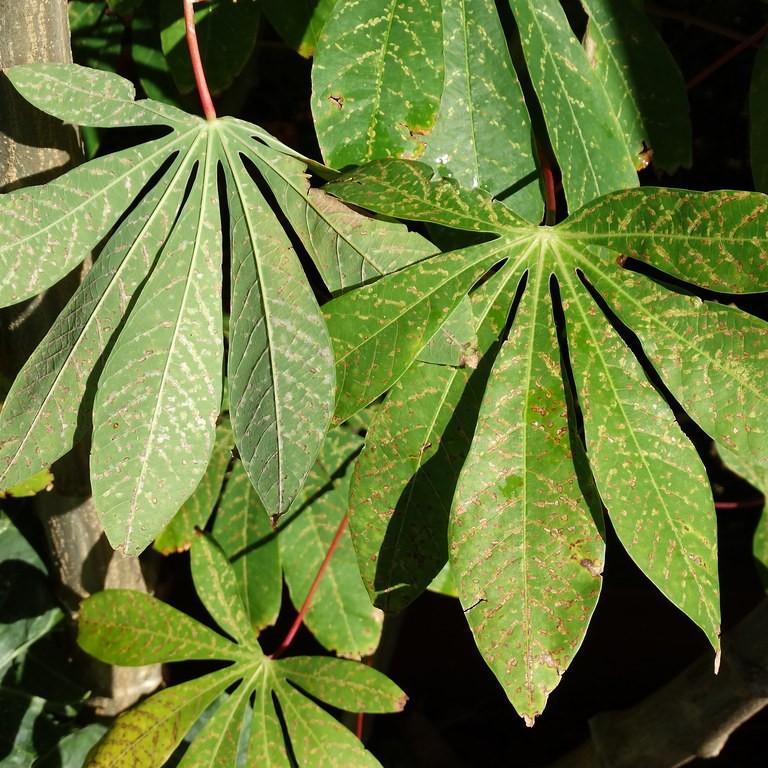
Cassava
Manihot esculenta
Overview
Cassava is a drought-tolerant woody perennial grown primarily for its edible, carbohydrate-rich tuberous roots, though its leaves are also consumed as a leafy green in many cultures. It is one of the most productive staple crops per unit of land and labor, thriving in low-fertility soils where other staples fail. Commercial cultivars are divided into 'sweet' low-cyanide varieties for direct consumption and 'bitter' high-cyanide varieties used for processed products like tapioca, flour, and animal feed.
Care Guide
Watering
Cassava is highly drought-tolerant, requiring regular moisture only during the first 3-4 months of establishment to support root development. Once established, it can survive extended dry periods, though consistent moderate rainfall of 40-60 inches (100-150 cm) annually supports optimal tuber yield. Avoid overwatering, as waterlogged soils cause root rot and reduce harvest quality.
Light
Cassava requires full, direct sunlight for a minimum of 6-8 hours per day to produce robust foliage and large, starchy tubers. It will not thrive in shaded conditions, with low light leading to sparse growth, reduced root development, and higher susceptibility to pest infestations.
Soil
Cassava adapts to a wide range of soil types but grows best in well-drained, sandy loam or loamy soils with a pH range of 5.5 to 6.5. It tolerates low-fertility, acidic, and even rocky soils where other staple crops cannot grow, though it will not survive in heavy, waterlogged clay soils that cause root rot.
Fertilizer
Cassava has low nutrient requirements, often producing acceptable yields in unamended low-fertility soils. For commercial production, apply a balanced NPK fertilizer at planting, supplemented with potassium 2-3 months after planting to support tuber bulking; excessive nitrogen promotes excessive foliage growth at the expense of root development.
Temperature
Cassava is a tropical crop requiring consistent warm temperatures between 77-90°F (25-32°C) for optimal growth. It is highly frost-sensitive, with temperatures below 50°F (10°C) causing foliage damage and root growth cessation, and prolonged exposure to freezing temperatures killing the plant entirely.
Pruning
Pruning is not required for cassava, but cutting back 20-30% of foliage 6-8 months after planting can redirect energy to tuber development and increase final harvest yield. Remove any yellowed, diseased, or pest-damaged leaves throughout the growing season to reduce the spread of pathogens and improve air circulation around the plant.
Propagation
Cassava is almost exclusively propagated vegetatively using 8-12 inch (20-30 cm) long mature stem cuttings taken from 8-12 month old healthy plants, as seed-grown plants produce inconsistent tuber size and quality. Plant cuttings at a 45-degree angle in moist soil 2-3 inches (5-7.5 cm) deep at the start of the wet season, with rooting and new foliage growth typically occurring within 1-2 weeks.
Humidity
Cassava thrives in moderate to high humidity levels of 60-90%, typical of its native tropical range, though it tolerates lower humidity during extended dry periods once established. Very low humidity can increase leaf drop and reduce photosynthetic capacity, slowing tuber development, while extremely high humidity paired with poor air circulation increases the risk of foliar fungal diseases.
Repotting
Cassava is rarely grown in containers long-term, as it requires ample root space to develop harvestable tubers. If grown in pots for ornamental or research purposes, repot young plants annually into larger containers with fresh, well-drained potting mix, moving to 15-20 gallon containers for full root development if you intend to harvest tubers.
Uses & Symbolism
Cassava is a global staple food, with its starchy roots consumed boiled, fried, or processed into flour, tapioca pearls, garri, fufu, and other traditional dishes across Africa, Asia, and Latin America. Its leaves are a nutrient-dense leafy green rich in protein, vitamins, and minerals, consumed cooked in soups and stews in many tropical regions. Industrially, cassava starch is used in food processing, textile manufacturing, biofuel production, and biodegradable plastic production, while crop residues are used as animal feed.
Diseases & Pests
Cassava is susceptible to cassava mosaic virus, a vector-borne disease spread by whiteflies that causes yellow mottling of leaves, stunted growth, and significant yield losses, and is one of the most economically damaging pathogens for the crop. Root rot caused by Phytophthora and Fusarium fungi is common in waterlogged soils, leading to rotting tubers and plant death. Common pests include cassava mealybugs, spider mites, and root-knot nematodes, which feed on foliage and roots, reducing plant vigor and harvest quality.
Guides that mention Cassava
Related plants
Other plants you might like if you grow Cassava.