American Black Elderberry
Sambucus canadensis
Overview
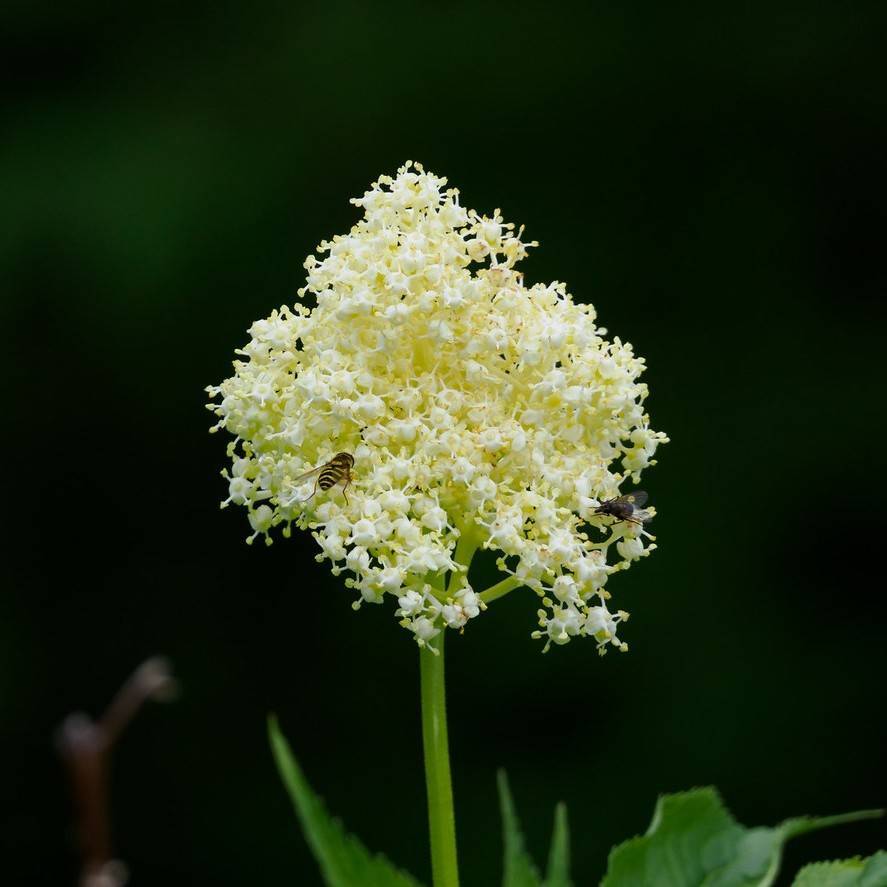
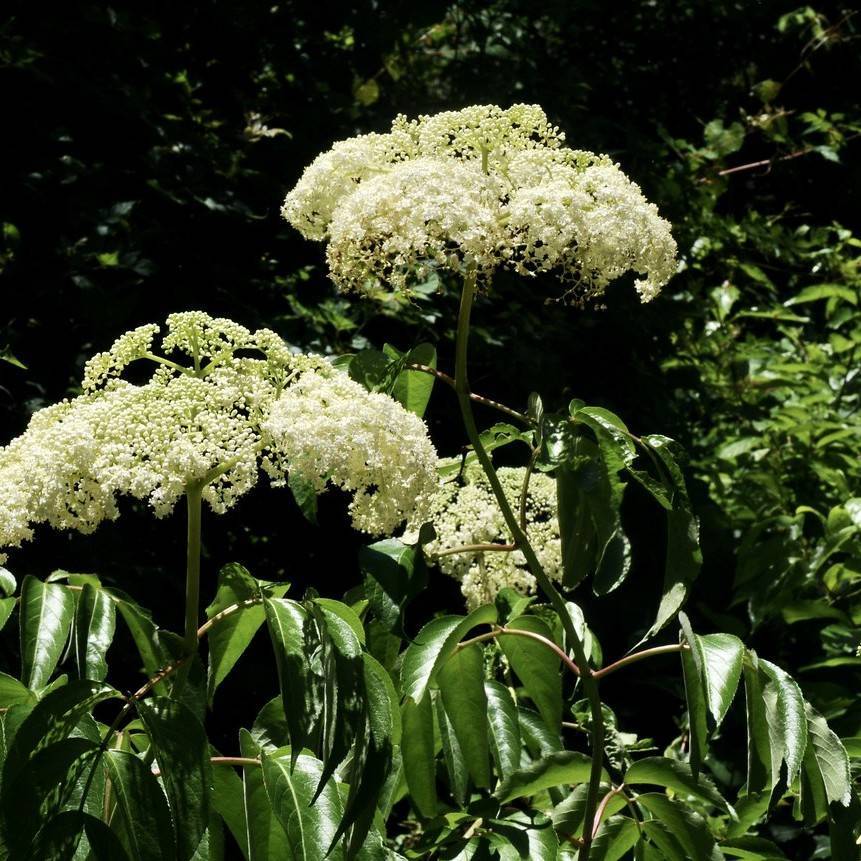
American Black Elderberry is a fast-growing, suckering deciduous shrub native to moist woodland edges, stream banks, and meadows across eastern and central North America. It produces large, flat clusters of tiny, fragrant white flowers in summer, followed by drooping bunches of small, glossy purplish-black berries in late summer to early fall. It is widely cultivated for both ornamental value and edible fruit, and supports a wide range of native wildlife including birds, bees, and butterflies.
Care Guide
Watering
Water regularly to keep soil consistently moist, especially during the first 2-3 years of establishment and periods of prolonged drought; avoid waterlogged conditions, as overly saturated soil can cause root rot. Mature shrubs are moderately drought tolerant, but consistent moisture supports larger flower and fruit yields.
Light
Grows best in full sun, which encourages abundant flowering and fruiting, but can tolerate partial shade. In shadier locations, growth will be leggier, flower clusters will be smaller, and berry production will be significantly reduced.
Soil
Thrives in moist, well-drained, loamy soil with a pH between 5.5 and 6.5, but adapts to a wide range of soil types including clay, sand, and wet soils as long as drainage is adequate. Amend heavy, poorly draining soil with organic matter such as compost or leaf mold prior to planting to improve structure and nutrient content.
Fertilizer
Apply a balanced 10-10-10 granular fertilizer in early spring before new growth emerges, at a rate of 1 pound per shrub, to support vigorous growth and fruit development. Avoid over-fertilizing, as excessive nitrogen can lead to lush foliage growth at the expense of flower and berry production. Established shrubs may only need fertilization every 2-3 years if grown in nutrient-rich soil.
Temperature
Adaptable to USDA hardiness zones 3 through 9, tolerating winter temperatures as low as -40°F (-40°C) and summer highs up to 95°F (35°C). Winter dormancy is required for healthy growth; late spring frosts can damage emerging flower buds, reducing fruit yields for the season.
Pruning
Prune in late winter or early spring while the shrub is dormant, removing dead, damaged, or crossing branches to improve air circulation and reduce disease risk. Remove any suckers growing outside the desired planting area to control spread, as elderberry is a vigorous suckering plant that can form large colonies over time. For fruit production, cut back stems older than 3 years, as younger stems produce the heaviest berry yields.
Propagation
Most commonly propagated from softwood cuttings taken in early summer, rooted in moist potting mix under high humidity, with roots forming in 4-6 weeks. Can also be propagated from seed, which requires 3-4 months of cold stratification to germinate, though seed-grown plants may not retain the fruit characteristics of the parent plant. Division of established suckering clumps in early spring or late fall is also a reliable propagation method.
Humidity
Tolerates a wide range of humidity levels, from 40% to 80%, as long as soil moisture needs are met. High humidity combined with poor air circulation can increase the risk of fungal leaf diseases, so ensure plants are spaced appropriately to allow for air flow. It is well adapted to both the humid summers of the southeastern U.S. and the drier conditions of the central plains.
Repotting
American Black Elderberry is rarely grown in containers long-term due to its large size and suckering habit, but if potted, repot every 2-3 years in early spring before new growth emerges. Use a large, heavy container with drainage holes to prevent tipping, and refresh the potting mix with compost and perlite to improve drainage and nutrient content. Root-bound container-grown shrubs will have significantly reduced growth and fruit production, so monitor root growth regularly.
Uses & Symbolism
Fully ripe berries, when cooked, are used to make jams, jellies, syrups, wines, and herbal supplements valued for their reputed immune-supporting properties. The large, fragrant flower clusters are edible raw or cooked, and are often used to make elderflower cordial, fritters, or teas. It is also planted in wildlife gardens and native landscape restorations to support pollinators and provide food for songbirds, game birds, and small mammals.
Diseases & Pests
Common fungal diseases include powdery mildew, leaf spot, and canker, which are most prevalent in conditions of high humidity and poor air circulation; these can be managed by pruning to improve air flow and avoiding overhead watering. Common pests include aphids, spider mites, and elderberry borer, which can be controlled with insecticidal soap for small infestations or horticultural oil applied during dormancy for severe cases. Birds are a common nuisance for fruit growers, as they feed heavily on ripening berries; netting placed over shrubs a few weeks before harvest can protect the crop.
Related plants
Other plants you might like if you grow American Black Elderberry.