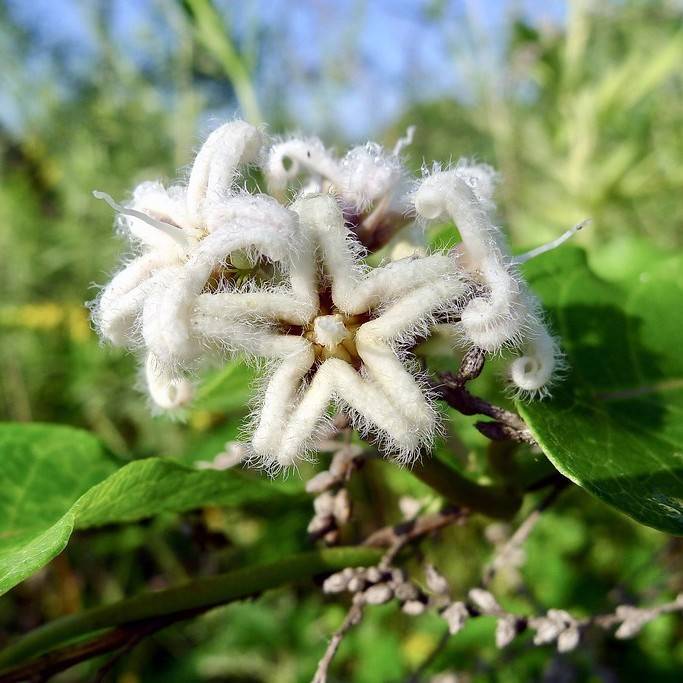
Gaga Imo
Dioscorea bulbifera 'Gaga Imo'
Overview
Gaga Imo is a selectively bred cultivar of the air potato, developed to have lower toxin levels than its wild counterparts, making it suitable for culinary use after thorough cooking. It produces small, warty aerial bulbils along its twining vines and larger starchy underground tubers, both of which are harvested as food staples in parts of Japan and East Asia. As a perennial vine, it dies back to its root system in cool winter months and resprouts vigorously when warm spring temperatures return.
Care Guide
Watering
Keep soil consistently moist but not waterlogged during the active growing season from spring to early fall, watering whenever the top 1 inch of soil feels dry to the touch. Reduce watering frequency gradually in fall as foliage begins to yellow, and keep soil only slightly damp during the winter dormant period to prevent tuber rot. Avoid overhead watering where possible to minimize the risk of fungal leaf spot diseases.
Light
Gaga Imo thrives in full sun to partial shade, requiring a minimum of 4 hours of direct sunlight daily to support robust tuber and bulbil development. In regions with intense midday summer sun, provide light afternoon shade to prevent leaf scorch and reduce excessive moisture loss from the soil. Grown indoors, place it near a south or west-facing window with bright, filtered light, supplementing with grow lights if natural light levels are insufficient.
Soil
Plant in loose, well-drained, loamy soil with a slightly acidic to neutral pH range of 5.5 to 7.0, amended with organic matter such as compost or well-rotted manure to boost nutrient content and improve drainage. Avoid heavy, compacted clay soils that hold standing water, as these will quickly cause the underground tubers to rot. For container cultivation, use a high-quality potting mix blended with perlite or coarse sand to enhance drainage and airflow around the root system.
Fertilizer
Feed monthly during the active growing season with a balanced, all-purpose 10-10-10 NPK fertilizer, diluted to half the recommended strength to avoid over-fertilization that can lead to excessive foliage growth at the expense of tuber development. Stop fertilizing entirely in late summer to allow the plant to prepare for its dormant winter phase. For outdoor garden plantings, top-dress the soil with a 2-inch layer of compost in early spring to provide a slow-release nutrient base for the growing season.
Temperature
Gaga Imo prefers warm growing temperatures between 65–85°F (18–29°C) during its active growth period, and will suffer foliage damage if exposed to temperatures below 50°F (10°C) for extended periods. In temperate regions with cold winters, the underground tubers can survive light freezes if heavily mulched, but container-grown plants should be brought indoors to a cool, frost-free location for the winter. Dormant tubers can be stored at 45–55°F (7–13°C) in a dry, dark location if lifted from the soil for the off-season.
Pruning
Trim back overlong, unruly vines during the growing season to control spread and improve airflow through the foliage, which helps reduce the risk of fungal diseases. Remove any yellowed, damaged, or diseased leaves as soon as they appear to prevent the spread of pathogens to healthy plant tissue. After the first frost kills back the foliage in fall, cut all vines down to ground level to prepare the plant for its dormant period.
Propagation
Gaga Imo is most easily propagated using the small aerial bulbils produced along the vines, which can be harvested once they mature and fall naturally from the plant in late fall. Plant bulbils 2–3 inches deep in loose, moist potting mix in early spring, keeping them warm and consistently moist until they sprout, typically within 2–4 weeks. It can also be propagated by dividing the larger underground tubers during the dormant winter period, ensuring each divided section has at least one visible growth bud before replanting.
Humidity
Gaga Imo adapts well to average ambient humidity levels between 40–60%, which is typical for most indoor and outdoor growing environments. In very dry, arid climates, mist the foliage occasionally during the hottest summer months to raise local humidity and prevent leaf tip browning. Avoid excessively high, sustained humidity levels above 70%, as this can increase the risk of fungal leaf and tuber diseases.
Repotting
Container-grown Gaga Imo should be repotted annually during the dormant winter period, before new spring growth emerges, to refresh the soil and provide extra room for expanding tubers. Choose a pot that is 2–3 inches wider and deeper than the previous container, with ample drainage holes to prevent waterlogging. When repotting, inspect the tubers for signs of rot or damage, trimming away any affected areas before planting in fresh, well-drained potting mix.
Uses & Symbolism
Harvested Gaga Imo bulbils and tubers are boiled, roasted, or steamed as a starchy staple in Japanese and other East Asian cuisines, with a mild, sweet flavor similar to sweet potatoes when fully cooked. It is sometimes grown as an ornamental vining plant for its large, heart-shaped foliage, trained up trellises, arbors, or fences to provide natural summer shade. In traditional East Asian folk medicine, cooked Gaga Imo is used to support digestive health and provide a nutrient-dense food source for post-illness recovery.
Diseases & Pests
Gaga Imo is susceptible to fungal leaf spot and anthracnose in overly moist, poorly ventilated conditions, which appear as brown or black lesions on foliage and can spread rapidly if left untreated. Common pests include aphids, spider mites, and yam beetles, which feed on leaf sap and tuber tissue, reducing plant vigor and harvest yields. Tuber rot is a major issue in waterlogged soils, caused by various fungal and bacterial pathogens that can kill the entire plant if drainage is not improved quickly.
Related plants
Other plants you might like if you grow Gaga Imo.