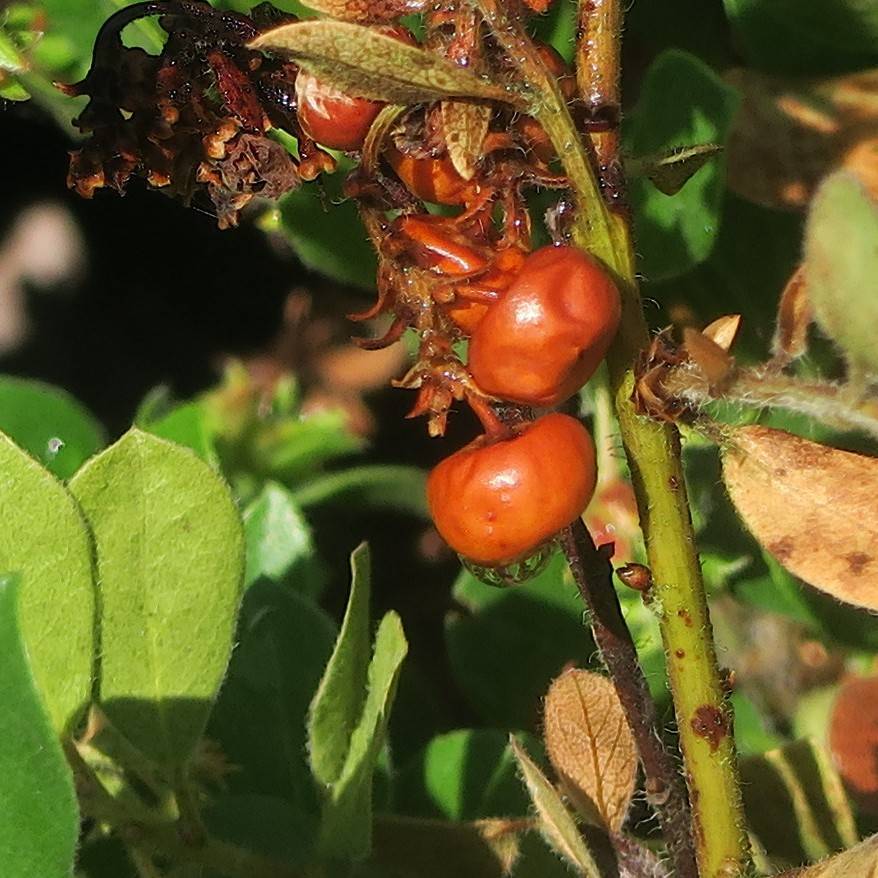
Hairy Manzanita
Arctostaphylos columbiana
Overview
Hairy manzanita is a broadleaf evergreen shrub recognizable by its peeling, reddish-brown bark coated in fine, fuzzy hairs on new growth, paired with leathery, oval dark green leaves. It produces clusters of drooping, urn-shaped white to pale pink flowers in late winter to early spring, followed by small, round, reddish-brown edible berries that persist into fall. Adapted to well-drained, nutrient-poor soils, it thrives in sunny coastal bluffs, dry coniferous forests, and rocky slopes across its native Pacific Northwest range, supporting local pollinators and bird species.
Care Guide
Watering
Hairy manzanita is highly drought-tolerant once established, requiring only occasional deep watering during extended hot, dry periods; overwatering, especially in heavy soils, will quickly cause root rot. Newly planted specimens need regular, light watering for the first 1-2 years to help roots establish, but should be allowed to dry out completely between waterings to avoid stress. Avoid wetting the foliage or trunk when watering to reduce the risk of fungal disease.
Light
This shrub requires full sun to light partial shade for optimal growth and flowering; full sun exposure encourages denser foliage, more abundant blooms, and the characteristic rich red bark color. In extremely hot, inland locations, a small amount of afternoon shade can prevent leaf scorch, but it will become leggy and produce fewer flowers if grown in heavy shade. It tolerates strong coastal winds and salt spray, making it ideal for exposed coastal gardens.
Soil
Hairy manzanita requires extremely well-drained, acidic to neutral soil with low nutrient content, thriving in sandy, gravelly, or rocky soils that mimic its native slope and bluff habitats. It cannot tolerate heavy clay or waterlogged soils, which lead to fatal root rot; amend heavy planting sites with coarse sand or gravel to improve drainage before planting. It does not need rich organic matter, and adding high-nitrogen compost or fertilizer can damage its sensitive root system.
Fertilizer
Hairy manzanita is adapted to low-nutrient soils and rarely requires fertilization; even mild, general-purpose fertilizers can burn its fine, shallow root system or disrupt its natural growth rhythm. If growth appears stunted or leaves show unusual yellowing not caused by overwatering, apply a very dilute, slow-release ericaceous fertilizer once in early spring, taking care to avoid direct contact with the trunk or roots. Never apply high-nitrogen fertilizers, as these can lead to excessive, weak growth and reduce flowering and berry production.
Temperature
This species is cold-hardy to USDA zones 6 through 9, tolerating winter temperatures as low as -10°F (-23°C) and summer heat up to 100°F (38°C) when established. It prefers mild, coastal temperature ranges but can adapt to inland conditions if provided with adequate drainage and occasional summer water. Severe, prolonged frost can damage new growth, but mature plants typically regrow quickly from woody stems once temperatures warm.
Pruning
Hairy manzanita requires minimal pruning, only needing removal of dead, damaged, or crossing branches in late spring after flowering has finished to maintain an open, healthy structure. Avoid heavy pruning into old, bare wood, as the plant rarely resprouts from older, leafless stems; limit trimming to new growth to prevent permanent damage. Thinning out crowded inner branches can improve air circulation, reducing the risk of fungal disease in humid conditions.
Propagation
Hairy manzanita is most reliably propagated from seed, which requires stratification (cold, moist treatment) for 3-4 months followed by light scarification to break the hard seed coat before sowing. Semi-hardwood cuttings taken in late summer can also root, but success rates are low, even with rooting hormone and consistent, well-drained propagation medium. It forms a symbiotic relationship with mycorrhizal fungi in native soils, so propagating plants with a small amount of soil from an established manzanita planting can improve long-term survival.
Humidity
Hairy manzanita prefers low to moderate humidity levels, typical of its native coastal and dry mountain habitats, and tolerates the low humidity of inland Mediterranean climates well. High, constant humidity, especially combined with poor air circulation, can lead to leaf spot and other fungal diseases; ensure plants are spaced properly to allow air flow around foliage. It does not require misting or supplemental humidity, and excess moisture on leaves should be avoided.
Repotting
Hairy manzanita is rarely grown in containers long-term, as its shallow, wide-spreading root system and need for excellent drainage make container cultivation challenging. If grown in a pot, use a fast-draining cactus or ericaceous mix with extra coarse sand, and repot only when roots are visibly growing out of drainage holes, taking extreme care not to damage the fragile root ball during the process. Repot in early spring before new growth begins, and avoid overpotting, as excess soil can hold too much moisture and cause root rot.
Uses & Symbolism
Hairy manzanita is a popular ornamental shrub for drought-tolerant, native West Coast gardens, valued for its attractive reddish bark, evergreen foliage, and early spring flowers that support native bumblebees and other pollinators. Its small, tart berries are edible raw or cooked, and were traditionally harvested by Indigenous peoples of the Pacific Northwest to make jellies, cider, or dried for later use. It is also planted for erosion control on sunny slopes and in habitat restoration projects, providing food and cover for native songbirds and small mammals that feed on its berries.
Diseases & Pests
Hairy manzanita is relatively pest and disease resistant when grown in its preferred conditions, but is highly susceptible to root rot caused by Phytophthora fungi in poorly drained or overwatered soils, which is almost always fatal. Fungal leaf spot and powdery mildew can occur in areas with high humidity and poor air circulation, but can be managed by pruning to improve air flow and avoiding overhead watering. Occasional pests include aphids and scale insects, which can be controlled with horticultural oil sprays or by encouraging natural predators such as ladybugs.
Related plants
Other plants you might like if you grow Hairy Manzanita.