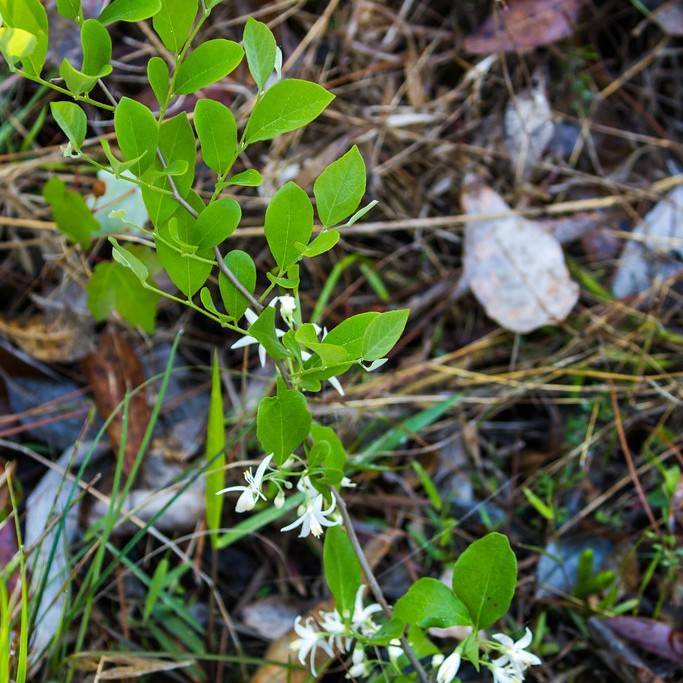
American Snowbell
Styrax americanus
Overview
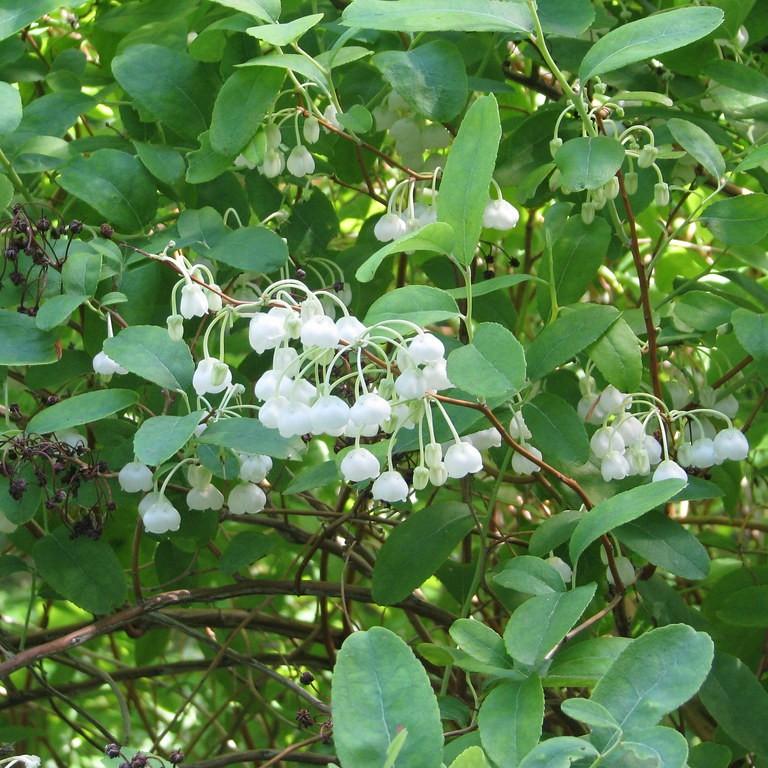
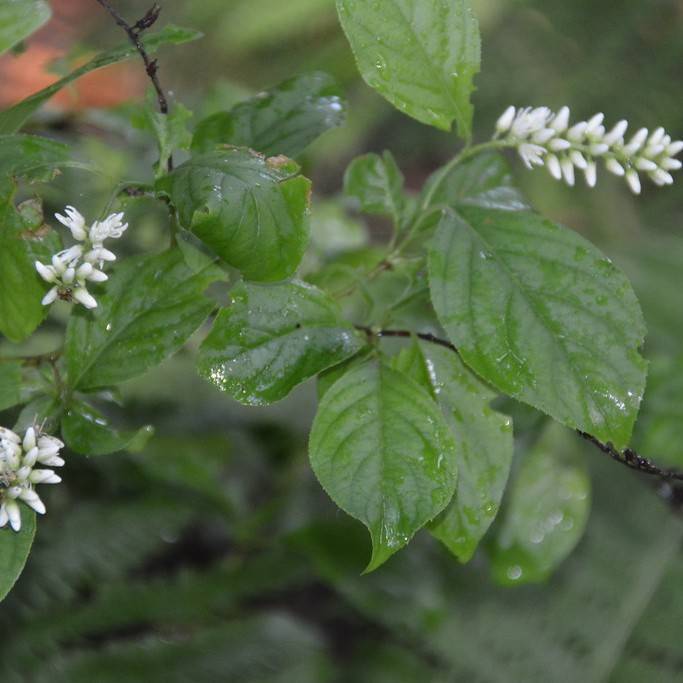
American Snowbell is a loose, rounded deciduous shrub native to wet woodland edges, swamps, and stream banks of the southeastern United States. In late spring, it produces abundant clusters of small, fragrant, white bell-shaped flowers that hang from slender stems, creating a soft, snow-like appearance that gives the plant its common name. Its glossy, oval green leaves turn a subtle yellow in fall, adding mild seasonal interest before dropping for winter. This slow-growing shrub is well-adapted to moist, partially shaded sites, making it a popular choice for native plant gardens and rain gardens.
Care Guide
Watering
American Snowbell prefers consistently moist, well-drained soil and does not tolerate prolonged drought. Water regularly during dry spells, ensuring the root zone stays evenly damp but not waterlogged; reduce watering frequency in winter when the plant is dormant. Avoid letting the soil dry out completely, as this can cause leaf drop and reduced flowering the following season.
Light
This shrub thrives in partial shade, particularly dappled sunlight filtered through taller trees, though it can tolerate full sun in cooler regions if provided with ample moisture. Too much intense, unfiltered full sun in hot climates can scorch leaves and stress the plant, while deep shade will significantly reduce flower production. Aim for 3-6 hours of direct morning sun with afternoon shade for the best growth and bloom output.
Soil
American Snowbell grows best in acidic, organically rich soil with a pH between 4.5 and 6.5, though it can tolerate slightly neutral soils. It naturally occurs in wetland margins, so it adapts well to heavy, clay soils that retain moisture, as long as they do not stay permanently flooded. Amend sandy or nutrient-poor soils with compost, leaf mold, or peat moss to improve moisture retention and nutrient content before planting.
Fertilizer
Fertilize sparingly in early spring, just before new growth emerges, using a slow-release, acidic fertilizer formulated for woodland plants or azaleas. Avoid over-fertilizing, as this can lead to excessive leaf growth at the expense of flowering and may make the plant more susceptible to drought stress. Do not apply fertilizer after mid-summer, as this can encourage tender new growth that will be damaged by early fall frosts.
Temperature
American Snowbell is hardy in USDA zones 5 to 9, tolerating winter lows down to -20°F (-29°C) when established. It prefers moderate summer temperatures between 60-85°F (16-29°C) and may require extra watering during extended periods of heat above 90°F (32°C). Mulch around the base of the plant in late fall to insulate roots from extreme temperature fluctuations in colder parts of its range.
Pruning
Prune American Snowbell immediately after flowering finishes in late spring, as it blooms on wood produced the previous year. Remove any dead, damaged, or crossing branches to improve air circulation and maintain the plant’s natural rounded shape, avoiding heavy pruning which can reduce flowering for 1-2 seasons. You can also thin out older, unproductive stems every 2-3 years to encourage new, vigorous growth that will produce more blooms.
Propagation
The most reliable propagation method for American Snowbell is sowing fresh seed in fall, as seeds require a 3-month period of cold stratification to germinate; stored seeds can be refrigerated in moist peat moss for 90 days before sowing in spring. Softwood cuttings taken in early summer can also root successfully if treated with rooting hormone and kept in a humid, shaded environment until roots form, usually within 6-8 weeks. Suckers that sprout from the base of mature plants can be carefully dug up and transplanted in late winter while the plant is dormant.
Humidity
American Snowbell prefers moderate to high humidity levels between 50-70%, consistent with its native wetland habitat. It adapts well to average outdoor humidity in most of its growing range, but may require occasional misting or a nearby water source if grown in exceptionally dry, arid regions. Low humidity can cause leaf browning at the edges and reduce overall vigor, so pairing it with other moisture-loving plants can help raise ambient humidity levels in the surrounding area.
Repotting
American Snowbell is rarely grown in containers long-term, as it develops a deep, spreading root system best suited to in-ground planting. If growing in a container temporarily, repot every 2-3 years in early spring before new growth emerges, using a slightly larger pot with acidic, well-draining potting mix amended with peat moss and perlite. Ensure the pot has ample drainage holes to prevent root rot, and avoid repotting once the plant is mature, as it does not tolerate root disturbance well.
Uses & Symbolism
American Snowbell is primarily planted as an ornamental shrub in native plant gardens, rain gardens, and shaded woodland landscapes, where its fragrant spring flowers provide visual interest and support pollinators. Its ability to tolerate wet soil makes it an excellent choice for erosion control along stream banks and pond edges, where it also provides cover for small wildlife and birds. Historically, some Indigenous communities used extracts from its bark and roots for medicinal purposes, though it is not widely used for this in modern times.
Diseases & Pests
American Snowbell is relatively pest and disease resistant, though it can occasionally suffer from leaf spot, powdery mildew, and root rot if grown in poorly drained, waterlogged soil. Common pests include aphids, scale insects, and spider mites, which can be controlled with insecticidal soap or horticultural oil if infestations become severe. Ensuring good air circulation around the plant and avoiding overhead watering will reduce the risk of fungal diseases significantly.
Related plants
Other plants you might like if you grow American Snowbell.