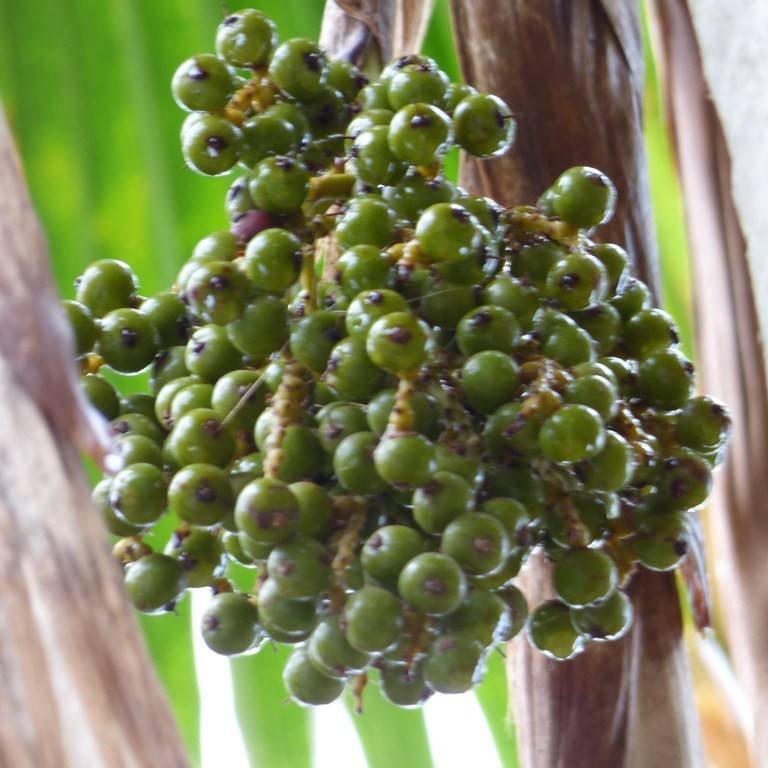
Fiji Palm
Pritchardia pacifica
Overview
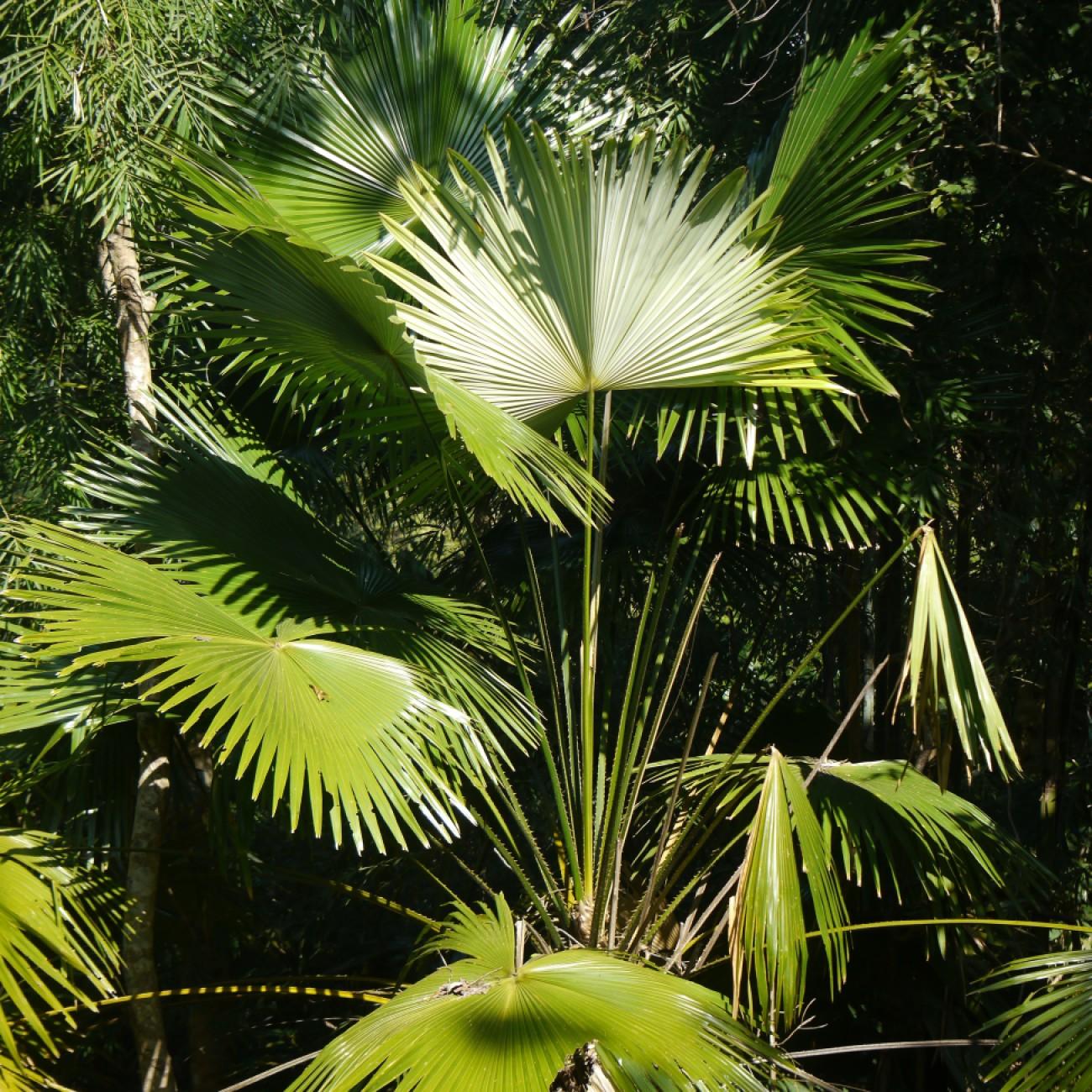
The Fiji Palm is a medium-sized, single-stemmed palm distinguished by its broad, pleated, fan-shaped fronds that can reach 3 feet across, held atop smooth, gray trunks ringed with old leaf scars. It naturally grows in coastal lowland habitats in its native South Pacific range, making it highly tolerant of salt spray and wind. In warm, frost-free climates it makes a dramatic landscape specimen, while younger plants are popular as high-impact indoor foliage.
Care Guide
Watering
Water Fiji Palms regularly during the growing season, allowing the top 1-2 inches of soil to dry out between waterings to prevent root rot. Reduce watering frequency in cooler winter months, taking care not to overwater when growth slows. Avoid letting the plant sit in standing water in its saucer or planting bed.
Light
Thrives in bright, indirect light when grown indoors, and can tolerate partial shade to full sun in outdoor cultivation in mild, warm climates. Young plants should be protected from intense, direct midday sun to prevent frond scorching, while mature specimens handle full sun well in humid environments.
Soil
Requires well-draining, fertile, loamy soil with a slightly acidic to neutral pH between 6.0 and 7.0 for optimal growth. For potted specimens, use a high-quality palm potting mix amended with perlite or coarse sand to improve drainage, avoiding heavy, water-retentive soils.
Fertilizer
Feed with a balanced, slow-release palm fertilizer formulated with micronutrients 2-3 times per year during the active growing season from spring through early fall. Avoid fertilizing in winter when growth is dormant, and do not apply fertilizer to dry soil to prevent root burn. Palm-specific fertilizers with extra magnesium and manganese will help prevent common frond yellowing.
Temperature
Prefers warm, tropical temperatures between 65-85°F (18-29°C), and is only cold hardy down to 32°F (0°C) for very short periods. Outdoor plants require protection from frost, as prolonged exposure to temperatures below 30°F (-1°C) will kill the foliage and may damage the trunk. Indoor plants should be kept away from cold drafts from windows or air conditioning units.
Pruning
Prune only dead, brown, or severely damaged fronds as needed, taking care not to remove green, healthy fronds which provide the palm with essential nutrients. Avoid cutting into the trunk when pruning, as wounds on the palm stem do not heal and can leave the plant vulnerable to infection. Remove any spent flower or fruit stalks once they dry out to keep the plant looking tidy.
Propagation
Fiji Palm is almost exclusively propagated from fresh, viable seeds, which typically germinate within 2-6 months when kept in warm, humid, bright indirect light conditions. Seeds must be sown soon after harvesting, as they lose viability quickly when stored. Vegetative propagation is not possible for this single-stemmed palm species.
Humidity
Thrives in high humidity levels of 50-70%, mimicking its native tropical island habitat. Indoor plants may benefit from regular misting, a pebble tray filled with water, or a humidifier during dry winter months or in arid climates. Low humidity can cause browning of frond tips and stunted growth.
Repotting
Repot young Fiji Palms every 2-3 years in spring, moving to a pot just 1-2 inches larger than the previous container to avoid overpotting and excess soil moisture. Mature potted specimens only need repotting every 4-5 years, or when roots begin growing out of the drainage holes. Take care not to damage the delicate root ball when repotting, as palms are sensitive to root disturbance.
Uses & Symbolism
Mature Fiji Palms are widely used as striking focal points in tropical and subtropical coastal landscapes, prized for their salt tolerance and elegant form. Younger plants are popular as large, statement indoor foliage plants for bright, spacious rooms or atriums. In its native Fiji, the palm has traditional cultural uses, with its fronds used for thatching and weaving, and its seeds used for craft materials.
Diseases & Pests
Fiji Palms are susceptible to common palm pests including spider mites, mealybugs, and scale insects, which can be controlled with horticultural oil or insecticidal soap. Overwatering and poor drainage often lead to root rot, the most common fatal disease for this species, while nutrient deficiencies of magnesium or manganese can cause yellowing or browning of frond edges. In outdoor landscapes, it may occasionally be affected by fungal leaf spots, which can be managed by improving air circulation and avoiding overhead watering.
Related plants
Other plants you might like if you grow Fiji Palm.