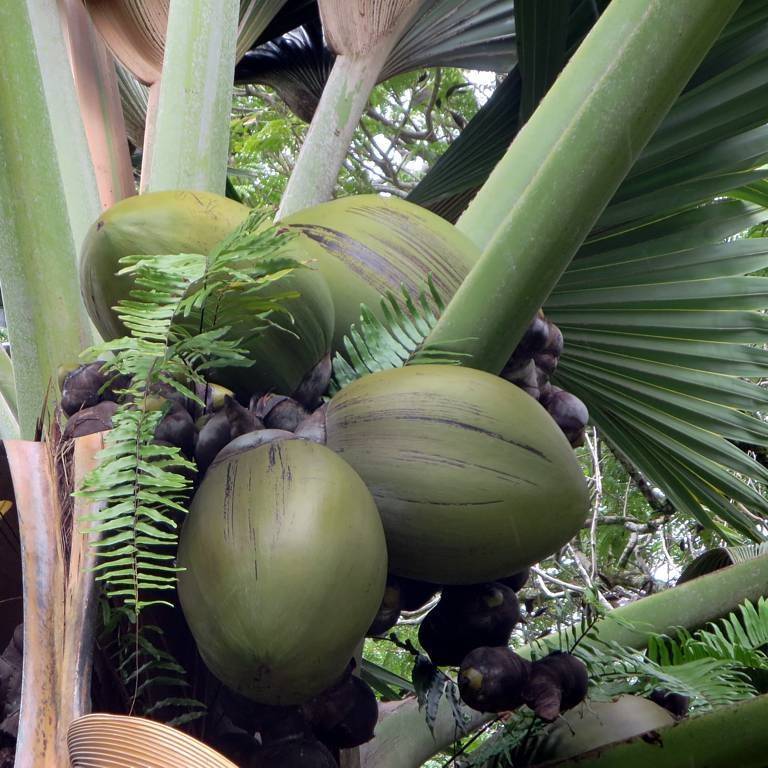
Double Coconut Palm
Lodoicea maldivica
Overview
Also called the coco de mer, the double coconut palm is a legendary palm species celebrated for its massive, distinctive bilobed seeds that can weigh up to 40 pounds, making them the heaviest seeds on Earth. Endemic to just two islands in the Seychelles archipelago, it is a globally protected endangered species, with wild populations strictly conserved to prevent illegal harvesting of its valuable seeds. Female trees produce the iconic large fruit, while male trees bear long, cylindrical inflorescences, with both sexes required for successful pollination in cultivation or wild settings.
Care Guide
Watering
Double coconut palms require consistent, deep watering, especially during their juvenile growth phase, with soil kept evenly moist but never waterlogged to avoid root rot. Mature trees are moderately drought tolerant, but prolonged dry periods will hinder fruit development and slow overall growth. Rainwater or low-salinity water is preferred, as the species is sensitive to high levels of dissolved salts in irrigation water.
Light
Juvenile double coconut palms thrive in bright, filtered light, as direct unfiltered sun can scorch their young, large fronds. Mature, established trees require full, direct sunlight for at least 6 hours per day to support healthy growth, flowering, and fruit production. In cultivation, young specimens should be gradually acclimated to full sun over a period of 1 to 2 years to avoid stress.
Soil
This species grows best in deep, well-drained, loamy or sandy loam soil with high organic matter content, mimicking the forest floor substrate of its native Seychelles habitat. It tolerates a slightly acidic to neutral pH range between 5.5 and 7.0, and will not thrive in heavy, compacted clay soils that hold excess moisture. Good drainage is non-negotiable, as standing water around the root zone will quickly kill young and mature trees alike.
Fertilizer
Double coconut palms benefit from a slow-release, balanced palm fertilizer with micronutrients (including magnesium, iron, and manganese) applied 2 to 3 times per year during the active growing season. Avoid over-fertilizing young plants, as their sensitive root systems are prone to burn from high concentrations of synthetic nutrients. Mature fruiting trees may benefit from an extra application of potassium-rich fertilizer in late spring to support healthy fruit development.
Temperature
As a tropical species, the double coconut palm requires consistently warm temperatures between 75 and 90°F (24 and 32°C) for optimal growth. It cannot tolerate temperatures below 50°F (10°C), and even brief exposure to frost will cause severe foliage damage or kill the entire plant. In regions with cool winters, it can only be grown in large, climate-controlled greenhouses that maintain stable warm temperatures year-round.
Pruning
Pruning requirements are minimal for double coconut palms, limited only to the removal of dead, damaged, or diseased fronds as needed to keep the canopy tidy and reduce pest habitat. Never remove green, healthy fronds, as this will stress the tree and reduce its ability to photosynthesize, slowing growth and inhibiting flowering. When pruning, make clean cuts close to the trunk without damaging the bark, as open wounds can invite fungal or bacterial infections.
Propagation
Double coconut palms are exclusively propagated from seed, which requires very specific conditions to germinate successfully, and can take 6 to 12 months to sprout, with some seeds taking up to 2 years. Seeds must be planted on their side in a deep, well-drained growing medium, kept consistently warm (80 to 85°F / 27 to 29°C) and moist, with high ambient humidity. Juvenile plants grow extremely slowly, often producing only 1 to 2 fronds per year for the first 10 to 15 years of life.
Humidity
This tropical palm thrives in high ambient humidity between 70 and 90%, matching the humid coastal forest conditions of its native range. Low humidity below 50% will cause frond browning at the tips and edges, especially in juvenile plants grown in indoor or greenhouse settings. In dry climates, regular misting of foliage or the use of a humidifier can help maintain appropriate humidity levels for young specimens.
Repotting
Juvenile double coconut palms grown in containers require repotting every 2 to 3 years in early spring, before the start of the active growing season, as they develop a deep taproot that requires extra vertical space. Always use a deep, wide pot with ample drainage holes, and avoid disturbing the root ball as much as possible during repotting to prevent transplant shock. Once trees reach 6 to 8 feet in height, they are impractical to grow in containers and require permanent outdoor planting in appropriate tropical climates.
Uses & Symbolism
Historically, double coconut seeds were highly prized as rare, exotic curios by European royalty and collectors, fetching exorbitant prices during the 18th and 19th centuries. In the Seychelles, the seeds are a iconic cultural symbol, used for ceremonial purposes, carved into decorative crafts, and featured as a key tourism draw for the islands. In its native habitat, the palm provides habitat for endemic Seychelles wildlife, including rare bird species and geckos that use its large fronds for shelter.
Diseases & Pests
Double coconut palms are susceptible to common palm pathogens, including Ganoderma butt rot, a fungal disease that enters through root or trunk wounds and causes gradual frond yellowing, wilting, and eventual death of the tree. Scale insects and mealybugs may infest the undersides of fronds, especially in low-humidity conditions, sucking sap and causing stunted growth and foliage discoloration if left untreated. Root rot is a common issue in cultivation, caused by overwatering or poorly drained soil, which leads to black, mushy roots and rapid decline in young plants.
Related plants
Other plants you might like if you grow Double Coconut Palm.