Blueflower Butterwort
Pinguicula caerulea
Overview
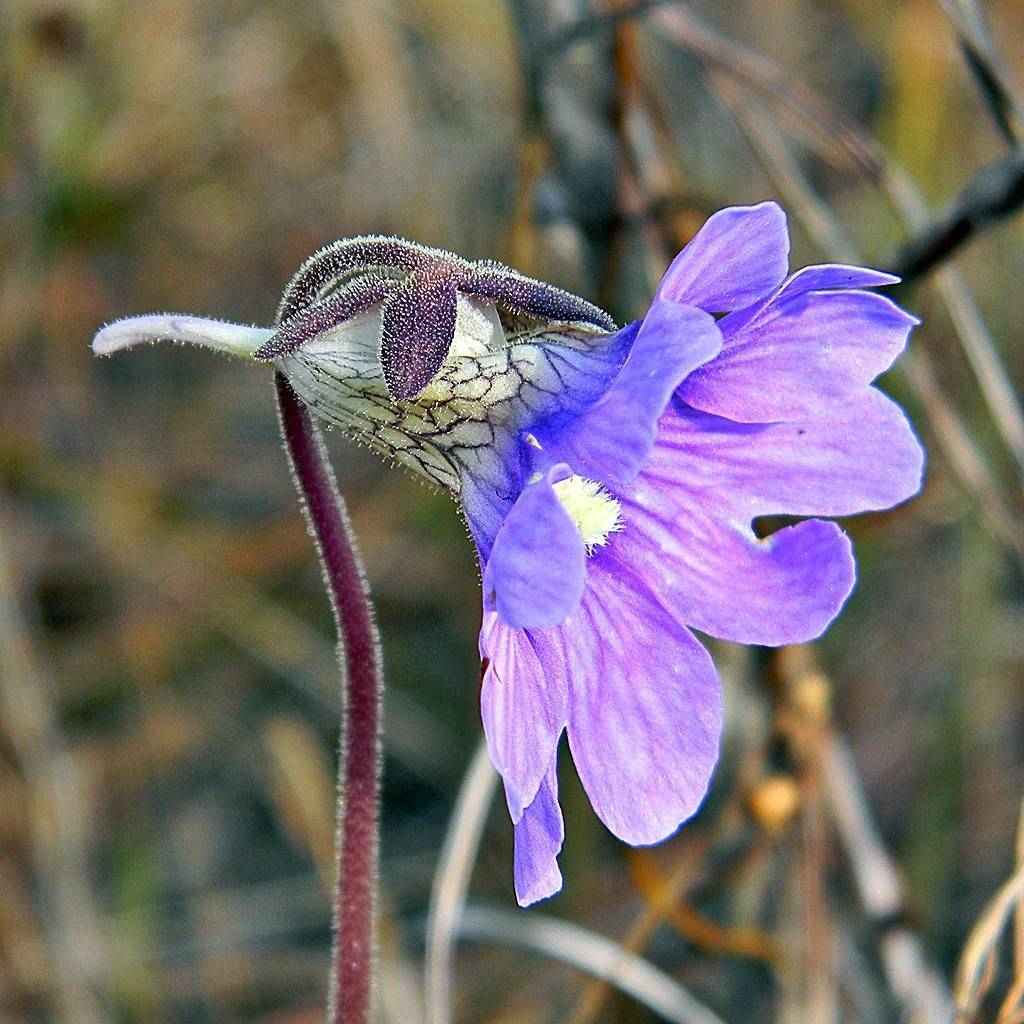
Blueflower butterwort is a compact carnivorous plant that forms low rosettes of fleshy, yellow-green leaves coated in sticky mucilage to trap and digest small insects such as gnats and mosquitoes, supplementing the low nutrient levels of its native bog soils. In late winter to early spring, it produces slender, upright scapes topped with single, five-petaled pale blue to violet flowers marked with darker purple veins and a small white throat, attracting small pollinators like bees. Unlike many tropical butterworts, this species is adapted to temperate climates, dying back to a tight winter bud during cold months before re-emerging in spring.
Care Guide
Watering
Keep soil consistently saturated to very moist year-round, using only distilled water, rainwater, or reverse-osmosis water to avoid mineral burn; stand pots in a shallow tray of 0.5-1 inch of water during the active growing season. Reduce watering slightly in winter when the plant enters dormancy, keeping soil just damp rather than waterlogged to prevent rot of the winter resting bud. Never allow the root system to dry out completely at any point, as this species is adapted to permanently wet wetland conditions.
Light
Provide bright, indirect light or partial sun, mimicking the dappled sunlight of its native pine savanna habitat; 4-6 hours of direct morning sun is ideal, while harsh midday sun should be filtered to prevent leaf scorch. If grown indoors, place near a south or east-facing window, or use a full-spectrum grow light set to 12-14 hour daily cycles to support healthy growth and flowering. Too little light will result in weak, elongated leaves and reduced flower production.
Soil
Plant in a very porous, acidic, nutrient-free carnivorous plant mix, typically a 1:1 blend of peat moss and perlite or horticultural sand, with no added fertilizers or compost that would damage the sensitive root system. Ensure the soil pH stays between 4.0 and 5.5 to match its native bog conditions; avoid regular potting soils, which often contain high nutrient levels that will kill the plant over time. The medium must retain moisture well while still allowing for minimal air flow around the roots to prevent rot.
Fertilizer
Do not apply conventional fertilizer to blueflower butterwort, as its sensitive roots cannot tolerate high nutrient levels; the plant obtains all required nutrients by digesting trapped insects. If grown indoors where insect access is limited, you can feed it one to two small freeze-dried bloodworms or gnats per month during the growing season, placing the prey directly on the sticky leaves to trigger digestion. Overfeeding will cause leaf burn and rosette decline, so err on the side of underfeeding.
Temperature
During the active growing season (spring to fall), maintain temperatures between 60-85°F (15-29°C), consistent with the warm, humid conditions of its native southeastern US habitat. This species requires a cold dormancy period of 2-3 months in winter, with temperatures between 35-50°F (2-7°C) to support healthy regrowth the following spring; it can tolerate brief dips down to 20°F (-7°C) if kept dry during dormancy. Avoid exposing the plant to temperatures above 90°F (32°C) for extended periods, as this can cause leaf melt and root damage.
Pruning
Prune off any brown, wilted leaves or spent flower scapes at their base using clean, sharp scissors to maintain the rosette’s appearance and prevent mold growth in the moist growing medium. Avoid cutting healthy, green leaves, as these are the plant’s primary sites for both photosynthesis and insect trapping. At the start of dormancy, trim back all dying foliage to reduce the risk of rot affecting the winter resting bud.
Propagation
Blueflower butterwort is most easily propagated by leaf cuttings taken in early summer: carefully remove a healthy outer leaf from the rosette, lay it flat on moist carnivorous plant mix, and keep it in high humidity and bright indirect light until small plantlets form at the base of the leaf. It can also be grown from seed, which requires sowing on the surface of moist, acidic medium and exposure to cold stratification for 4-6 weeks to break dormancy, followed by warm, humid conditions to trigger germination. Division of mature rosettes can be done during the early spring just before new growth emerges, taking care to minimize root disturbance during the process.
Humidity
Maintain moderate to high humidity levels between 50-70% for optimal growth, as this species is adapted to the moist air of wetland habitats; grow it in a terrarium, near a humidifier, or on a pebble tray filled with water if indoor humidity is low. During winter dormancy, humidity can be reduced slightly to 40-50% to lower the risk of fungal growth on the resting bud. Avoid sudden drops in humidity, as this can cause the edges of the delicate leaves to brown and curl.
Repotting
Repot every 2-3 years in early spring, just as new growth emerges from dormancy, to refresh the acidic growing medium and prevent compaction that can restrict root growth. Gently remove the old medium from the root system, trim any dead or rotting roots, and place the rosette in a new pot only slightly larger than the previous one, as this species has a small, shallow root system. Avoid repotting during the active growing season or flowering period, as this can cause stress that disrupts growth and bloom production.
Uses & Symbolism
Blueflower butterwort is widely grown as a novelty carnivorous houseplant or in outdoor bog gardens in temperate regions, valued for its attractive blue flowers and ability to naturally control small flying insect populations such as gnats and fruit flies. In its native range, it is used in wetland restoration projects to support native pollinator populations and stabilize acidic bog soils, as it is adapted to thrive in low-nutrient wet conditions where many other plant species cannot survive. Historically, some Indigenous groups in the southeastern US used the sticky leaf mucilage as a topical remedy for minor skin irritations and warts, though modern medicinal use is not common.
Diseases & Pests
The most common issues for blueflower butterwort are root rot and fungal leaf spot, caused by overwatering during dormancy, poor air circulation, or use of nutrient-rich, poorly draining soil. Common pests include aphids, fungus gnats, and spider mites, which can be controlled by rinsing the leaves with distilled water, introducing predatory nematodes, or using insecticidal soap diluted to half strength to avoid damaging the sensitive leaf tissue. Mineral burn from tap water or excessive fertilization presents as brown, crispy leaf edges and stunted growth, which can be prevented by using only pure water and avoiding all conventional fertilizers.
Related plants
Other plants you might like if you grow Blueflower Butterwort.