Cancer Weed
Salvia lyrata
Overview
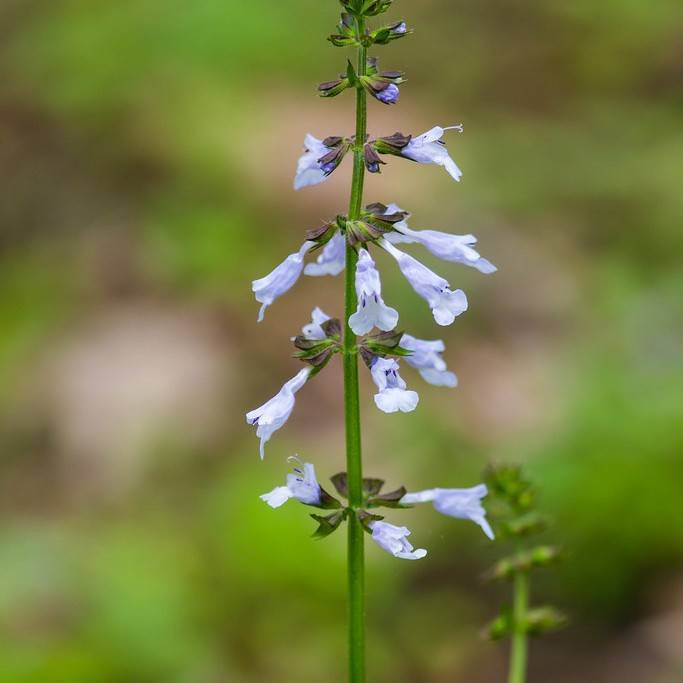
Cancer Weed, also called lyreleaf sage, is a hardy herbaceous perennial named for its historic folk use as a topical remedy for cancerous sores. It forms low rosettes of deeply lobed, lyre-shaped green leaves that often have purple mottling, sending up slender spikes of small, tubular pale lavender or white flowers in spring. It adapts readily to a range of growing conditions, often spreading gently via self-seeding in disturbed areas, meadows, and open woodlands.
Care Guide
Watering
Cancer Weed is drought-tolerant once established, requiring only occasional watering during extended dry periods; overwatering can lead to root rot, so allow the top 2 inches of soil to dry out between waterings. Newly planted specimens need regular, light watering for the first 2-3 months to help them establish a strong root system. Avoid wetting the foliage excessively when watering to reduce the risk of foliar fungal issues.
Light
It thrives in full sun to partial shade, producing the most abundant flower spikes when given at least 4-6 hours of direct sunlight daily. In regions with extremely hot summer temperatures, it benefits from light afternoon shade to prevent leaf scorch and reduce moisture stress. It can tolerate full shade, though flowering will be sparser and growth may become lanky.
Soil
Cancer Weed adapts to a wide range of soil types, including sandy, loamy, and clay soils, as long as the site has good drainage. It tolerates poor, low-nutrient soils and neutral to slightly acidic pH levels between 5.5 and 7.5. Avoid heavy, waterlogged soils that stay saturated for long periods, as this will damage the plant's shallow root system.
Fertilizer
This low-maintenance plant rarely requires fertilization, as it thrives in low-nutrient soils; excess fertilizer can encourage leggy growth and reduce flowering. If grown in extremely poor soil, apply a thin layer of compost in early spring to provide mild, slow-release nutrients for the growing season. Avoid synthetic high-nitrogen fertilizers, which will promote foliage growth at the expense of flowers.
Temperature
It is cold-hardy in USDA zones 5 through 9, tolerating winter temperatures as low as -20°F (-29°C) when established. It adapts well to summer heat up to 100°F (38°C) as long as it has access to occasional moisture and partial shade in the hottest parts of the day. Frost will kill back the above-ground foliage in late fall, but the root system will regrow new rosettes the following spring.
Pruning
Minimal pruning is required for Cancer Weed; snip off spent flower spikes after blooming if you wish to prevent self-seeding and maintain a neater appearance. In late fall, after the foliage dies back from frost, you can cut back any remaining dead stems to ground level to prepare the plant for winter dormancy. Remove any yellowed or damaged leaves from the basal rosette throughout the growing season as needed to improve air circulation.
Propagation
Cancer Weed is most easily propagated by seed, which can be sown directly outdoors in fall or early spring; seeds require no stratification and will germinate readily when exposed to warm soil and moisture. It can also be propagated by dividing established clumps in early spring before new growth begins, separating the root rosettes and replanting them 12-18 inches apart. Self-sown seedlings can be gently dug up and transplanted to new locations in early spring when they are 2-3 inches tall.
Humidity
It tolerates a wide range of humidity levels, from dry continental climates to humid subtropical regions, with no specific humidity requirements. High humidity combined with poor air circulation can increase the risk of powdery mildew on foliage, so space plants appropriately to allow for good airflow around each specimen. It does not require misting or supplemental humidity, even when grown indoors as a potted plant.
Repotting
When grown in containers, Cancer Weed only needs repotting every 2-3 years, or when the root system has filled the current pot and drainage holes show visible root growth. Repot in early spring before new growth emerges, using a well-draining general-purpose potting mix and selecting a pot only 1-2 inches larger in diameter than the current one to avoid excess soil moisture buildup. After repotting, water lightly and place the plant in partial shade for 1-2 weeks to help it adjust to its new container.
Related plants
Other plants you might like if you grow Cancer Weed.