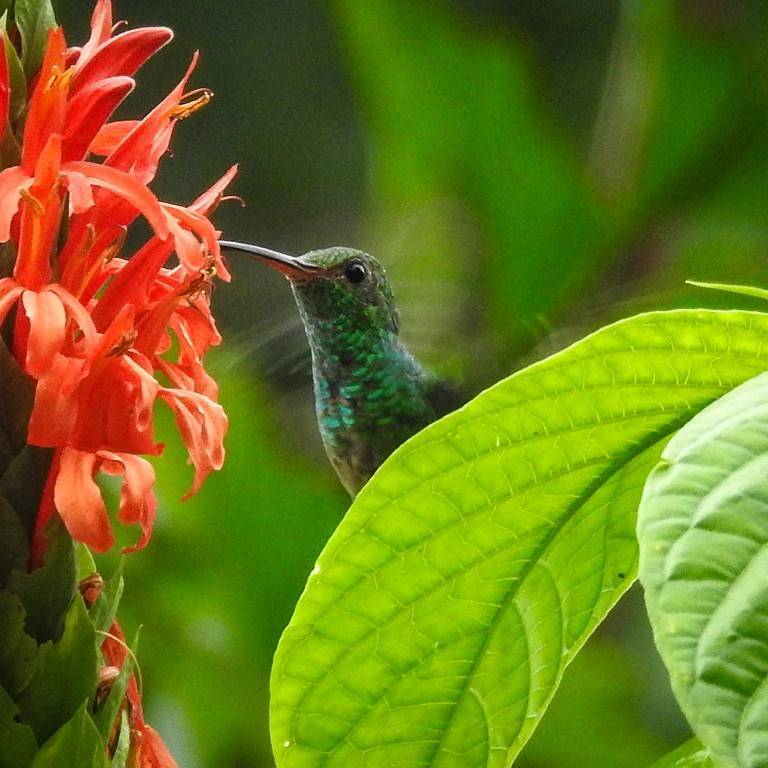
Cardinal's Guard
Pachystachys coccinea
Overview
Cardinal's Guard is a lush, bushy evergreen perennial with glossy, dark green, oval-shaped leaves that provide a vivid contrast to its bold floral displays. Its signature erect flower spikes, which can reach up to 6 inches long, bear dozens of tubular bright red blooms that emerge sequentially for months during the growing season. In its native tropical range, it grows as an understory shrub in moist, partially shaded forest edges, while in temperate climates it is widely grown as a greenhouse or houseplant, or as a seasonal outdoor bedding plant.
Care Guide
Watering
Keep the soil consistently moist but not waterlogged during the active spring and summer growing season, watering when the top 1 inch of soil feels dry to the touch. Reduce watering frequency in fall and winter, allowing the top 2 inches of soil to dry out between waterings to prevent root rot as growth slows. Avoid letting the plant sit in standing water in its saucer, as this can quickly lead to fungal issues in the root system.
Light
Cardinal's Guard thrives in bright, indirect light, such as that provided by a east-facing window or a spot shaded from direct midday sun outdoors. It can tolerate a few hours of gentle morning direct sun, but harsh afternoon direct sunlight will scorch its leaves, causing brown, crispy edges and faded foliage. In low light conditions, it will produce fewer flowers and develop leggy, sparse growth as it stretches toward light sources.
Soil
Plant Cardinal's Guard in a well-draining, nutrient-rich potting mix with a slightly acidic to neutral pH between 6.0 and 7.0. A mixture of peat moss, perlite, and compost works well, as it retains adequate moisture while allowing excess water to drain freely away from the roots. Heavy, compacted garden soils or potting mixes with high clay content are unsuitable, as they hold too much moisture and can cause root rot.
Fertilizer
Feed the plant every two weeks during the active spring and summer growing season with a balanced, water-soluble fertilizer diluted to half the recommended strength. Prioritize a fertilizer with a slightly higher phosphorus content during the blooming period to support robust flower spike development. Stop fertilizing entirely in fall and winter, when the plant enters a period of slower growth, to avoid burning the roots with excess nutrient buildup.
Temperature
Cardinal's Guard prefers warm temperatures between 65°F and 80°F (18°C to 27°C) for optimal growth and flowering. It is highly sensitive to cold, and temperatures below 50°F (10°C) will cause leaf drop and permanent damage, so it must be brought indoors before the first frost in temperate climates. Avoid placing it near cold drafts from windows, air conditioners, or heating vents, as sudden temperature fluctuations can stress the plant.
Pruning
Prune back the plant by up to one-third of its total height in late winter or early spring, just before new growth begins, to encourage a bushier, more compact shape and more abundant flower production. Pinch off spent flower spikes as they fade to redirect the plant's energy into producing new blooms and prevent it from expending resources on seed development. Remove any yellowed, damaged, or leggy stems throughout the year to maintain the plant's appearance and improve air circulation through its foliage.
Propagation
Cardinal's Guard is most easily propagated from stem cuttings taken in spring or early summer, using 4-6 inch long tip cuttings from healthy, non-flowering stems. Remove the lower leaves from the cutting, dip the cut end in rooting hormone powder, and plant it in a moist, well-draining rooting medium, keeping it in a warm, humid spot with bright indirect light until roots develop in 4-6 weeks. It can also be grown from fresh seed, but seed-grown plants take longer to reach flowering size and may not retain the exact characteristics of the parent plant.
Humidity
This tropical plant prefers moderate to high humidity levels between 50% and 70% to keep its leaves glossy and prevent browning leaf edges. In dry indoor environments, increase humidity by placing the plant on a pebble tray filled with water, grouping it with other moisture-loving plants, or running a small humidifier near it. Avoid misting the leaves directly for extended periods, as this can increase the risk of fungal leaf spots if moisture remains on the foliage for too long.
Repotting
Repot young Cardinal's Guard plants annually in early spring, moving them to a pot one size larger than their current container to accommodate their active root growth. Mature plants only need repotting every 2-3 years, or when roots begin to grow out of the drainage holes at the bottom of the pot. Always use a pot with adequate drainage holes, and refresh the potting mix at repotting time to provide the plant with fresh nutrients and improve drainage.
Uses & Symbolism
Cardinal's Guard is primarily grown as an ornamental plant, valued for its long-lasting, vibrant red flower displays that add bold color to tropical gardens, patios, and indoor plant collections. It is a popular addition to pollinator gardens, as its tubular nectar-rich flowers are highly attractive to hummingbirds, butterflies, and bees. In its native range, some indigenous communities use small amounts of its leaves in traditional herbal remedies, though medicinal use is not widespread outside of those cultural contexts.
Diseases & Pests
Cardinal's Guard is susceptible to common houseplant pests including aphids, spider mites, and whiteflies, which feed on the sap of its leaves and can cause stunted growth and yellowed foliage if left untreated. Overwatering and poor drainage frequently lead to root rot, a fungal disease that causes wilting, yellowing leaves, and eventual plant death if the soil is not allowed to dry out and the affected roots are not trimmed. It can also develop fungal leaf spots if exposed to prolonged moisture on its foliage, especially in low air circulation conditions, which can be prevented by watering at the base of the plant and avoiding overhead watering.
Related plants
Other plants you might like if you grow Cardinal's Guard.