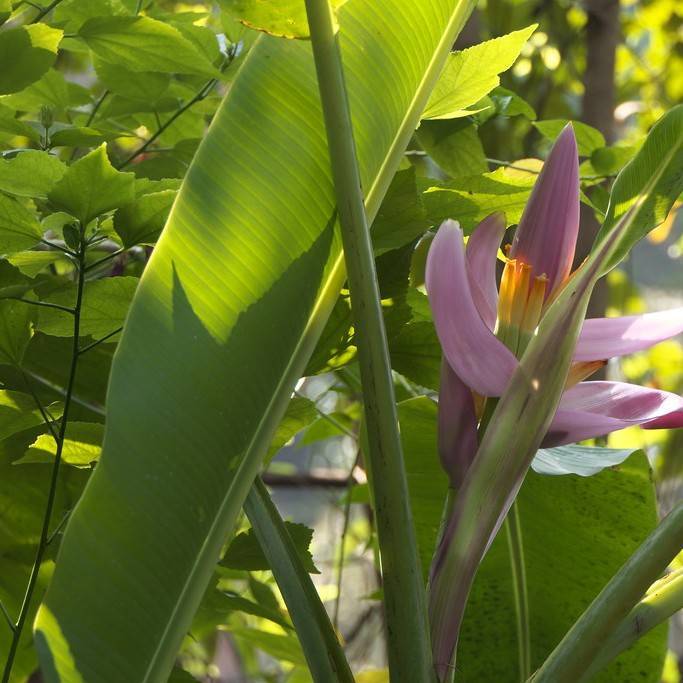
Flowering Banana
Musa ornata
Overview
Musa ornata, commonly called flowering banana, is a herbaceous perennial grown almost exclusively for its decorative value rather than fruit production. It produces large, paddle-shaped deep green leaves that unfurl from a central pseudostem, creating a classic tropical silhouette. The plant’s standout feature is its long-lasting, bright pink to magenta inflorescence that emerges in mature specimens, followed by small, seedy, unpalatable yellow fruit. In warm climates it grows outdoors year-round, while in cooler regions it is often kept as a dramatic potted houseplant or patio specimen.
Care Guide
Watering
Flowering bananas require consistently moist, well-drained soil, and should be watered when the top 1-2 inches of soil feel dry to the touch. Avoid overwatering and standing water, which can cause root rot, and reduce watering frequency during the winter dormant period when growth slows. Potted specimens may need watering 2-3 times per week during hot summer months, depending on temperature and humidity levels.
Light
This species thrives in full sun to partial shade, with at least 6 hours of direct sunlight daily to support healthy growth and flowering. Indoor specimens should be placed in a bright south or west-facing window, and may benefit from supplemental grow lights during dark winter months to prevent leggy growth. Too much intense, unfiltered midday sun in very hot climates can scorch leaf edges, so light dappled shade during peak heat is ideal.
Soil
Flowering bananas prefer rich, loamy, well-drained soil with a slightly acidic to neutral pH between 5.5 and 7.0. A high-quality potting mix amended with compost, peat moss, and perlite or coarse sand works well for potted specimens, as it retains moisture while preventing sogginess. Avoid heavy clay soils that hold excess water, as these can quickly lead to root rot in this fast-growing species.
Fertilizer
Feed flowering bananas every 2-4 weeks during the active growing season (spring through early fall) with a balanced, water-soluble fertilizer diluted to half strength, or a slow-release granular fertilizer formulated for tropical plants. High potassium fertilizer can help encourage more prolific blooming, as potassium supports flower and fruit development in Musa species. Stop fertilizing entirely during the winter months when growth slows to avoid fertilizer burn on dormant roots.
Temperature
Flowering bananas prefer warm temperatures between 65-85°F (18-29°C) for optimal growth and flowering. They are only cold hardy in USDA zones 9-11, and will suffer leaf damage if exposed to temperatures below 50°F (10°C) for extended periods. Frost will kill above-ground growth, but root systems may resprout in spring if mulched heavily in zones 8 and above; potted specimens should be brought indoors before cold weather arrives.
Pruning
Prune away dead, yellowed, or damaged leaves by cutting them off at the base of the petiole with clean, sharp shears to maintain a tidy appearance and improve air circulation around the plant. After a pseudostem finishes flowering and producing fruit, cut it down entirely to the ground, as each pseudostem only blooms once before dying back. This encourages new, healthy suckers to grow from the root system, which will produce future blooms.
Propagation
Flowering banana is most easily propagated by dividing and replanting the small suckers (pups) that grow from the base of mature mother plants. Wait until suckers are at least 1-2 feet tall with their own small root system, then separate them carefully from the parent plant with a sharp, sterile knife, and plant in a suitable potting mix. It can also be grown from seed, but seeds have a long germination period of 2-6 months and require consistent warm, moist conditions to sprout, so division is far more common for home growers.
Humidity
This tropical species thrives in high humidity levels between 50-70%, similar to its native Southeast Asian habitat. Indoor-grown specimens may benefit from regular misting, placing a pebble tray filled with water under the pot, or using a humidifier to counteract dry indoor air, especially during winter heating months. Low humidity can cause brown, crispy leaf edges and slow overall growth, so consistent moisture in the air is key for healthy foliage.
Repotting
Potted flowering bananas grow quickly, so they need to be repotted every 1-2 years in spring, or when roots start to grow out of the drainage holes of the current pot. Choose a pot that is 2-4 inches larger in diameter than the current one, with ample drainage holes, and use a fresh, nutrient-rich potting mix during repotting to support new growth. Mature specimens that have reached their desired size can be repotted every 3-4 years, with top-dressing of fresh compost in between repottings to replenish soil nutrients.
Uses & Symbolism
Flowering banana is primarily grown as an ornamental plant for tropical landscapes, large indoor spaces, and patio containers, valued for its lush foliage and striking pink inflorescences that add a dramatic tropical vibe to any space. Its long-lasting flower stalks are sometimes harvested for use in cut flower arrangements, where they hold up well for several weeks in fresh water. In its native range, parts of the plant are occasionally used in traditional medicine for minor ailments, though it has no widespread culinary use due to its seedy, unpalatable fruit.
Diseases & Pests
Flowering bananas are susceptible to common houseplant pests including aphids, spider mites, and mealybugs, which tend to cluster on the undersides of leaves and can be controlled with neem oil, insecticidal soap, or regular wiping of foliage. Overwatering or poorly drained soil frequently leads to root rot, the most common disease issue for this species, which presents as yellowing, wilting leaves and a foul odor from the soil. In outdoor settings, they may also be affected by banana bunchy top virus, fusarium wilt, and anthracnose, which can cause leaf spotting, stunted growth, and plant death if left untreated.
Related plants
Other plants you might like if you grow Flowering Banana.