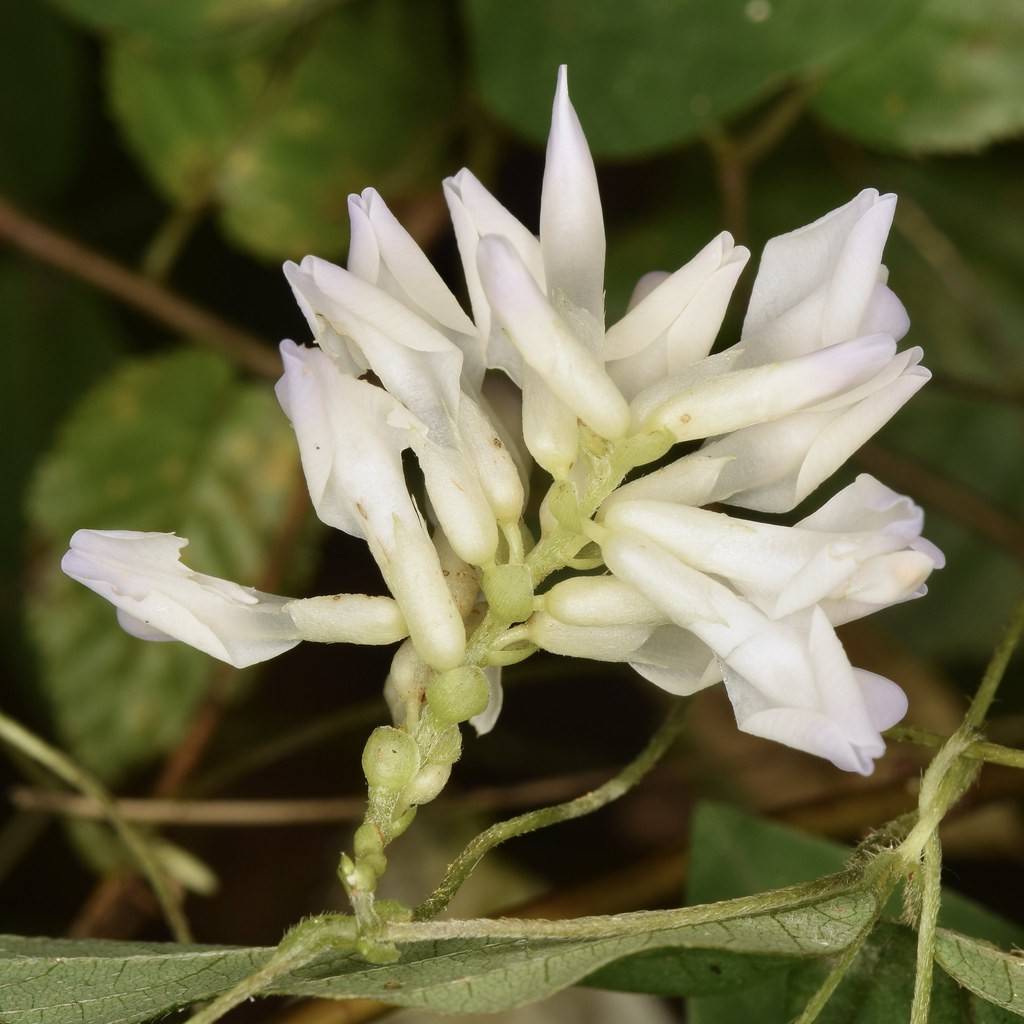
American Hog Peanut
Amphicarpaea bracteata
Overview
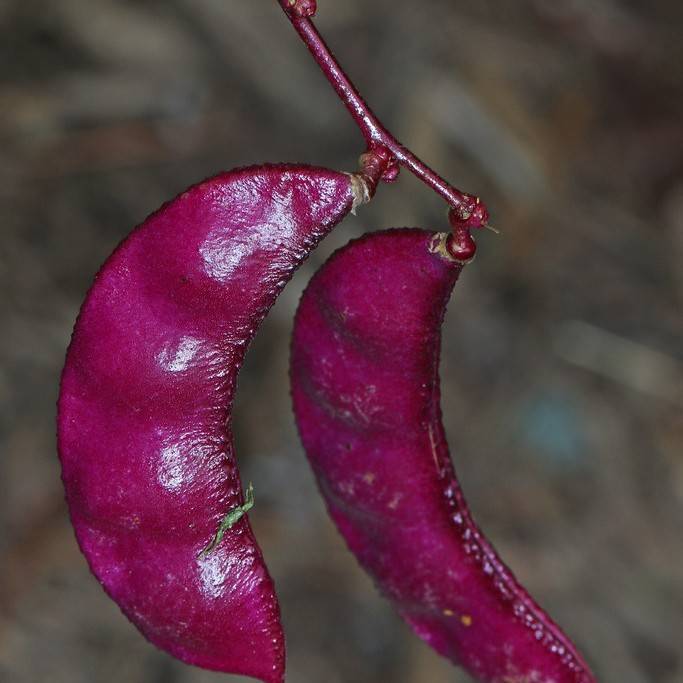
American Hog Peanut is a twining herbaceous vine in the pea family, recognized for its delicate trifoliate leaves and drooping clusters of small pale pink or white late-summer blooms. It produces two distinct seed types: aboveground pea-like pods in open areas, and self-fertile, fleshy underground pods that grow near the root system. This adaptable plant naturally colonizes woodland edges, stream banks, and disturbed sites, fixing nitrogen in soil to support surrounding vegetation.
Care Guide
Watering
American Hog Peanut prefers consistently moist, well-drained soil, tolerating occasional short dry spells once established but thriving with regular watering during extended drought periods. Avoid overwatering or waterlogged conditions, which can cause root rot, especially in heavy clay soils. In its native habitat, it receives consistent rainfall, so mimic this with 1 inch of water per week during the growing season for best growth.
Light
This vine grows well in partial shade, such as dappled sunlight under deciduous trees, but can also tolerate full sun if provided with adequate moisture. Full, deep shade will reduce flowering and seed production, leading to sparse, leggy growth with fewer foliage leaves. For optimal performance, site it in a location that receives 3 to 6 hours of direct sunlight daily.
Soil
American Hog Peanut adapts to a wide range of soil types, including sandy loam, silty loam, and average garden soil, as long as drainage is sufficient. It prefers a slightly acidic to neutral soil pH between 6.0 and 7.0, and as a nitrogen-fixing legume, it can thrive in low-nutrient soils where many other plants struggle. Avoid heavy, poorly draining clay soils unless amended with organic matter to improve permeability.
Fertilizer
As a nitrogen-fixing legume, American Hog Peanut rarely requires supplemental fertilization, as it forms symbiotic relationships with soil bacteria to produce its own nitrogen. If growing in extremely poor, nutrient-depleted soil, apply a balanced low-nitrogen 5-10-10 fertilizer once at the start of the growing season to support root development. Avoid high-nitrogen fertilizers, which will encourage excessive foliage growth at the expense of flower and seed production.
Temperature
This hardy annual grows best in temperate climates with average summer temperatures between 60 and 85°F (16 and 29°C), tolerating light frosts in early spring and late fall without significant damage. It is adapted to USDA hardiness zones 3 through 9, germinating reliably once soil temperatures reach 55°F (13°C) in the spring. Extreme heat above 90°F (32°C) may cause temporary wilting, but plants will recover once temperatures cool if soil moisture is adequate.
Pruning
American Hog Peanut requires minimal pruning; you can trim back overgrown vines in mid-summer if they are spreading beyond their intended area or crowding out other desirable plants. Remove any dead or yellowed foliage throughout the growing season to improve air circulation and reduce the risk of fungal disease. At the end of the growing season, you can pull up entire dead vines to clean up the planting area, or leave them in place to decompose and add organic matter to the soil.
Propagation
American Hog Peanut is most easily propagated from seed, sown directly outdoors in the fall or early spring after the last frost date. Seeds have a hard outer coat, so scarify them by nicking the seed coat or soaking in warm water for 24 hours before sowing to improve germination rates. You can also collect the fleshy underground seeds in late fall and plant them immediately, as they do not store well for long periods.
Humidity
This vine tolerates a wide range of humidity levels, thriving in the moderate to high humidity common to its native eastern North American woodland and riparian habitats. It does not require supplemental humidity when grown outdoors, though very dry, arid conditions may cause leaf edge browning and reduce flowering. Indoor grown specimens benefit from occasional misting if ambient humidity drops below 40%.
Repotting
As an annual vine primarily grown outdoors, American Hog Peanut is rarely grown in containers and does not require repotting. If you do grow it in a container, choose a pot at least 12 inches deep to accommodate its trailing roots and underground seed production, and use a well-draining potting mix. At the end of the growing season, discard the entire plant and refresh the potting mix if you plan to grow new specimens the following year.
Uses & Symbolism
American Hog Peanut has a long history of edible use by Indigenous peoples, who harvest both the small aboveground peas and the larger, sweeter underground seeds for raw or cooked consumption. It is widely planted as a native ground cover and restoration species, providing food for pollinators, game birds, and small mammals while fixing nitrogen to improve soil health. It also serves as a host plant for the silver-spotted skipper butterfly, supporting local pollinator and insect biodiversity in native gardens.
Diseases & Pests
American Hog Peanut is relatively disease-resistant, though it can be susceptible to common legume fungal issues such as powdery mildew and rust in high humidity or poor air circulation conditions. Common pests include aphids, leaf miners, and Japanese beetles, which feed on foliage but rarely cause significant damage to established healthy plants. Root rot can occur in waterlogged, poorly draining soils, so ensure proper site selection to avoid over-saturated conditions.
Related plants
Other plants you might like if you grow American Hog Peanut.