Zea Mays Corn: Taxonomy, Cultivation, Home Growing Tips, and Common Confusions
Learn all about Zea mays corn: its taxonomic history, cultivation requirements, home growing best practices, and how to distinguish it from plants with 'corn' in their common names.
Zea Mays Corn: Taxonomy, Cultivation, Home Growing Tips, and Common Confusions
Zea mays corn is a warm-season annual cereal grain in the grass family Poaceae, domesticated 9,000 years ago from Mexican teosinte and grown globally for food, feed, and industrial use. It produces starchy, husk-wrapped ears with silk and kernels in colors ranging from yellow to blue, red, or black.
What Is Zea Mays Corn?
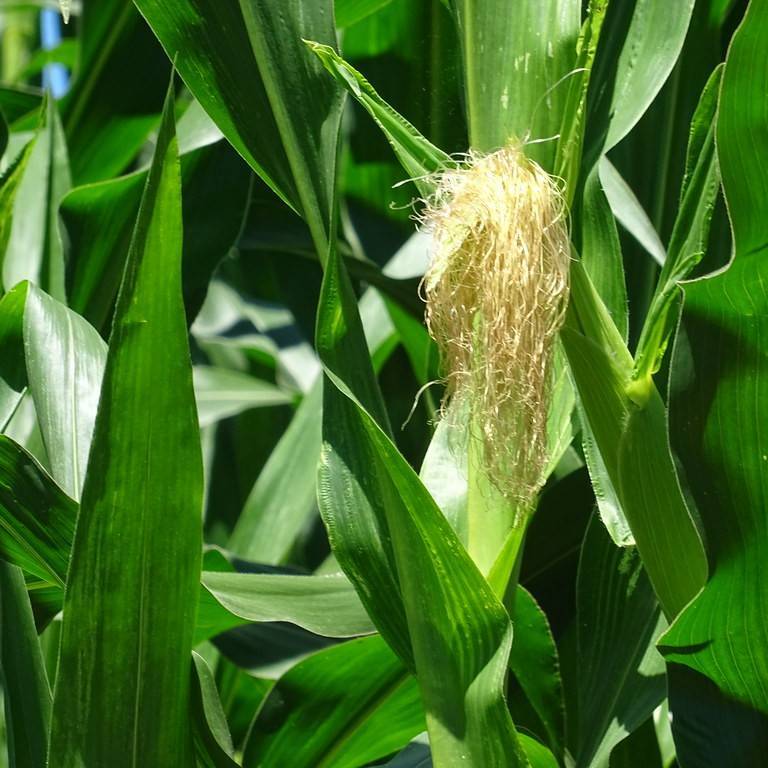
Zea mays corn is a large, single-stalked grass that grows 4 to 12 feet tall at maturity, with long, broad leaves and separate male and female reproductive structures on the same plant. Male tassels form at the top of the stalk to release pollen, while female ears grow along the stalk, protected by green husks with stringy silk that catches pollen for kernel development. If you encounter an unknown grass plant that resembles corn, snap a photo with the Sproutly app to confirm identification and access personalized care guidance.
Core botanical classification
As a member of the Poaceae family, Zea mays corn is closely related to other major cereal crops including wheat, rice, and sorghum. Its full taxonomic classification is:
- Kingdom: Plantae
- Clade: Tracheophytes, Angiosperms, Monocots, Commelinids
- Order: Poales
- Family: Poaceae
- Genus: Zea
- Species: Z. mays
All cultivated corn varieties, from sweet corn to popcorn and flint corn, fall under the Zea mays species, with distinct cultivars bred for specific uses, climate adaptations, and flavor profiles. You can find a full breakdown of common corn cultivars in our Corn species profile.
Primary global uses for Zea mays corn
Zea mays corn is one of the most widely cultivated crops in the world, with three primary use categories:
- Human consumption: Sweet corn for fresh eating, popcorn, flint corn for hominy or cornmeal, and dent corn for processed foods like corn syrup, tortillas, and cereal
- Animal feed: Approximately 40% of global corn production is used to feed livestock, particularly poultry and cattle
- Industrial uses: Production of ethanol biofuel, bioplastics, adhesives, and textile dyes
Zea Mays Corn Taxonomy and Evolutionary History
Zea mays is the only domesticated species in the genus Zea, which includes four additional wild grass species native to Mexico and Central America. All modern corn cultivars trace back to a single domestication event in the Balsas River valley of southern Mexico approximately 9,000 years ago, where early farmers selected for favorable traits from the wild grass teosinte. Over millennia of selective breeding, the small, hard, inedible kernels of teosinte evolved into the large, starchy, edible ears of modern Zea mays corn.
External phylogeny of the Zea genus
The genus Zea is divided into two sections: Luxuriantes, which includes three wild perennial and annual teosinte species, and Zea, which includes the annual teosinte Zea mays parviglumis and domesticated Zea mays corn. Genetic studies confirm Zea mays parviglumis is the direct wild ancestor of domesticated corn, with no significant genetic contribution from other teosinte species in the core domestication process. Subsequent crossbreeding between domesticated corn and local teosinte populations as the crop spread across the Americas led to minor genetic adaptations to regional climates.
Key taxonomic distinctions from other grass crops
While Zea mays corn is related to other cereal grasses, it has several unique taxonomic traits that set it apart:
- It is one of the few cereal crops with separate male and female reproductive structures on the same plant, rather than combined in a single seed head
- It has a much larger genome than wheat or rice, with approximately 2.3 billion base pairs and significant genetic diversity across cultivars
- Unlike most other grasses, domesticated corn does not have a natural seed dispersal mechanism; kernels remain attached to the cob until manually removed, a trait directly selected for during domestication
Zea Mays vs Teosinte: Key Differences
Teosinte produces 5 to 12 hard, triangular kernels per ear, each encased in a tough, indigestible shell, while modern Zea mays corn can have 500 or more soft, starchy kernels per ear without a hard outer casing. Teosinte also has multiple branching stalks, unlike most commercial Zea mays corn varieties, which grow as a single central stalk to maximize ear yield. These differences are the result of just 5 major genetic changes selected for during the initial domestication process.
Genetic modifications that drove domestication
Just five key gene mutations account for the majority of the physical differences between teosinte and Zea mays corn:
- The tb1 (teosinte branched 1) gene, which suppresses side stalk branching to produce a single central stalk
- The tga1 (teosinte glume architecture 1) gene, which eliminates the hard, protective shell around teosinte kernels to expose soft, edible corn kernels
- The su1 gene, which increases sugar content in sweet corn varieties
- The bt2 gene, which increases starch content in field corn varieties
- The o2 gene, which increases protein content in specialty corn cultivars
How to tell the two plants apart in the wild
If you encounter a wild grass that resembles corn in regions of Mexico or Central America, use these traits to distinguish teosinte from escaped Zea mays corn:
- Teosinte has multiple thin, branching stalks, while escaped corn has a single thick central stalk
- Teosinte ears are 1 to 2 inches long with only a handful of kernels, while corn ears are 4 to 12 inches long with hundreds of kernels
- Teosinte kernels fall off the ear naturally when ripe, while corn kernels remain firmly attached to the cob
Historical Spread of Zea Mays Corn Across North America
Zea mays corn spread north from Mexico to what is now the southwestern United States by 2100 BCE, and reached eastern North America by 1000 CE, where it became a staple crop for many Indigenous nations alongside beans and squash in the Three Sisters agricultural system. Early European colonists adopted the crop from Indigenous communities, and it later spread to Europe, Africa, and Asia via global trade routes in the 16th and 17th centuries. Today, corn is grown on every continent except Antarctica.
Regional cultivar adaptations to northern climates
As Zea mays corn spread north into cooler regions of North America, Indigenous farmers selected for early-maturing varieties that could ripen in shorter growing seasons. Northern Flint corn, a cultivar developed by Indigenous communities in the northeastern U.S. and eastern Canada, matures in just 60 to 80 days and tolerates colder soil temperatures than southern corn varieties. These early-maturing traits were later incorporated into many modern sweet corn cultivars grown in temperate regions.
Pre-Columbian cultivation techniques
Indigenous communities across North America developed specialized cultivation techniques for Zea mays corn that improved yield and soil health:
- The Three Sisters system, where corn is planted alongside beans (which fix nitrogen in the soil) and squash (which shades the soil to reduce weed growth and retain moisture)
- Mound planting, where corn seeds are sown in raised 3 to 4 inch mounds to improve soil drainage and warm soil faster in spring
- Crop rotation, where corn is planted in a different section of the garden each year to reduce pest and disease pressure and prevent nutrient depletion
Common Names for Zea Mays Corn Around the World
The term "maize" is the formal common name for Zea mays corn in most English-speaking countries outside of North America, while "corn" is the standard term in the U.S. and Canada. Many Indigenous languages have their own distinct names for the crop, including "maíz" in Spanish, derived from the Taíno word "mahiz" used by communities in the Caribbean when European colonists first encountered the plant.
Why "corn" can refer to different grains in regional dialects
In British English and some other Commonwealth dialects, "corn" is a generic term for the dominant cereal crop grown in a region, which may refer to wheat, barley, or oats depending on the location. This is why Zea mays corn is almost exclusively called "maize" in these regions to avoid confusion with local grain crops. In North American English, "corn" refers specifically to Zea mays corn, with other grains referred to by their individual common names.
Distinguishing Zea mays corn from other "corn"-named crops
Because "corn" is used as a generic term for grain crops in many regions, dozens of unrelated plant species have "corn" in their common name, most of which are not edible or cultivated as grain crops. This can lead to confusion for gardeners and foragers who encounter these plants in fields or wild spaces. The most reliable way to confirm a plant is Zea mays corn is to check for the combination of a single thick stalk, large broad leaves, and husk-wrapped ears with protruding silk.
Commercial and Home Cultivation Requirements for Zea Mays Corn
Zea mays corn requires full sun (6+ hours of direct light daily), well-draining loamy soil with a pH of 6.0 to 6.8, and air temperatures between 60°F and 95°F for optimal growth. It is a heavy feeder, requiring regular nitrogen fertilization, and needs 1 to 1.5 inches of water per week, particularly during the silking and ear development stages. The Sproutly app can send you customized watering reminders for your Zea mays corn plants based on your local weather conditions to avoid overwatering or underwatering during critical growth stages.
Soil preparation and planting depth guidelines
Prepare soil for Zea mays corn by amending it with 2 to 3 inches of compost or well-rotted manure before planting to increase nutrient content and improve drainage. Plant seeds 1 to 2 inches deep, with deeper planting recommended for sandy soils to ensure seeds have access to enough moisture for germination. If you are growing corn in poor soil, apply a balanced 10-10-10 fertilizer at planting time, followed by a nitrogen-rich side dressing of blood meal or urea when plants are 8 to 12 inches tall, and again when tassels first appear at the top of the stalk.
Spacing requirements for proper pollination
Zea mays corn is wind-pollinated, with each silk strand connecting to an individual kernel that will only develop if it is successfully pollinated by tassel pollen. To ensure sufficient pollination:
- Plant corn in blocks of at least 4 rows, rather than single long rows, to increase the chance of pollen landing on silk strands
- Space rows 30 to 36 inches apart, with 8 to 12 inches between individual plants in each row
- Avoid planting corn in areas with frequent high winds during the silking stage, or install a temporary windbreak to reduce pollen loss
How to Grow Zea Mays Corn at Home
Plant Zea mays corn seeds directly outdoors 1 to 2 weeks after the last frost date, when soil temperatures reach at least 60°F, to avoid seed rot. Plant in blocks of at least 4 rows (rather than single long rows) to improve wind pollination, as each kernel requires individual pollination from tassel pollen to develop. Harvest ears 20 to 25 days after silk first appears, when kernels are plump and exude a milky liquid when punctured with a fingernail.
Choosing the right Zea mays cultivar for your region
Select a corn cultivar that matches your growing season length and intended use:
- Early-season varieties (60 to 70 days to maturity): Best for regions with short, cool growing seasons, or for succession planting to extend your harvest period
- Mid-season varieties (70 to 90 days to maturity): Ideal for most temperate regions, with good yield and disease resistance
- Late-season varieties (90 to 100 days to maturity): Best for regions with long, warm growing seasons, with higher sugar content and larger ears than early-season varieties
For small gardens, choose compact dwarf cultivars that grow 4 to 6 feet tall, which require less space and are less likely to fall over in strong winds.
Common pests and diseases to monitor for
Zea mays corn is susceptible to a small number of common pests and diseases that can reduce yield or kill plants:
- Corn earworms: Larvae that feed on the tip of developing ears; control by applying a small drop of mineral oil to the tip of the ear when silk first appears, or use row covers to prevent adult moths from laying eggs
- Corn smut: A fungal disease that causes swollen, gray galls on ears and stalks; remove and destroy infected plants immediately, and avoid planting corn in the same location for at least 2 years to reduce spore buildup in soil
- European corn borers: Larvae that bore into the stalks of corn plants, causing stalks to break; control by removing and destroying plant debris at the end of the growing season to eliminate overwintering sites
Common Plants With "Corn" in Their Name That Are Not Zea Mays Corn
Many plants with "corn" in their common name are unrelated to Zea mays corn, belonging to entirely different taxonomic families and growing conditions. Distinguishing these plants is critical for gardeners to avoid misidentifying weeds or ornamental plants as edible corn, and to apply the correct care or removal strategies. If you are unsure whether a plant is Zea mays corn or another corn-named species, the Sproutly app can help you identify it in seconds.
Corn Brome (Bromus secalinus): Common grain field weed
Corn brome is an annual grass weed that often grows in commercial corn and wheat fields, earning its common name from its preferred habitat. Unlike Zea mays corn, corn brome grows 1 to 3 feet tall with thin, narrow leaves and flattened spikelet seed heads, rather than large husk-wrapped ears. It is a problematic weed in grain fields because its small seeds are difficult to separate from harvested grain, reducing crop quality.
Corn Gromwell (Buglossoides arvensis): Weedy borage family plant
Corn gromwell is a low-growing annual weed in the borage family, named for its tendency to grow as a weed in corn fields. It grows 6 to 18 inches tall with small, hairy leaves and tiny white flowers, and has no physical resemblance to Zea mays corn. While it is considered a weed in most regions, its seeds produce an oil rich in omega-3 fatty acids that is increasingly used in commercial food and cosmetic products.
Corn Poppy (Papaver rhoeas): Red remembrance wildflower
Corn poppy is a bright red annual wildflower that historically grew as a weed in corn fields across Europe, leading to its common name. It grows 1 to 2 feet tall with delicate, tissue-like red blooms and lobed leaves, and is not related to Zea mays corn in any way. It is most widely known as the symbol of remembrance for military casualties in Commonwealth countries.
Frequently Asked Questions About Zea Mays Corn
Is Zea mays the same as regular corn?
Yes, Zea mays is the formal scientific name for all common corn varieties, including sweet corn, field corn, popcorn, and flint corn. All types of corn grown for food, feed, or industrial use are cultivars of Zea mays.
What is the difference between Zea mays and teosinte?
Teosinte is the wild grass ancestor of Zea mays corn, with small, hard, inedible kernels and multiple branching stalks. Zea mays corn was selectively bred from teosinte over 9,000 years to produce large, soft, edible kernels on a single central stalk.
Can I grow Zea mays corn in a small home garden?
Yes, you can grow Zea mays corn in a small home garden as long as you plant it in blocks of at least 4 rows for proper pollination, and choose compact cultivars that grow 4 to 6 feet tall if space is limited. Avoid planting in single rows, as this will lead to poorly pollinated ears with missing kernels.
Are corn poppies or corn brome related to Zea mays corn?
No, corn poppies, corn brome, and corn gromwell are not related to Zea mays corn. These plants only share "corn" in their common name because they historically grew as weeds in corn fields, but they belong to entirely different plant families.
How long does it take Zea mays corn to mature from seed to harvest?
Most Zea mays corn varieties take 60 to 100 days from planting to harvest, depending on the cultivar and growing conditions. Early-season varieties mature in 60 to 70 days, while late-season varieties can take 90 to 100 days to produce ripe ears.
Identify and Care for Zea Mays Corn With Sproutly
Snap a photo of any corn or corn-like plant with the Sproutly app to confirm if it is Zea mays corn, access customized care schedules, and get alerts for common pests or nutrient deficiencies specific to your growing conditions. The app also includes a growing calendar tailored to your zip code to help you plant and harvest Zea mays corn at the optimal time for your region.
Try Sproutly today to take the guesswork out of growing corn and other edible crops in your home garden.
Letture correlate
Altre guide che potrebbero piacerti
Arugula: Growing, Nutrition, Uses, and Complete Care Guide
Learn all about arugula (rocket/rucola): its spicy, nutty flavor, growing tips, nutrition benefits, storage hacks, and culinary uses for this pet-safe leafy green.
2026-06-28 · 19 min read
Weeping Fig (Ficus Benjamina): Complete Care, Cultivars, and Growing Guide
Learn how to care for a weeping fig, including light, water, and humidity needs, plus common cultivars, safety tips, and troubleshooting for this popular tropical houseplant.
2026-06-28 · 10 min read
Weeping Ficus: Complete Care Guide, Cultivars, and Common Issues
Learn how to grow and care for a weeping ficus (Ficus benjamina) indoors, including light, water, and humidity needs, plus common problems to avoid.
2026-06-27 · 13 min read