Indian Jujube
Ziziphus mauritiana
Overview
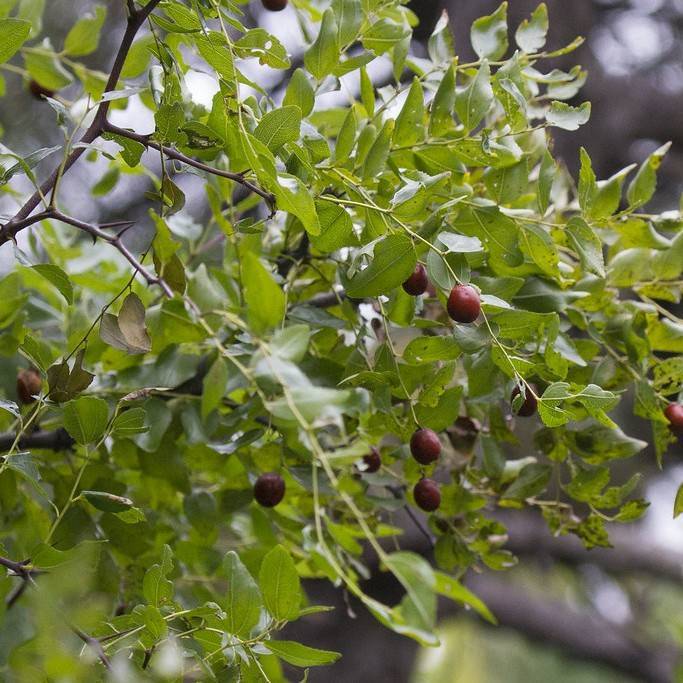
Indian Jujube, also called ber, is a thorny, deciduous or semi-evergreen tree adapted to arid and semi-arid climates. It bears small, yellowish-green fragrant flowers followed by round to oval fruits that ripen from green to yellow or reddish-brown, with a sweet, crisp white pulp surrounding a single hard seed. The tree is highly valued for its resilience to poor soil and low rainfall, making it a staple food crop in many low-resource agricultural regions.
Care Guide
Watering
Indian Jujube is exceptionally drought-tolerant once established, requiring only occasional deep watering during prolonged dry spells. Young trees need regular, consistent moisture to support root development, but overwatering or waterlogged soil will cause root rot and should be strictly avoided. During fruiting season, moderate, regular watering helps improve fruit size and prevent premature drop.
Light
This tree thrives in full, direct sunlight, requiring a minimum of 6 to 8 hours of unobstructed light daily to produce abundant flowers and fruit. It can tolerate very high light intensity and heat even in arid regions, with no risk of leaf scorch under typical outdoor growing conditions. Shaded growing conditions will lead to sparse foliage, reduced flowering, and poor fruit yields.
Soil
Indian Jujube adapts to a wide range of soil types, including sandy, loamy, clay, and even saline or alkaline soils with pH levels between 6.0 and 8.5. Well-drained soil is critical to prevent root rot, as the tree cannot withstand standing water around its root zone. It can thrive in poor, low-nutrient soils where most other fruit trees would fail, requiring minimal soil amendment for basic growth.
Fertilizer
Mature Indian Jujube trees have low fertilizer needs, responding well to a balanced 10-10-10 NPK fertilizer applied once annually at the start of the growing season. Young trees benefit from light, frequent applications of nitrogen-rich fertilizer during their first 2 to 3 years to support vigorous foliage and root growth. Over-fertilization, particularly with excess nitrogen, can lead to excessive vegetative growth at the expense of flower and fruit production.
Temperature
This tree prefers tropical to subtropical climates, thriving in average temperatures between 77°F and 95°F (25°C to 35°C) during the growing season. It can tolerate brief light frosts down to 28°F (-2°C) once established, but young trees are highly sensitive to cold and require protection if temperatures drop below freezing. Extended periods of cold below 32°F (0°C) will cause leaf drop and may kill exposed branches.
Pruning
Prune Indian Jujube trees during the dormant season to remove dead, damaged, or crossing branches, improve air circulation, and maintain a manageable canopy height for easier fruit harvesting. Light annual pruning also encourages the growth of new fruiting wood, as the tree produces fruit on current-year growth. Remove root suckers regularly to prevent the tree from spreading beyond its intended growing area.
Propagation
Indian Jujube is most commonly propagated through seed, though seeds require scarification or soaking in warm water for 24 hours prior to planting to improve germination rates. Vegetative propagation via hardwood cuttings, air layering, or grafting onto rootstock is preferred for cultivated varieties to preserve desirable fruit traits like size, sweetness, and productivity. Cuttings should be taken from mature, healthy branches during the dormant season and rooted in well-drained, moist growing medium under partial shade.
Humidity
This tree tolerates a wide range of humidity levels, from the dry air of arid regions to the high humidity of tropical monsoon climates, with no negative impacts on growth or fruiting. Humidity levels between 40% and 70% are ideal for optimal flower pollination and fruit development. High humidity during extended rainy periods may increase the risk of fungal leaf spots, but good air circulation through pruning mitigates this risk.
Repotting
Indian Jujube trees grown in containers require repotting every 2 to 3 years during the dormant season, moving to a pot one size larger with fresh, well-drained potting mix. Root prune moderately during repotting to prevent the tree from becoming root-bound, which can reduce fruit production and slow growth. Once the tree reaches its desired maximum container size, refresh the top 2 to 3 inches of potting mix annually instead of full repotting to provide new nutrients.
Uses & Symbolism
Indian Jujube fruits are eaten fresh, dried, or processed into jams, jellies, juices, and candies, and are rich in vitamin C, antioxidants, and dietary fiber. The tree’s dense, thorny canopy is often used for windbreaks, live fencing, and erosion control in arid regions, while its hard, durable wood is used for small construction projects and tool handles. In traditional medicine, parts of the tree including leaves, bark, and fruit are used to treat digestive issues, skin conditions, and respiratory ailments.
Diseases & Pests
Indian Jujube is relatively pest and disease resistant, but may be affected by fruit flies, which lay eggs in developing fruit leading to rot and premature drop, and powdery mildew, which forms a white fungal coating on leaves and young shoots during cool, humid conditions. Root rot can occur in waterlogged soils, causing yellowing foliage, stunted growth, and eventual tree death if drainage is not improved. Occasional infestations of mealybugs and scale insects may also occur, which can be controlled with horticultural oil sprays or natural predators like ladybugs.
Related plants
Other plants you might like if you grow Indian Jujube.