Cork Oak
Quercus suber
Overview
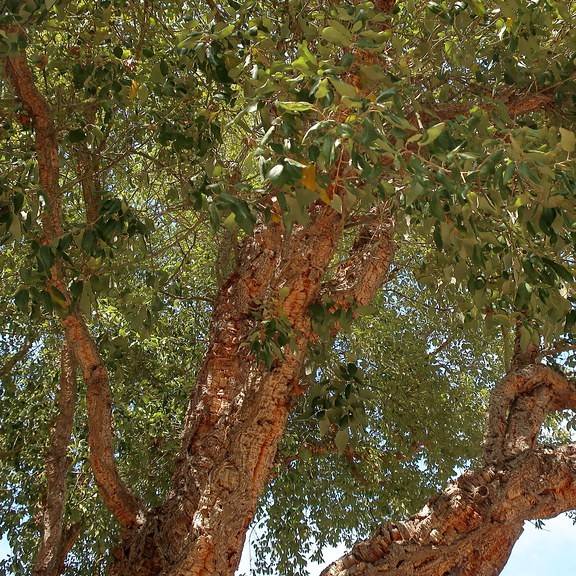
The cork oak is a slow-growing, drought-tolerant evergreen tree distinguished by its thick, spongy, insulating bark that develops deep furrows with age. Native to the hot, dry Mediterranean climate, it has adapted to periodic wildfires, as its thick cork bark protects inner living tissues from damage. Unlike most oak species, it retains its glossy, leathery oval leaves year-round, making it a popular ornamental for warm, arid landscapes.
Care Guide
Watering
Established cork oaks are highly drought-tolerant and only require supplemental watering during extended periods of extreme heat or no rainfall. Young saplings need consistent, moderate watering for the first 2-3 years to develop a deep root system, with soil allowed to dry out completely between waterings to prevent root rot. Avoid overwatering, especially in poorly draining soils, as this can quickly lead to fungal root damage.
Light
Cork oaks require full, direct sunlight for at least 6-8 hours daily to thrive and develop their characteristic thick bark and dense canopy. They cannot tolerate deep shade, which will lead to sparse foliage and stunted growth. Young saplings can be placed in partial light for their first growing season, but should be transitioned to full sun as soon as they are established.
Soil
This species prefers well-draining, sandy or loamy soils with a slightly acidic to neutral pH between 5.0 and 7.5. It can tolerate poor, low-nutrient soils and even mild limestone substrates, but will not survive in heavy, waterlogged clay soils. Amending heavy planting sites with sand or gravel to improve drainage is critical for long-term health.
Fertilizer
Mature cork oaks rarely require fertilizer, as they are adapted to low-nutrient Mediterranean soils. Young saplings can be fed with a balanced, slow-release 10-10-10 fertilizer once annually in early spring to support healthy root and canopy growth. Avoid high-nitrogen fertilizers, which can promote excessive leaf growth at the expense of cork bark development.
Temperature
Cork oaks thrive in warm Mediterranean climates with average temperatures between 50-86°F (10-30°C). They are moderately frost-tolerant, surviving brief dips down to 15°F (-9°C), but prolonged freezing temperatures will damage foliage and young branches. Young saplings should be protected from frost with burlap wraps or frost cloth for their first 3-5 winters in cooler regions.
Pruning
Prune cork oaks only in late winter or early spring during their dormant period to remove dead, damaged, or crossing branches that risk damaging the canopy. Avoid heavy pruning, as removing more than 20% of the canopy in a single year can stress the tree and slow cork production. Always make clean cuts just outside the branch collar to prevent disease entry, and never remove bark from the lower trunk, as this is the primary commercial cork harvest site.
Propagation
Cork oaks are most reliably propagated from fresh acorns sown immediately after ripening in fall, as acorns lose viability quickly when stored. Sow acorns 1-2 inches deep in well-draining potting mix, keep moderately moist, and place in a sunny location; germination typically occurs within 4-6 weeks. Grafting is also used commercially to preserve desirable high cork-yielding cultivars, but is less common for home cultivation.
Humidity
Cork oaks are adapted to the low to moderate humidity levels of their native Mediterranean range, thriving in relative humidity between 30-60%. They can tolerate occasional dry air spells but may develop brown leaf edges if exposed to extended periods of very low humidity below 20%. They do not tolerate consistently high, humid conditions, which increase their risk of fungal leaf and root diseases.
Repotting
Cork oaks grown as container saplings only need repotting every 2-3 years in early spring, before new leaf growth emerges. Move saplings to a container 2-3 inches larger than the previous one, using a well-draining sandy loam potting mix, and avoid disturbing the root ball excessively to prevent transplant shock. Once trees reach 6 feet tall, they are best planted permanently outdoors, as they quickly outgrow even large containers.
Uses & Symbolism
The primary commercial use of cork oak is its renewable bark, which is harvested every 9-12 years without harming the tree to produce wine stoppers, flooring, insulation, and craft materials. It is also widely planted as an ornamental shade tree in warm, arid regions for its evergreen foliage and attractive, textured bark. In its native range, it supports unique Mediterranean ecosystems, providing habitat for a wide range of bird, insect, and mammal species.
Diseases & Pests
Cork oaks are susceptible to oak wilt, a fatal fungal disease spread by sap-feeding beetles that blocks vascular tissue and causes rapid canopy dieback. They are also prone to anthracnose, a fungal disease that causes brown leaf spots and defoliation during cool, wet spring weather. Common pests include oak aphids, which secrete honeydew that leads to sooty mold growth, and cork oak borers, which tunnel into the bark and damage inner tissues in stressed trees.
Related plants
Other plants you might like if you grow Cork Oak.