European Fan Palm (Chamaerops humilis): The Complete Care & Growing Guide
Learn how to grow and care for the European fan palm, a cold-hardy, pet-safe Mediterranean palm perfect for indoor and outdoor spaces.
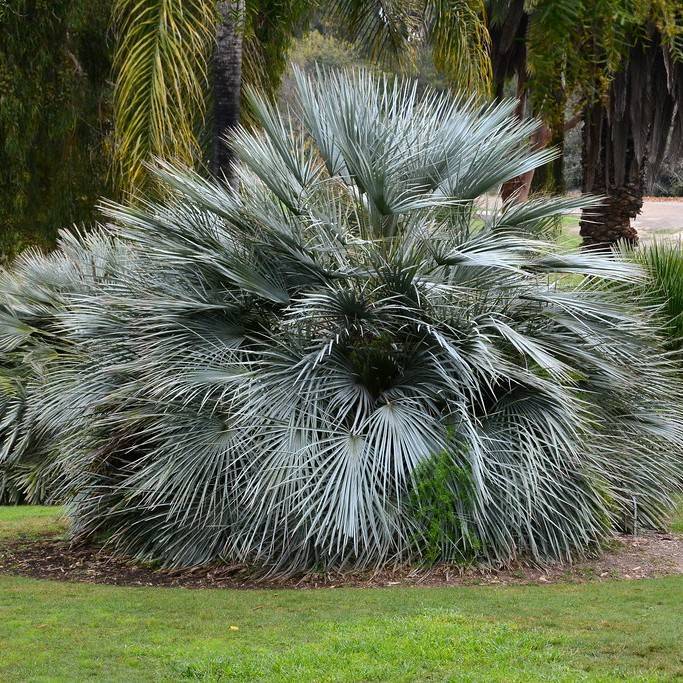
European Fan Palm (Chamaerops humilis): The Complete Care & Growing Guide
European fan palm (Chamaerops humilis) is a cold-hardy, slow-growing Mediterranean palm suited to both indoor and outdoor growth, and non-toxic to dogs, cats, and humans. It tolerates temperatures as low as 10°F (-12°C) when established, and requires full sun and well-draining soil to thrive.
European Fan Palm Quick Overview
European fan palm (Chamaerops humilis) is the only palm native to the Mediterranean basin, cold hardy to 10°F (-12°C) when established, growing slowly to 8–15 feet tall with clumping, fan-shaped fronds. It is non-toxic to dogs, cats, and humans, making it suitable for pet-friendly homes and landscapes.
Key species traits
- Clumping growth habit, with multiple stems emerging from a single root base rather than a single tall trunk
- Fan-shaped fronds 2–3 feet wide, with sharp spines along the leaf stem edges
- Small, yellow, fragrant flowers that bloom in spring, followed by small, brown, non-edible fruit in fall
- Drought-tolerant once established, with a shallow, non-invasive root system that will not damage sidewalks or foundations
- Chamaerops humilis var. humilis is the most common dwarf cultivar, maxing out at 8 feet tall, making it ideal for containers and small spaces.
Native range and hardiness zones
This palm is native to coastal regions of the western Mediterranean, including southern Europe, North Africa, and parts of the Middle East, where it grows in rocky, well-drained soils in full sun. It is suitable for outdoor growth in USDA hardiness zones 8–11, though young plants in zone 8 may need winter protection for their first 3 years. In all zones below 8, it can be grown as a houseplant or a patio container plant that is brought indoors during freezing temperatures.
European Fan Palm Species and Cultivars
The primary cultivated European fan palm variety is Chamaerops humilis var. humilis, a compact, clumping cultivar ideal for small spaces and container growth. It is often misidentified as similar fan-shaped palms, some of which are toxic to pets.
Chamaerops humilis var. humilis
This dwarf cultivar is the most widely sold variety of European fan palm, prized for its smaller mature size and slower growth rate that requires less frequent pruning or repotting. It grows to a maximum of 8 feet tall and 6 feet wide, with fronds that are slightly more rounded than the full-size species. It is equally cold hardy and drought tolerant as the full-size species, making it suitable for all the same growing conditions.
Lookalike species to avoid
Many fan-shaped palms are sold under generic "fan palm" labels, and some are highly toxic to pets. The most common misidentification is with the sago palm, which has narrower, stiffer fronds and produces bright orange seeds; all parts of the sago palm are toxic to dogs and cats, even in small quantities. The dwarf palmetto, native to the U.S. southeast, is another lookalike, but it tolerates wetter soil than the European fan palm and has smoother, spineless leaf stems. If you are unsure of your palm’s identity, use Sproutly’s plant identification feature to scan fronds and confirm species to avoid toxic misplantings.
European Fan Palm Light Requirements
European fan palm thrives in full sun, defined as 6+ hours of direct unfiltered light per day, for fastest growth and densest frond production. It can tolerate partial shade, though growth will slow and fronds may become sparse.
Outdoor light needs
For outdoor planting, choose a south or west-facing spot with no overhead shade from trees or buildings. In regions with extreme summer heat above 100°F (38°C), young plants may benefit from light afternoon shade for their first 1–2 years to prevent frond scorch, but established plants tolerate full, unfiltered summer sun without damage. Avoid planting in north-facing spots or areas with less than 4 hours of direct sun per day, as this will lead to leggy growth and increased susceptibility to pest infestations.
Indoor light placement
Indoor European fan palms need the brightest light possible to thrive. Place the plant within 2 feet of a south-facing window for year-round direct light, or within 1 foot of a west-facing window for 3–4 hours of afternoon direct sun daily. If your home does not receive sufficient natural light, supplement with 12 hours of full-spectrum grow light daily, positioned 6–12 inches above the top of the fronds. Rotate the pot 90 degrees every 2 weeks to ensure even growth on all sides of the plant.
Best Soil for European Fan Palm
European fan palm requires extremely well-draining, sandy or loamy soil with a pH between 6.1 and 7.8. It will develop root rot quickly if planted in heavy, water-retentive clay soil or standard potting mix with high peat content.
Outdoor soil amendments
For outdoor planting, test your soil drainage first by digging a 1-foot deep hole, filling it with water, and letting it drain completely. If it takes longer than 1 hour to drain, you will need to amend the soil to improve drainage before planting. Mix 3 parts native soil with 2 parts coarse sand and 1 part perlite to break up heavy clay and improve drainage. Avoid adding compost or peat moss, as these materials hold excess moisture that can damage the palm’s shallow roots. If drainage is extremely poor, plant the palm in a raised mound 12–18 inches above ground level to ensure roots do not sit in saturated soil.
Indoor potting mix recipe
For potted indoor plants, use a custom mix tailored to the palm’s drainage needs: combine 4 parts cactus soil, 1 part pumice, and 1 part orchid bark. This mix dries out evenly between waterings and prevents compaction that can suffocate roots. Avoid using standard houseplant potting mix, which typically retains too much moisture for this drought-tolerant species. Ensure all containers have at least one ½-inch diameter drainage hole to let excess water escape; do not use pots without drainage holes, as this will almost always lead to root rot.
Watering Schedule for European Fan Palm
Established outdoor European fan palms are drought tolerant, requiring water only once every 10–14 days during the summer growing season, and once every 30–45 days in winter. Indoor potted palms need water when the top 2 inches of soil are completely dry, usually every 7–10 days in summer and every 14–21 days in winter.
Outdoor watering frequency
Newly planted outdoor palms need more frequent water to establish roots: water once every 3–4 days for the first 3 months, then gradually reduce frequency to the established schedule after the first year. Water deeply, soaking the soil to a depth of 12–18 inches, to encourage roots to grow downward rather than staying near the soil surface. Never water outdoor palms during periods of heavy rain, and avoid watering the crown of the plant directly, as this can lead to crown rot in cool, humid weather.
Indoor watering best practices
For indoor potted palms, check soil moisture by inserting your finger 2 inches deep into the soil before watering; if the soil is even slightly damp, wait 2–3 days and check again. When watering, pour water slowly over the entire surface of the soil until water flows freely out of the drainage hole. Empty any excess water from the saucer under the pot within 30 minutes of watering, as the plant sitting in standing water can cause root rot in as little as 48 hours. Use Sproutly to set custom watering reminders based on your local humidity and light levels, as lower humidity or higher light will increase the plant’s water needs.
Growing European Fan Palm Outdoors
Plant outdoor European fan palms in spring after the last frost, digging a hole twice as wide as the root ball and the same depth to avoid root suffocation. Space multiple plants 6–8 feet apart to accommodate their clumping growth habit.
Planting steps
- Dig a hole twice as wide as the root ball and exactly the same depth, so the top of the root ball sits level with the surrounding soil. Planting too deep will cause the root crown to rot.
- Gently loosen any tightly packed roots around the edge of the root ball before placing it in the hole, to encourage roots to spread into the surrounding soil.
- Backfill the hole with the amended soil mix, tamping it down lightly as you go to remove air pockets. Do not add fertilizer to the planting hole, as this can burn young roots.
- Water deeply immediately after planting to settle the soil around the roots. Add a 2-inch layer of wood mulch around the base of the plant, leaving a 6-inch gap around the root crown to prevent rot. Avoid pruning green fronds, as the plant pulls nutrients from aging foliage for new growth. Only remove completely brown, dead fronds once they easily pull away from the stem with minimal force.
Cold weather protection
Established plants tolerate temperatures as low as 10°F (-12°C) for short periods, but young plants under 3 years old need protection from temperatures below 20°F (-7°C). For regions with occasional temperatures below 10°F (-12°C), wrap the entire trunk and frond bundle in burlap in late fall, and cover the root zone with 4 inches of wood mulch to insulate roots. If you are growing the palm in a container, move it indoors to a cool, bright garage or sunroom before the first frost of the season. Do not prune frost-damaged fronds until spring, as they will protect the rest of the plant from further cold damage.
Growing European Fan Palm Indoors
Indoor European fan palms grow best in heavy terracotta pots that wick excess moisture from soil, sized 2 inches larger than the current root ball to prevent overwatering. They prefer indoor temperatures between 60–80°F (15–27°C) and 40–60% relative humidity to prevent frond browning.
Pot selection
Choose a heavy terracotta or stone pot to prevent the top-heavy palm from tipping over as it grows. Avoid pots that are more than 2 inches larger than the current root ball, as excess soil will hold extra moisture that can lead to root rot. Ensure the pot has at least one large drainage hole, and add a 1-inch layer of pebbles to the bottom of the pot to improve drainage if the hole is small. This palm prefers tight root conditions, so repot only once every 3–4 years, in spring, when roots start to grow out of the drainage holes.
Humidity and temperature needs
Indoor European fan palms tolerate average household humidity levels, but frond tips may turn brown if humidity drops below 40% for extended periods, especially in winter when heating systems run frequently. Mist fronds 2–3 times per week with room-temperature filtered water if humidity is low, or place the pot on a pebble tray filled with water to increase ambient moisture. Avoid placing the palm near heating vents, air conditioners, or drafty windows, as sudden temperature fluctuations can cause frond drop. The plant will tolerate short dips to 50°F (10°C) in winter, but avoid exposure to temperatures below that to prevent cold damage.
Growing European Fan Palm from Seed
European fan palm seeds require 30 days of cold stratification before planting to break dormancy, followed by consistent warm, moist conditions for germination. Germination is slow, taking 3–6 months on average, and seed-grown plants take 10+ years to reach full mature size.
Seed stratification steps
- Harvest fresh seeds from a mature palm in fall, or purchase fresh, viable seeds from a reputable supplier. Old seeds have a much lower germination rate.
- Soak seeds in room-temperature water for 24 hours to soften the outer seed coat. Discard any seeds that float, as they are not viable.
- Place the soaked seeds in a sealed plastic bag with moist (not soaking wet) peat moss, and store the bag in the refrigerator at 35–40°F (1–4°C) for 30 days. Do not let the peat moss dry out during this period.
- After 30 days, remove the seeds from the refrigerator and plant them ½ inch deep in small 4-inch pots filled with cactus mix. Water lightly to settle the soil around the seeds.
Germination timeline
Place the potted seeds in a warm, bright spot with indirect light, and maintain a consistent soil temperature of 75–85°F (24–29°C) using a seed heating mat if needed. Keep the soil consistently moist but not soaking wet, and cover the pots with a clear plastic dome to retain humidity if your environment is dry. Germination will occur in 3–6 months, and some seeds may take up to 12 months to sprout, so do not discard pots prematurely. Once seedlings have developed 2–3 true fronds, transplant them into larger pots and care for them as you would a mature plant.
Common Uses for European Fan Palm
European fan palm is widely used in Mediterranean-style landscapes as a low hedge, accent plant, or container specimen for patios and entryways. Indoors, it adds a tropical, low-maintenance focal point to bright living rooms, home offices, or sunrooms.
Landscape uses
Its salt tolerance makes it suitable for coastal landscapes within 5 miles of saltwater, as it can withstand wind-blown salt spray without frond damage. The clumping growth habit means it does not have a single invasive taproot, so it is safe to plant near sidewalks, foundation lines, or underground utility lines. Plant multiple palms 6–8 feet apart to create a dense, low privacy hedge, or use a single specimen as a focal point in a rock garden or xeriscape bed. It pairs well with other Mediterranean plants like lavender, rosemary, and olive trees for a cohesive, drought-tolerant landscape design.
Indoor design uses
The compact size of the Chamaerops humilis var. humilis cultivar makes it ideal for indoor use, as it will not outgrow its space quickly. Place a potted palm in a bright entryway to add a welcoming, tropical touch, or use it as a floor plant in a sunny living room to fill empty corner space. It also works well in sunrooms or enclosed patios, where it can receive bright light year-round without exposure to freezing temperatures. Pair it with other sun-loving, drought-tolerant houseplants like snake plants or succulents for a low-maintenance plant grouping.
FAQ: European Fan Palm Common Questions
Below are answers to the most frequent user questions about growing and caring for European fan palm.
Is European fan palm toxic to pets?
No, European fan palm (Chamaerops humilis) is non-toxic to dogs, cats, and humans, making it a safe choice for pet-friendly homes and yards. Always confirm your palm’s identity with a tool like Sproutly, as toxic lookalikes such as the sago palm have similar fan-shaped fronds.
How cold can European fan palm tolerate?
Established European fan palms are cold hardy to 10°F (-12°C), and can survive short dips to 5°F (-15°C) with proper burlap wrapping and root mulch insulation. Young plants under 3 years old should be protected from temperatures below 20°F (-7°C).
How fast does European fan palm grow?
European fan palm is a slow-growing species, putting on just 4–6 inches of new growth per year in ideal full sun conditions. It takes 10+ years to reach its full mature height of 8–15 feet.
Can European fan palm grow indoors?
Yes, European fan palm grows well as a houseplant if placed in a spot with 6+ hours of direct sunlight per day, such as near a south-facing window. It tolerates average indoor humidity and requires water only when the top 2 inches of soil are dry.
How often should I fertilize my European fan palm?
Fertilize European fan palm once every 3 months during the spring and summer growing season with a slow-release palm-specific fertilizer with an NPK ratio of 8-2-12. Do not fertilize in fall or winter, when the plant is dormant.
If you are unsure of your palm’s identity, notice signs of pest damage, or need custom care reminders tailored to your growing conditions, try Sproutly to scan your plant and access personalized care guidance. You can also find more detailed species information in our European fan palm encyclopedia entry.
관련 읽을거리
마음에 들 것 같은 더 많은 가이드
Plant Disease Identification: How to Spot Common Issues and Prevent Spread
Learn step-by-step plant disease identification to spot fungal, bacterial, and viral issues early, plus how to protect susceptible and disease-resistant plants in your space.
2026-06-24 · 9 min read
Trees in Florida Identification Guide: 7 Common Native and Cultivated Species to Spot
Identify trees across Florida with this practical guide: recognize key foliage, flower, and bark traits for common species found in yards, parks, and wild spaces.
2026-06-24 · 10 min read
Tropical Plant Care Guide for California: Grow Thriving Tropicals Indoors & Out
Learn how to grow tropical plants in California’s varied climate, from indoor humidity tips to outdoor sun-tolerant varieties that thrive in Golden State conditions.
2026-06-24 · 12 min read