Cape Primrose
Streptocarpus sect. Saintpaulia
Overview
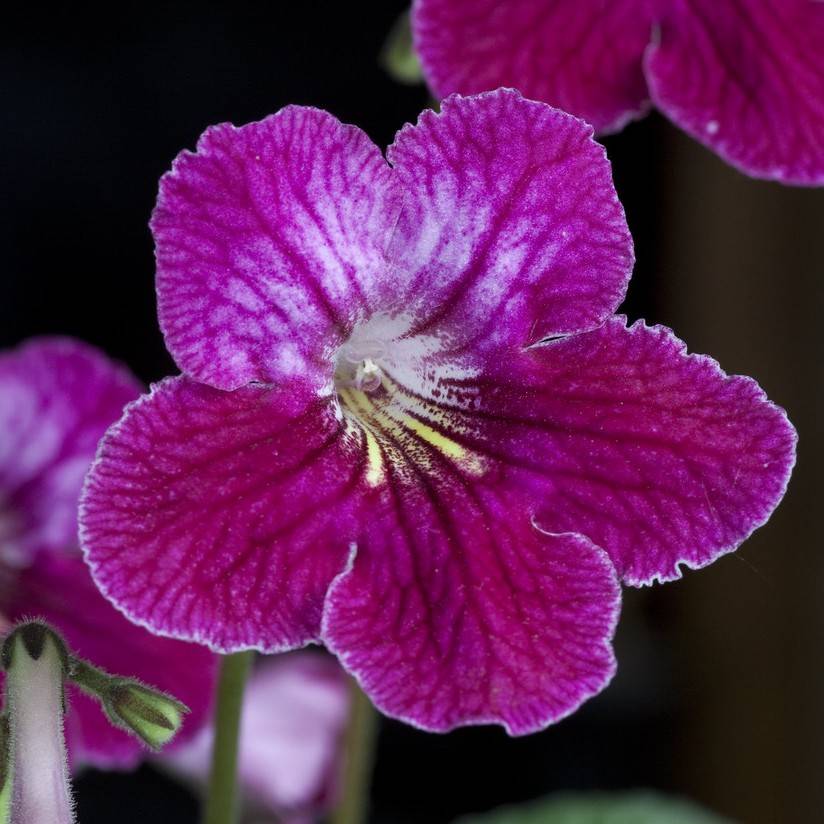
Cape Primrose, often previously classified under the genus Saintpaulia, is a compact, clumping perennial native to the cool, forested slopes of South Africa’s Eastern Cape. It produces clusters of trumpet-shaped blooms in shades of purple, pink, white, blue, and bicolor patterns that can bloom nearly year-round under optimal conditions. Its soft, velvety, oval-shaped leaves grow in rosettes, giving the plant a neat, low-growing habit well-suited for windowsill displays.
Care Guide
Watering
Water Cape Primrose when the top 1 inch of soil feels dry to the touch, avoiding pouring water directly onto the foliage or crown to prevent rot. Use room-temperature, soft water if possible, as hard water can cause leaf tip burn and reduce flowering frequency. Allow excess water to drain fully from the container after each watering to avoid soggy root conditions.
Light
Provide bright, indirect light for 10 to 14 hours per day for best flowering; an east-facing windowsill is ideal, as it avoids harsh midday sun that can scorch leaves. In low-light winter months, supplement with grow lights placed 12 to 18 inches above the plant to maintain consistent bloom production. Avoid direct afternoon sun, as it can cause brown leaf spots and stunted growth.
Soil
Use a light, well-draining, slightly acidic potting mix with a pH between 5.5 and 6.5, formulated for African violets or gesneriads works well. Amend standard potting mix with perlite, vermiculite, or peat moss to improve aeration and moisture retention without compaction. Avoid heavy, clay-heavy soils that hold excess water and can lead to rapid root rot.
Fertilizer
Feed with a balanced, water-soluble fertilizer diluted to half strength every 2 to 4 weeks during active growth and flowering periods. Use a fertilizer with a higher phosphorus content during bloom cycles to support abundant flower production. Avoid over-fertilizing, as excess salts can build up in the soil and cause leaf burn or reduced flowering.
Temperature
Maintain consistent daytime temperatures between 65 and 75°F (18 and 24°C), with nighttime temperatures no lower than 60°F (15°C) to prevent cold damage. Avoid placing Cape Primrose near drafty windows, heating vents, or air conditioning units, as sudden temperature fluctuations can cause bud drop and leaf stress. Extended exposure to temperatures above 80°F (27°C) can slow growth and reduce bloom production.
Pruning
Remove spent flower stalks at their base as soon as blooms fade to encourage the growth of new flower clusters and maintain a tidy appearance. Trim off yellowed, damaged, or dead leaves at the base of the rosette periodically to improve air circulation and reduce the risk of fungal disease. Avoid pruning healthy green foliage, as this can reduce the plant’s ability to photosynthesize and produce blooms.
Propagation
Cape Primrose is most commonly propagated from leaf cuttings: snip a healthy mature leaf with a 1 to 2 inch petiole, plant the petiole in moist, well-draining rooting medium, and keep it in bright, indirect light until new plantlets form at the base in 4 to 8 weeks. It can also be propagated by division during repotting, carefully separating clumping rosettes and planting each in its own container with fresh potting mix. Propagation from seed is possible but less common for home growers, as seeds are very small and plants take longer to reach flowering size.
Humidity
Maintain relative humidity levels between 50 and 60% for optimal growth, as dry air can cause leaf tip browning and bud drop. Increase humidity by placing the plant on a pebble tray filled with water, grouping it with other plants, or using a small humidifier near its growing location. Avoid misting the foliage directly, as standing water on fuzzy leaves can lead to fungal spots and crown rot.
Repotting
Repot Cape Primrose every 12 to 18 months, or when it becomes root-bound, using a pot that is only 1 to 2 inches larger than the previous container to avoid excess soil holding unnecessary moisture. The best time to repot is in early spring, just before the start of the active growing season. Gently loosen the root ball before planting in fresh potting mix, and avoid planting the crown too deep, as this can increase the risk of rot.
Uses & Symbolism
Cape Primrose is primarily grown as a decorative houseplant, valued for its long, repeat bloom cycles and compact size that makes it ideal for windowsills, tabletops, and indoor container displays. It is a popular choice for indoor gardening hobbyists, with many cultivated varieties available that feature unique flower colors, patterns, and foliage traits. In its native range, it is occasionally grown as a groundcover in shaded, mild-climate gardens where temperatures do not drop below freezing.
Diseases & Pests
Common pests affecting Cape Primrose include aphids, mealybugs, and spider mites, which tend to congregate on the undersides of leaves and can be controlled with insecticidal soap or neem oil applications. Fungal diseases such as crown rot, root rot, and powdery mildew are common when plants are overwatered, exposed to standing water on foliage, or grown in poorly draining soil. Botrytis blight can also develop in high-humidity conditions with poor air circulation, causing brown, water-soaked spots on leaves and flowers.
Related plants
Other plants you might like if you grow Cape Primrose.