Banana
Musa acuminata
Overview
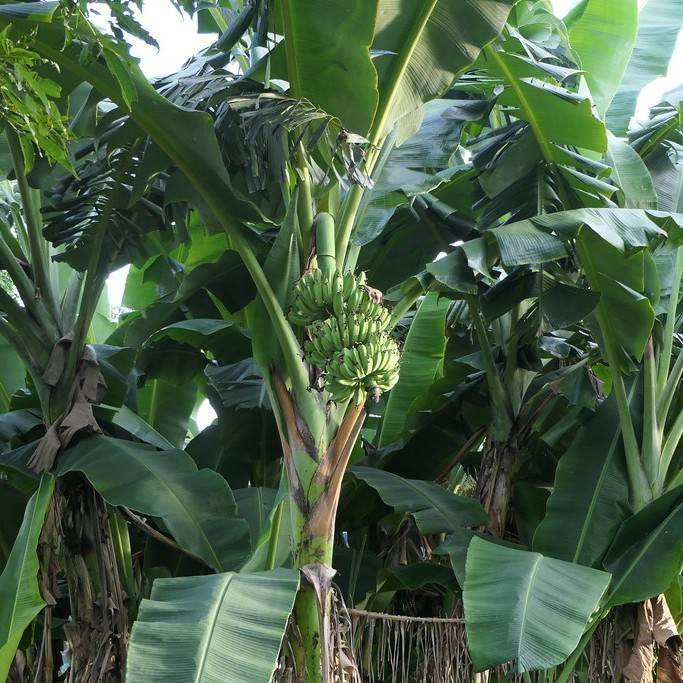
Banana plants are not true trees, but giant herbaceous perennials with pseudostems formed from tightly overlapping leaf bases. Most cultivated edible varieties produce seedless, sweet fruit that is a staple food crop across tropical and subtropical regions worldwide. Their broad, paddle-shaped leaves can reach up to 9 feet long, lending a bold tropical aesthetic to gardens and indoor collections.
Care Guide
Watering
Banana plants require consistent, deep watering to keep soil evenly moist but not waterlogged, especially during active growth periods; reduce watering frequency in cooler winter months to prevent root rot. Potted indoor specimens need more frequent watering than outdoor plants, as container soil dries out faster, and may need watering 2-3 times per week in warm weather.
Light
Bananas thrive in full, direct sunlight for a minimum of 6-8 hours per day to support robust growth and fruit production. Indoor plants should be placed near a south-facing or west-facing window, and may require supplemental grow lights during dark winter months to prevent leggy, weak growth.
Soil
Banana plants prefer rich, well-draining, loamy soil with a slightly acidic to neutral pH between 5.5 and 7.0, amended with plenty of organic matter such as compost or well-rotted manure to boost nutrient content. Avoid heavy, compacted clay soils that hold excess moisture, as these will quickly cause root rot; potted plants do well in a mix of potting soil, perlite, and compost to balance drainage and moisture retention.
Fertilizer
Bananas are heavy feeders that require regular fertilization during the growing season (spring through fall) with a balanced, all-purpose fertilizer, or a formula higher in potassium to support fruit development. Apply fertilizer every 2-4 weeks for outdoor plants, and every 4-6 weeks for indoor potted specimens, stopping fertilization entirely during the dormant winter months when growth slows.
Temperature
Bananas grow best in warm tropical temperatures between 75-95°F (24-35°C), and will suffer damage if exposed to temperatures below 50°F (10°C) for extended periods. Outdoor plants in cooler climates should be dug up and overwintered indoors, or covered with frost cloth during unexpected cold snaps; indoor plants should be kept away from cold drafts from windows or air conditioning units.
Pruning
Prune away dead, yellowed, or damaged leaves regularly to improve air circulation and direct the plant’s energy toward new growth and fruit production. Once a pseudostem produces a fruit bunch, it will die back after harvest, so cut it down to 6-12 inches above the soil line to make space for new suckers (pups) to grow from the underground rhizome.
Propagation
Bananas are most commonly propagated by dividing and transplanting suckers (pups) that grow from the parent plant’s underground rhizome, as most edible cultivated varieties do not produce viable seeds. Select healthy, 1-2 foot tall suckers with their own small root systems, cut them away from the parent plant with a sharp, sterilized tool, and plant them in a prepared location with nutrient-rich soil.
Humidity
Bananas are native to humid tropical regions and prefer relative humidity levels between 50-70% for optimal growth. Indoor plants may benefit from regular misting of the leaves, placing a tray of water and pebbles under the pot, or using a humidifier during dry winter months, as low humidity can cause leaf browning at the edges.
Repotting
Potted banana plants grow quickly and typically need repotting every 1-2 years in spring, moving to a container 2-3 inches larger in diameter than the current one to accommodate expanding root systems. When repotting, gently loosen the root ball, add fresh, nutrient-rich potting mix amended with compost, and ensure the new pot has ample drainage holes to prevent water buildup.
Uses & Symbolism
Edible banana fruit is a nutrient-dense staple food consumed fresh, cooked, or processed into a wide range of products including chips, smoothies, breads, and jams around the world. In landscaping, banana plants are used as dramatic ornamental specimens to create a tropical aesthetic in warm climate gardens, and smaller dwarf cultivars are popular large indoor houseplants. Various parts of the banana plant, including leaves, pseudostems, and flowers, are used in traditional cooking, textile production, and folk medicine across many Asian and African cultures.
Diseases & Pests
Banana plants are susceptible to fungal diseases such as Panama disease (Fusarium wilt) and Black Sigatoka, which can severely damage or kill plants, and are major threats to commercial banana crops globally. Common pests include banana aphids, spider mites, mealybugs, and banana weevils, which feed on foliage, sap, or roots, weakening the plant and potentially spreading viral diseases. Overwatering or poorly draining soil frequently leads to root rot, the most common issue for potted indoor banana plants, which presents as yellowing, wilting leaves and soft, discolored pseudostems.
Related plants
Other plants you might like if you grow Banana.