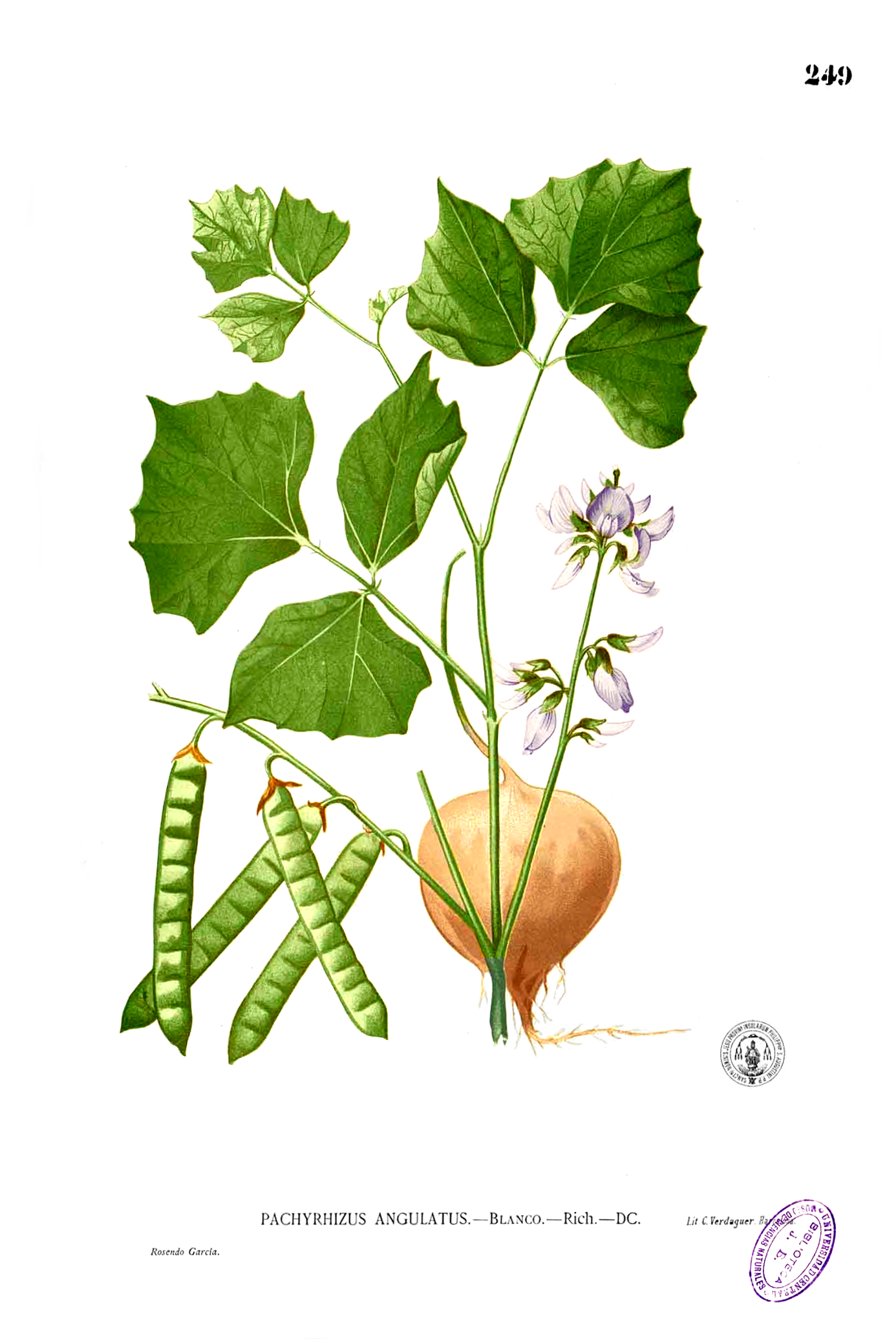
Jicama
Pachyrhizus erosus
Overview
Jicama, also called yam bean or Mexican turnip, is a warm-season legume cultivated primarily for its large, bulbous underground root tuber, which has a mild, nutty flavor and crisp, apple-like texture. While the root is a popular staple in Latin American, Southeast Asian, and Caribbean cuisines, all above-ground portions of the plant contain harmful rotenone, making them unfit for consumption. Though botanically a perennial, it is most often grown as an annual in temperate regions to harvest roots before frost damages the plant.
Care Guide
Watering
Jicama requires consistent, even moisture throughout its 5-9 month growing season, with 1-2 inches of water per week to support root development; avoid overwatering or waterlogged soil, which can cause root rot. Reduce watering gradually 2-3 weeks before harvest to encourage the root to sweeten and prevent splitting, and discontinue watering entirely once foliage begins to yellow as the plant reaches maturity.
Light
Jicama thrives in full, direct sunlight, requiring a minimum of 6-8 hours of unobstructed light daily to produce robust vines and large, well-developed root tubers. In regions with extremely intense midday sun, light afternoon shade can prevent leaf scorch, but too much shade will reduce root yield significantly by slowing photosynthesis and growth.
Soil
Jicama prefers loose, well-draining sandy loam or loamy soil with a pH between 6.0 and 7.0, as compacted or heavy clay soils will restrict root expansion and produce misshapen tubers. Amend heavy soil with compost, aged manure, or perlite to improve aeration and drainage before planting, and avoid soils with high nitrogen content, which encourages excessive foliage growth at the expense of root development.
Fertilizer
Jicama is a nitrogen-fixing legume, so it rarely requires supplemental nitrogen fertilizer, as excess nitrogen will promote vine growth rather than root formation. Apply a balanced 5-10-10 fertilizer at planting time to support root development, and side-dress with a phosphorus-rich fertilizer once mid-season when vines begin to spread, avoiding contact with the plant’s base to prevent burn.
Temperature
Jicama is a tropical plant that requires consistently warm temperatures between 75-90°F (24-32°C) for optimal growth, and is highly sensitive to frost, which will kill the vines and damage roots. Temperatures below 50°F (10°C) will slow growth significantly, so it should only be planted outdoors once all risk of frost has passed and soil temperatures have reached at least 65°F (18°C).
Pruning
Jicama requires minimal pruning, but you can trim back excessively long vines that overgrow their support structure to redirect energy toward root development, though avoid removing more than 20% of foliage at one time. Remove any yellowed or damaged leaves throughout the growing season to improve air circulation and reduce the risk of fungal disease, and cut back all vines to 2-3 inches above the soil line when you are ready to harvest the root tubers.
Propagation
Jicama is almost exclusively propagated from seed, which should be soaked in warm water for 12-24 hours before planting to speed up germination, which typically occurs within 7-14 days in warm soil. Sow seeds 1-2 inches deep directly in the garden after frost risk has passed, or start seeds indoors 3-4 weeks before the last frost date in biodegradable pots to avoid disturbing the sensitive taproot during transplanting.
Humidity
Jicama tolerates a wide range of humidity levels, growing well in both arid and moderately humid climates as long as consistent soil moisture is maintained. High humidity combined with poor air circulation can increase the risk of foliar fungal diseases, so space plants 12-18 inches apart and provide trellising for vines to improve airflow around foliage.
Repotting
Jicama is rarely grown in containers long-term, as it requires deep soil for root development, but if grown in pots, use a container at least 18 inches deep and 24 inches wide with ample drainage holes. Avoid repotting jicama once it has established, as disturbing the taproot will stunt growth or damage the developing tuber, so start seeds in their final container if growing in pots.
Uses & Symbolism
The crisp, mild jicama root is a versatile edible staple, eaten raw in salads, salsas, and crudité platters, or cooked in stir-fries, soups, and roasted dishes, with a low calorie count and high fiber, vitamin C, and potassium content. In agriculture, jicama is sometimes used as a cover crop to fix nitrogen in soil and prevent erosion, though its toxic foliage makes it unsuitable for livestock forage.
Diseases & Pests
Jicama is relatively pest-resistant, but common issues include aphids, spider mites, and whiteflies that feed on foliage, which can be controlled with insecticidal soap or neem oil applications. Fungal diseases such as powdery mildew and root rot can occur in overly humid, waterlogged conditions, so ensure proper soil drainage, adequate spacing between plants, and avoid overhead watering to minimize risk.
Guides that mention Jicama
Jicama: A Complete Guide to Growing, Eating, and Storing This Crisp Root Vegetable
Learn all about jicama, including its nutrition, health benefits, growing tips, how to prepare and store it, plus safety notes about its toxic foliage and seeds.
Monstera, Pothos, and Neon Pothos Root Rot: Signs, Causes, and Fixes for Common Tropical Houseplants
Learn to identify, treat, and prevent root rot in monstera, pothos, and neon pothos with simple, beginner-friendly steps for healthy tropical houseplants.
Related plants
Other plants you might like if you grow Jicama.