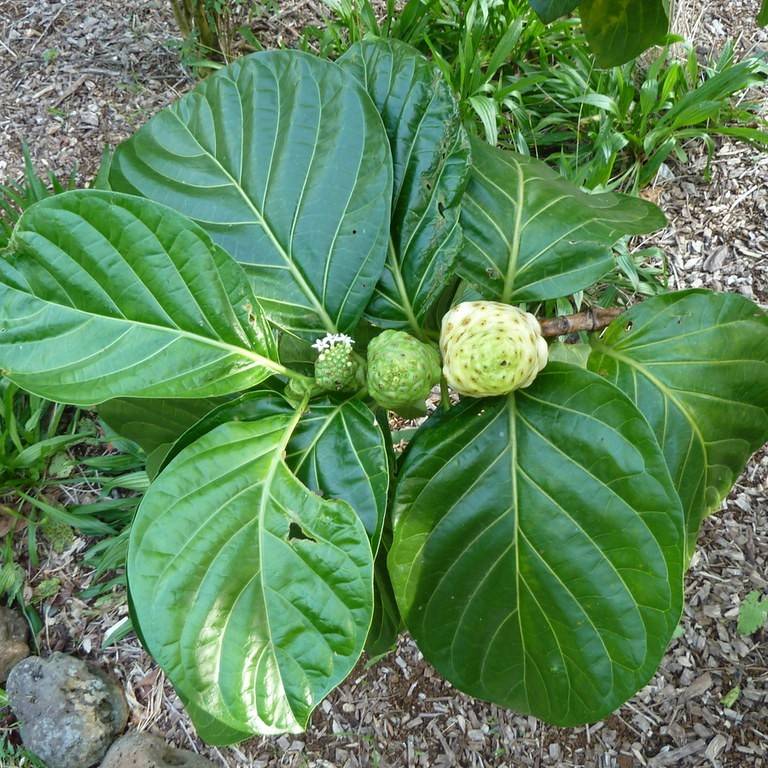
Indian Mulberry
Morinda citrifolia
Overview
Indian Mulberry, commonly called noni, is a hardy tropical perennial best known for its bumpy, yellow-white fruit that emits a strong, cheese-like odor when ripe. It has been a staple of traditional Polynesian, Indian, and Southeast Asian medicine for over 2,000 years, used to address a wide range of health concerns. The tree produces small, white, tubular flowers year-round in suitable climates, leading to continuous fruit production once mature. It thrives in coastal and lowland tropical habitats, tolerating poor, saline, or rocky soils that many other fruit crops cannot withstand.
Care Guide
Watering
Water young Indian Mulberry plants regularly to keep the soil consistently moist but not waterlogged, as standing water can cause root rot. Mature, established plants are drought-tolerant and only require supplemental watering during extended dry periods, allowing the top 2-3 inches of soil to dry out between waterings. Reduce watering frequency in cooler months when growth slows to prevent over-saturation of the root zone.
Light
Indian Mulberry requires full sun, meaning at least 6-8 hours of direct, unfiltered sunlight daily, to support vigorous growth and abundant fruit production. It can tolerate partial shade, but plants grown in lower light will produce fewer flowers and fruit, and may develop leggy, sparse foliage. When grown indoors as a container plant, place it in a south-facing window or use grow lights to provide sufficient light intensity.
Soil
This adaptable plant grows well in a wide range of soil types, including sandy, loamy, clay, and even saline coastal soils, as long as the medium has good drainage. A pH range of 5.5 to 7.5 is ideal, though it can tolerate slightly more acidic or alkaline conditions without significant stress. For container cultivation, use a well-draining potting mix amended with compost or perlite to improve aeration and prevent compaction.
Fertilizer
Feed young Indian Mulberry plants every 2-3 months during the growing season with a balanced, slow-release 10-10-10 fertilizer to support healthy root and foliage development. Mature, fruit-bearing plants benefit from a fertilizer higher in potassium, such as a 8-3-9 blend, applied in early spring, mid-summer, and early fall to boost flower and fruit production. Avoid over-fertilizing, as excessive nitrogen can lead to lush foliage growth at the expense of fruit yield.
Temperature
Indian Mulberry thrives in warm tropical temperatures between 68°F and 86°F (20°C and 30°C), and cannot tolerate frost or prolonged temperatures below 32°F (0°C), which will kill foliage and may kill the entire plant. If grown in regions with cool winters, plant it in a container that can be moved indoors to a warm, sunny space when temperatures drop below 50°F (10°C). Mature plants can tolerate brief dips to 40°F (4°C) without permanent damage, but growth will stall until warmer conditions return.
Pruning
Prune Indian Mulberry annually in late winter or early spring before new growth emerges to maintain a manageable shape, remove dead, damaged, or diseased branches, and improve air circulation throughout the canopy. Cut back overgrown branches by up to one-third of their length to encourage bushier, more productive growth, as fruit forms on new wood. Regularly remove suckers that grow from the base of the tree to direct energy to the main canopy and prevent the plant from becoming too dense.
Propagation
Indian Mulberry is most commonly propagated from fresh seed, which should be removed from ripe fruit, cleaned thoroughly, and sown in moist, well-draining seed starting mix, germinating within 2-6 weeks in warm, humid conditions. It can also be propagated from semi-hardwood cuttings taken in late summer, dipped in rooting hormone, and placed in a moist, sterile medium under high humidity until roots form in 4-8 weeks. Air layering is another reliable method for producing clones of mature, high-yielding plants, with roots typically developing in 2-3 months before the new plant is separated from the parent.
Humidity
This tropical plant prefers high humidity levels between 60% and 80%, which supports healthy foliage growth and optimal fruit development. In dry indoor environments or during periods of low humidity, mist the foliage regularly, place a tray of water and pebbles beneath the container, or use a humidifier to maintain adequate moisture in the air. Mature outdoor plants can tolerate slightly lower humidity levels, but prolonged dry air may cause leaf browning and reduced fruit set.
Repotting
Container-grown Indian Mulberry plants should be repotted every 2-3 years in early spring, before the active growing season begins, to refresh the soil and provide more space for root growth. Choose a pot that is 2-3 inches larger in diameter than the current container, with multiple drainage holes to prevent waterlogging, and use a nutrient-rich, well-draining potting mix. After repotting, water the plant thoroughly and place it in a shaded location for 1-2 weeks to allow it to recover from transplant shock before returning it to full sun.
Uses & Symbolism
Indian Mulberry (noni) fruit is most widely used in traditional and alternative medicine, processed into juices, capsules, powders, and topical ointments marketed to support immune function, reduce inflammation, and improve skin health. The wood of the tree is dense and durable, used in some tropical regions for small construction projects, carving, and making firewood, while the bark and roots yield natural dyes used for textiles. It is also grown as an ornamental landscape tree in warm coastal regions, valued for its glossy evergreen foliage, tolerance of salt spray, and low maintenance requirements.
Diseases & Pests
Indian Mulberry is relatively pest-resistant, but may be affected by aphids, mealybugs, and scale insects, which suck sap from foliage and can cause leaf yellowing, stunted growth, and sooty mold growth on excreted honeydew. Fungal diseases such as root rot and leaf spot can occur in poorly draining soil or conditions of excessive moisture, leading to wilting, brown leaf lesions, and plant decline if left unaddressed. Fruit rot may develop on overripe or damaged fruit, especially in high humidity, so harvest fruit promptly when ripe and ensure good air circulation around the canopy to reduce risk.
Related plants
Other plants you might like if you grow Indian Mulberry.